
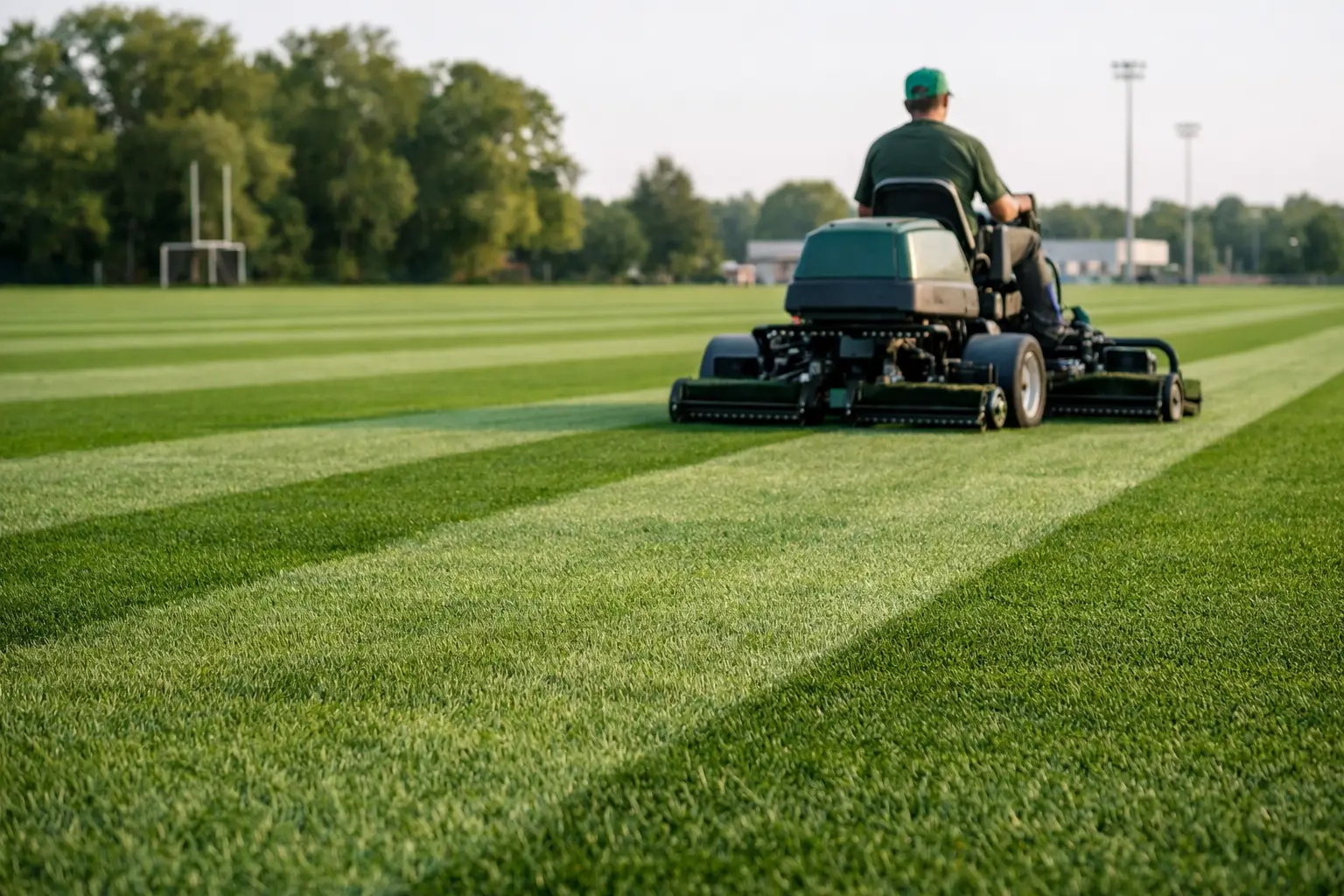
A surface can look acceptable after a single cut yet still reveal uneven standards over a week. Missed edges, shifting stripe definition, inconsistent height of cut and variable timing all affect presentation, playability and turf response. Knowing how to improve mowing consistency is therefore less about simply increasing cutting frequency and more about creating a controlled mowing system that performs to the same standard every day.
For golf courses, sports pitches and large institutional sites, that system must account for surface type, growth rate, use patterns, machinery, labour availability and weather. The objective is repeatable quality across the whole estate, not one well-presented area achieved at the expense of another.
Set a clear standard for every mowing area
Consistency starts with defining what “good” looks like for each surface. Greens, tees, fairways, surrounds, winter sports pitches, formal amenity areas and roughs should not be managed to one universal rule. Each has a different target height, finish, mowing pattern and tolerance for variation.
Set practical standards that the whole team can apply. These should cover height of cut, direction of travel, mowing frequency, clipping management, edge definition and the acceptable level of visible uncut material. On a stadium pitch, the priority may be a uniform, dense presentation and reliable ball roll. On a fairway, it may be clean striping, consistent lie and efficient coverage over a large area.
The most useful standards are measurable. Rather than instructing staff to cut a surface “when needed”, establish a planned frequency and define the conditions that warrant a change. Growth flushes, prolonged rainfall, drought stress, tournament preparation and intensive fixture periods all require adjustment, but the decision should follow an agreed process rather than individual judgement alone.
Control height of cut and cutting quality
A nominal height of cut is only valuable if the machine delivers it consistently. Differences in tyre pressure, roller condition, bedknife adjustment, blade wear, ground contours and forward speed can all produce an uneven result. A mower set correctly in the workshop can still cut differently once it is operating across a sloping, damp or undulating surface.
For cylinder mowing, maintain sharp, correctly adjusted cutting units and check the quality of cut regularly. A poor cut tears leaf tissue rather than cleanly shearing it, which can leave whitened tips, reduce presentation quality and increase plant stress. Rotary units also need sharp, balanced blades and an even deck set-up to avoid scalping or visible variation between passes.
Height should be verified at the cutting unit, not assumed from a lever position or previous setting. This is particularly relevant when several machines operate on the same class of surface. If units are set differently, a pitch or fairway can develop subtle bands of variation that become obvious in low light, under television coverage or during a tournament inspection.
Avoid removing too much leaf in one pass. The familiar one-third principle remains a useful discipline for managed turf, although growth conditions and species will influence what the surface can tolerate. When mowing has been delayed, raising the height temporarily or introducing an additional pass can protect plant health and produce a cleaner finish than attempting to recover the target height in a single cut.
Plan routes, timing and overlap
Mowing consistency is strongly influenced by how a machine moves across the site. Operators often achieve variation unintentionally through inconsistent overlap, changing travel lines around obstacles or rushing the final passes as time becomes limited. A defined route reduces these variables.
For striped sports surfaces, retain an agreed pattern and change the direction at appropriate intervals to limit grain, compaction and persistent wheel marks. For fairways and larger amenity areas, use route plans that ensure full coverage without excessive overlap. Too little overlap leaves missed strips; too much wastes time, increases trafficking and can create a darker visual band.
Timing matters as much as route choice. Cutting wet grass can reduce quality of finish, promote clumping and leave wheel marks on softer ground. Conversely, waiting too long during rapid growth can result in heavy clippings and an inconsistent appearance. Build mowing windows around weather, irrigation, play schedules and surface recovery rather than treating every day as identical.
Autonomous equipment can provide a significant advantage here because it follows programmed working areas and repeatable routes without fatigue or variation between shifts. It can maintain frequent cutting on designated turf while the grounds team focuses on presentation work, line marking, renovations and the decisions that require professional judgement.
Match the machine to the surface and workload
No mower delivers consistent results if it is being asked to work outside its intended role. Cylinder systems remain the preferred choice where a fine, close finish is essential, particularly on greens and high-quality playing surfaces. Rotary robotic mowers can be highly effective for fairways, larger pitches and extensive maintained grass where frequent light cutting supports a uniform finish.
The right choice depends on terrain, grass species, desired height, daily area, slope, access points and the level of precision required. A machine that covers the area quickly but cannot maintain the required cut quality is not productive. Equally, using a highly specialised mower for a broad, lower-intensity area may consume labour and machine hours without improving the outcome.
Consider the full operating cycle, not just the time spent cutting. Transport, refuelling or charging, set-up, cleaning, emptying clippings, daily checks and operator availability all affect whether the mowing plan is actually delivered. Autonomous mowing is most valuable where it removes routine, repeatable work from this cycle and provides dependable coverage outside peak labour hours.
Make daily checks non-negotiable
Small mechanical issues quickly become visible on closely managed turf. A disciplined inspection routine protects consistency before problems reach the surface. Before deployment, checks should include:
- blade or cylinder sharpness and security
- height-of-cut setting and cutting-unit adjustment
- tyre or roller condition and correct pressure
- battery charge, sensors and boundary or guidance status
- cleanliness around decks, rollers and discharge areas
These checks do not need to slow the operation. They prevent avoidable rework, missed zones and poor finish quality. Record recurring issues by machine and area, particularly where uneven cutting, scalping or clumping appears repeatedly. The pattern often points to a route, set-up or surface condition problem rather than a one-off operator error.
Use data to refine the mowing programme
Professional turf teams already monitor weather, disease pressure, irrigation and playing schedules. Mowing should be managed with the same level of intent. Track cutting frequency, hours per area, machine downtime, clipping volume, surface moisture and feedback from users or players. This gives the team evidence for changing a programme before standards slip.
Data is especially useful when introducing robotic mowing. Initial operating assumptions should be tested against actual growth, coverage times and presentation outcomes. A fairway may need a different operating window in spring than in mid-summer. A pitch perimeter may require additional attention after fixtures, while the main playing area can remain on a predictable autonomous schedule.
The goal is not maximum machine utilisation at all costs. It is reliable surface quality with the least unnecessary labour, trafficking and disruption. Sometimes that means increasing frequency at a higher height; at other times it means pausing work during saturated conditions or moving a machine to a priority area.
How to improve mowing consistency with autonomous mowing
Autonomous mowing creates repeatability that is difficult to sustain through manual operations alone. Once a working area, cutting height, schedule and safety parameters are set correctly, the machine can return to the same task with predictable precision. This reduces dependence on finding available operators for routine passes and helps maintain standards across multiple surfaces during busy periods.
It is not a replacement for turf expertise. A robotic mower will not decide that a disease outbreak, heavy dew, renovation programme or imminent fixture requires a change of plan. It gives the grounds team a dependable base level of cutting, while skilled staff retain control of agronomy, presentation and exceptions.
For the strongest result, introduce automation as part of the mowing programme rather than as an isolated equipment purchase. Map the areas where frequent light cutting will make the greatest difference, identify manual tasks that still demand specialist attention, and review the programme after the first growth cycle. GrassRobotics works with professional operators on exactly this principle: autonomous precision applied where it produces a clear operational gain.
A consistently presented surface is built through hundreds of correct, repeatable decisions. When cutting standards, machine condition, route planning and autonomous capacity work together, quality stops depending on who is available that morning and becomes part of the daily operation.