
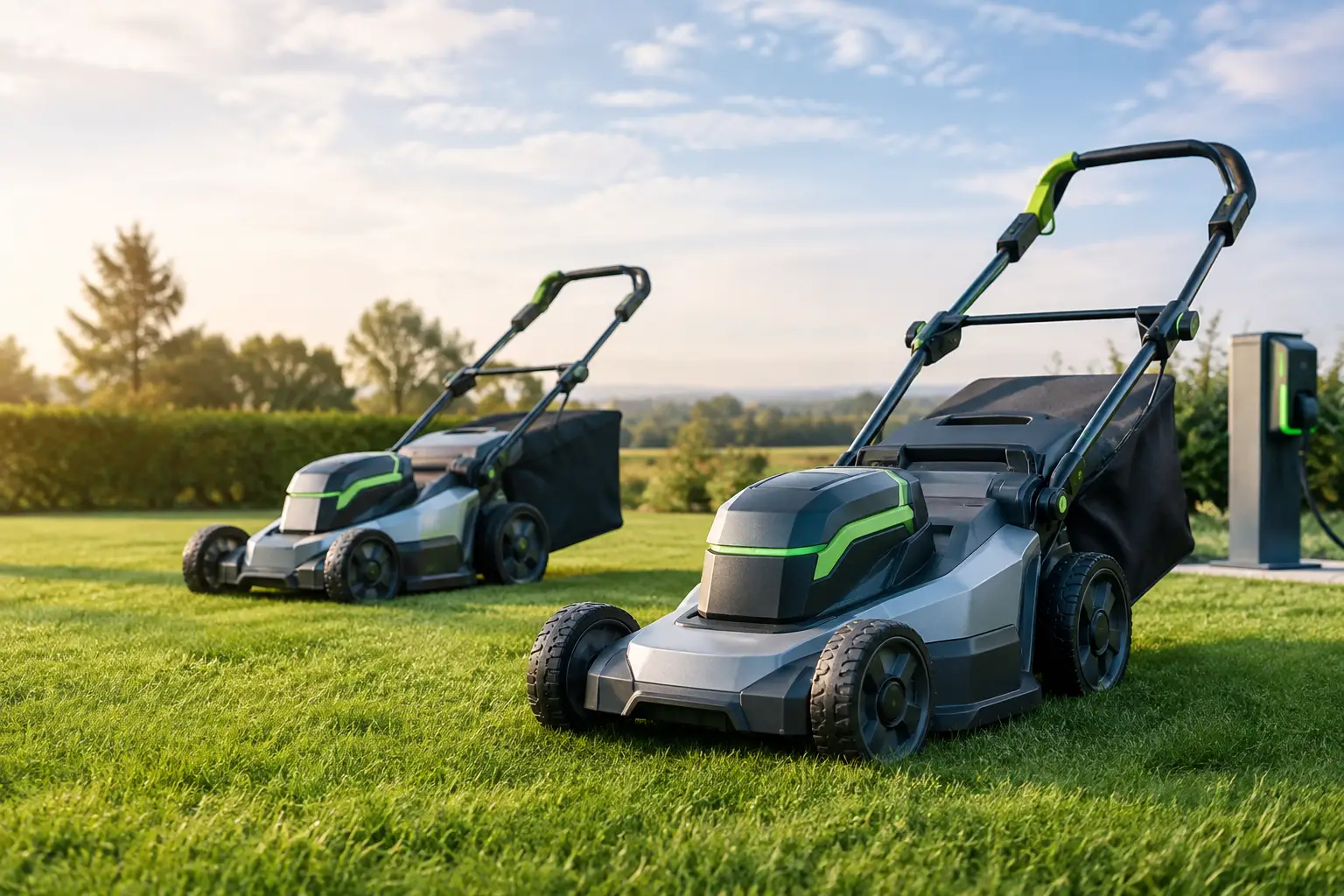
A 5 am start with diesel machinery was once simply part of maintaining a golf course or sports facility. That assumption is changing. Professional mower electrification trends are moving beyond quieter motors and lower fuel use towards a different operating model: planned autonomous cutting, predictable daily coverage and more productive deployment of skilled grounds staff.
For professional operators, the question is no longer whether electric mowing can work. The more useful question is where it will deliver the greatest operational return without compromising presentation, cut quality or access to the machine when it matters most.
Professional mower electrification trends shaping turf care
Electrification is advancing first where mowing is repetitive, frequent and easy to schedule. Fairways, formal sports areas, tee surrounds, practice grounds and large amenity spaces all present a clear opportunity. These are areas where a machine can work consistently within defined boundaries while the team focuses on preparation, repairs, line marking, irrigation and the detailed work that cannot be automated effectively.
This does not mean every professional mower will be replaced by a battery machine. Rotary, cylinder and specialist units will continue to have distinct roles, particularly for renovation, collection work, steep terrain, wet conditions and infrequent heavy cuts. The shift is towards using each machine type where it produces the best result, rather than relying on one labour-intensive approach across an entire site.
Battery capacity is becoming a planning issue, not a limitation
Early discussions around electric equipment often centred on runtime alone. Runtime still matters, but it is only one part of the system. Professional operators need to assess usable daily capacity, charging windows, terrain, grass growth, cutting frequency, travel distance and the available mains supply at the intended charging location.
A mower that returns automatically to charge can maintain a programme through the day and, where site conditions allow, beyond normal working hours. The relevant measure is therefore not a single battery cycle but the area maintained to the required standard over a week. For sites with consistent mowing demand, this changes the economics considerably.
Charging infrastructure needs proper consideration. A well-positioned charging point, secure equipment area and reliable electrical provision are fundamental. Facilities with several autonomous units may also need to consider how charging is staggered to avoid unnecessary load at one point in the day. This is practical estate planning, not a reason to delay adoption.
Autonomy is accelerating the value of electric mowing
Electrification and autonomy are closely linked, but they are not the same thing. An electric pedestrian mower may reduce noise and local emissions, yet it does not remove the need for an operator. An autonomous professional mower changes the labour equation because it performs scheduled cutting without requiring someone to walk or ride with it for every pass.
That distinction matters in a market where experienced greenkeeping and grounds staff are difficult to recruit and retain. Automation does not replace professional judgement. It reallocates skilled time towards tasks that affect playing quality most directly: assessing plant health, preparing surfaces, managing moisture, setting up fixtures and responding to seasonal pressure.
On a golf course, for example, autonomous mowing can be configured around fairways, rough, surrounds or selected practice areas while the course team concentrates on greens, bunkers and presentation ahead of play. At a sports venue, it can maintain routine coverage across pitches between bookings, freeing the grounds team for line marking, divot repair and match preparation.
Consistency is the strongest operational case
The visual benefit of electric autonomous mowing is often understated. Frequent, light cutting can support a neater, more consistent surface than occasional heavier passes, provided the machine, cutting system and programme are correctly matched to the area.
Regular mowing reduces the amount of leaf removed in a single visit. That can improve presentation and help maintain a uniform finish through periods of rapid growth. It also removes the disruption of repeatedly sending larger machinery across the same surface at busy times.
For facilities hosting early tee times, evening training or consecutive fixtures, lower operating noise is commercially useful. Equipment can be scheduled around activity with fewer restrictions, subject to site policy and local conditions. Quiet operation is not merely a comfort benefit. It widens the available maintenance window.
Cut quality remains non-negotiable. Cylinder mowing continues to be essential where a fine finish and precise height of cut are required, particularly on greens and certain closely managed playing surfaces. Electrification does not erase these agronomic requirements. Instead, it allows operators to choose autonomous rotary or cylinder solutions for suitable areas while retaining specialist machinery for surfaces that demand a particular finish.
Data supports better mowing decisions
Professional autonomous systems generate useful operational information: completed areas, work time, charging activity, location and exceptions. Used properly, this data helps managers confirm that a programme is being delivered rather than assuming it has been.
It can also make labour planning more accurate. If a mower has maintained a defined area overnight, the morning team can begin with inspection and detail work rather than routine first-pass cutting. Across a multi-area site, that predictability can make daily deployment more controlled, particularly during peak growing periods.
The value is not in collecting data for its own sake. The value is in identifying whether coverage, cutting frequency and machine allocation are meeting the required turf standard. A course manager or grounds manager should be able to adjust the programme based on actual performance, weather and fixture demands.
Where electrification requires a measured approach
Electric and robotic mowing should be evaluated as a site-specific solution, not a blanket purchase decision. Wet ground, excessive grass length, deep undulations, narrow access routes, public movement and changing event layouts all affect suitability.
Boundary design is particularly important. A strong autonomous mowing installation begins with an accurate understanding of the area, exclusion zones, access points and potential obstacles. Golf courses and sports facilities are dynamic environments. Temporary fencing, goalposts, practice equipment, drainage works and event infrastructure need to be accounted for within the operating plan.
Weather also changes the calculation. Modern professional equipment can work in a wide range of conditions, but responsible management still requires settings and schedules that respect soil moisture, slope and surface sensitivity. The aim is to reduce unnecessary trafficking and maintain quality, not to force a machine to operate when conditions indicate otherwise.
There is also an investment question. Purchase price alone gives an incomplete picture. Operators should compare the whole cost of ownership: fuel, routine servicing, transport, labour hours, utilisation, expected lifespan, charging installation and the value of consistent coverage. The return will vary by site. A compact facility with irregular mowing demand may have a different case from a large course or multi-pitch estate with repeated weekly workloads.
A practical route to adoption
The strongest projects start with a defined problem. It might be a fairway area that absorbs too many staff hours, a pitch complex that needs more frequent cutting, or a persistent gap in labour availability. Start there, rather than trying to automate every hectare immediately.
Select an area with repeatable work, manageable boundaries and a clear presentation requirement. Establish the current labour input, equipment use and cutting frequency. Then set a realistic performance target for the autonomous system, including when it will operate, how it will be supervised and what equipment remains responsible for finishing work.
A phased approach gives teams time to build confidence in the workflow. It also reveals the details that determine long-term performance: where machines charge, how they travel between zones, which periods are busiest, and how mowing schedules change during tournaments, fixtures or seasonal growth peaks.
GrassRobotics works with professional operators who need this level of practical fit. The objective is not automation for its own sake. It is a mowing system that supports reliable standards across greens, fairways, pitches and wider managed turf.
Electrification will not remove the need for capable grounds teams. It will make their time more valuable. The facilities that gain most will be those that treat autonomous mowing as part of a disciplined maintenance strategy – matching the right machine, cutting method and schedule to each surface, then using the recovered labour where professional judgement makes the greatest difference.