
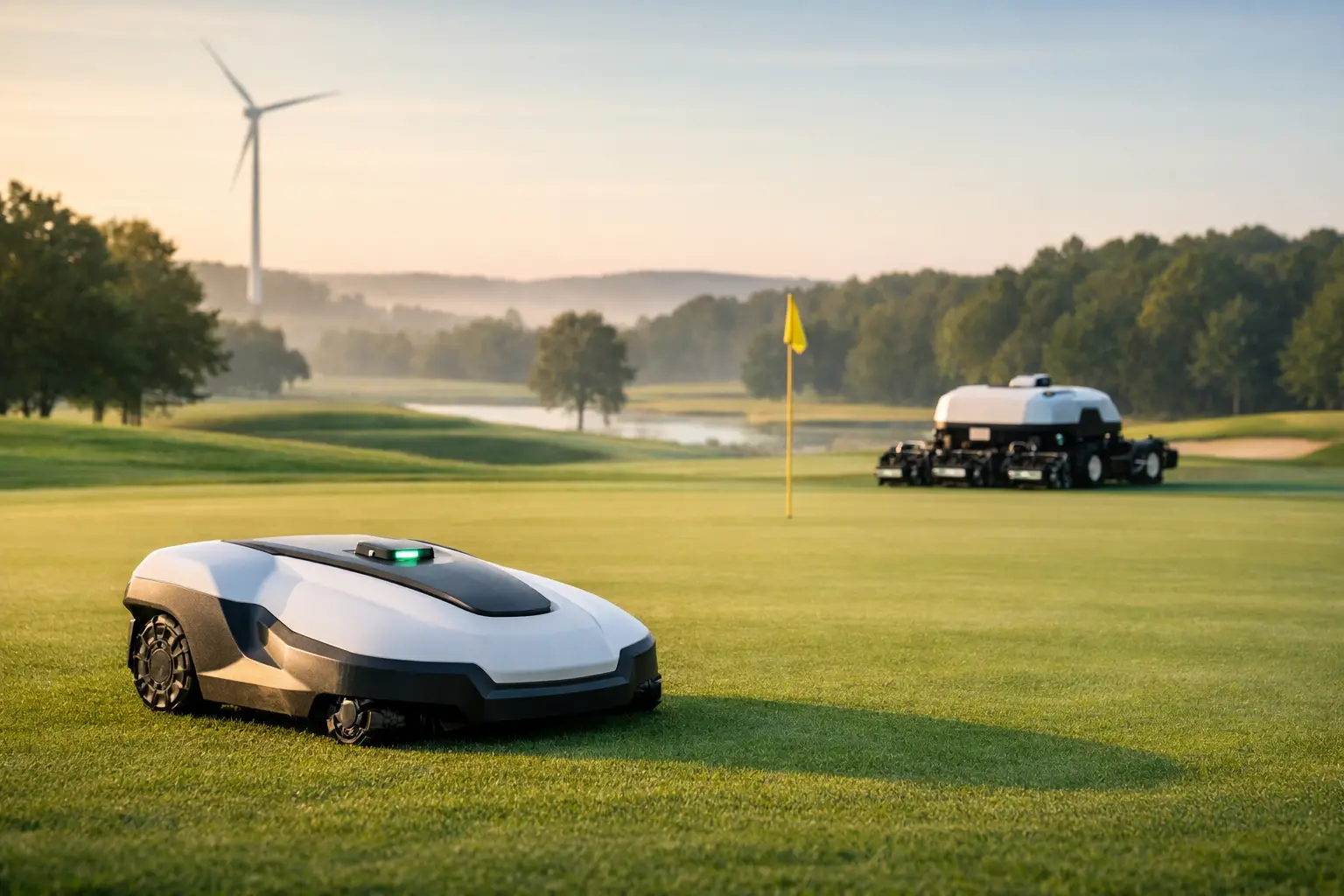
A missed morning cut before a competition, fixture or member event can affect far more than presentation. It puts pressure on an already stretched team, disrupts planned tasks and can force skilled staff onto routine mowing when they should be inspecting surfaces, preparing hazards or responding to weather. The future of robotic greenkeeping is about removing that pressure through dependable, purpose-built autonomy.
For professional venues, this is not a question of replacing good greenkeeping or sports turf expertise. It is about applying that expertise more effectively. Autonomous mowing is becoming a practical part of the maintenance operation: delivering frequent, consistent cuts while the team retains control of turf standards, machine schedules and the wider agronomic programme.
Why the future of robotic greenkeeping is operational
Labour remains one of the most persistent constraints in professional turf care. Recruiting and retaining experienced staff is difficult, while the basic mowing requirement does not disappear during busy playing periods. Golf courses, sports facilities and large grounds need high-quality surfaces every day, often across multiple areas with different cutting requirements.
Robotic mowing changes how that workload is allocated. A machine can maintain planned cutting cycles on fairways, rough, tees, greens surrounds or marked playing surfaces while the grounds team focuses on the work that requires judgement. That may mean moisture management, disease monitoring, line marking, divot repair, bunker presentation, irrigation checks or preparing for an event.
The value is not simply fewer hours spent driving a mower. It is the ability to protect skilled labour for higher-value tasks and reduce the operational risk created by absences, seasonal pressure and tight morning schedules.
Frequency is a quality advantage
A professionally specified robotic mower can cut little and often. This supports a cleaner, more consistent appearance and avoids relying on a single large mowing window. On managed turf, frequent light cutting can also reduce visible clippings and help maintain a more even finish between staffed visits.
That does not mean every area should be cut in the same way. Greens demand different equipment, cut quality and operating discipline from fairways or sports pitches. The most effective robotic strategy is therefore area-specific, matching the machine, cutting system, height of cut and schedule to the surface being maintained.
Cylinder mowing has a clear role where presentation and cut quality are paramount. Rotary systems may be more appropriate for larger areas, rough management or sites where throughput is the principal requirement. The future is not one robot doing every job. It is a coordinated fleet or equipment mix that respects the needs of each turf area.
From machine purchase to working system
The strongest robotic greenkeeping programmes begin with a site assessment, not a product catalogue. A course or facility is a live operating environment with slopes, trees, paths, irrigation infrastructure, public access, changing playing schedules and areas that may need different treatment through the season.
Before selecting equipment, managers should establish the true mowing requirement. This includes the hectares or square metres to be covered, target frequency, operating hours, access routes, gradients, charge locations, turf conditions and the occasions when equipment must be kept off site or out of sight. A robotic mower that looks capable on a specification sheet may still be the wrong operational fit if it cannot work around a venue’s practical constraints.
Boundary definition and route planning are equally important. Whether a system uses physical boundaries, satellite guidance or another navigation method, the setup must reflect exclusion zones, crossing points, water hazards, bunkers, trees and pedestrian areas. Precision is a commercial benefit only when it works consistently on the ground.
Managers should also plan for maintenance from the outset. Blades, cylinders, batteries, cleaning routines and seasonal inspections remain part of professional ownership. Robotics reduce routine driving time; they do not eliminate the need for a disciplined equipment programme. The difference is that maintenance becomes more predictable and less tied to daily operator availability.
Labour reduction without lowering standards
The concern often raised by experienced greenkeepers is justified: can an autonomous mower really maintain the expected finish? The answer depends on the task, the equipment and the deployment plan.
Robotic mowing is highly effective where frequent, repeatable coverage is required. It can take pressure off fairway, tee, surround and pitch-mowing programmes, particularly when staff are needed elsewhere. For premium greens, it may support the wider operation rather than replace specialist preparation, depending on the venue’s standards, machinery choice and playing calendar.
A sensible approach is to identify the repetitive work that creates the greatest labour demand without requiring constant human judgement. Automate that first. Once the team sees reliable output and understands the system’s operating limits, automation can be extended into additional areas.
This phased approach also helps justify investment. Rather than assessing a robotic mower purely against its purchase price, calculate the hours it can release across a typical season, the reduction in contractor reliance, the avoided disruption from staffing gaps and the value of more consistent cutting. For many sites, the business case is strongest when labour is redeployed, not simply removed.
Data will improve decisions, not replace them
Autonomous turf-care equipment produces useful operational information: work status, completed areas, charging behaviour, alerts and planned activity. Over time, this visibility helps managers understand whether mowing schedules match actual site demand.
The next step is connecting mowing data with the wider maintenance picture. Weather forecasts, growth patterns, irrigation activity, fixture schedules and seasonal recovery periods can all influence when and where a machine should operate. A wet spell may require a different programme from a dry summer week. Heavy traffic around a tournament or match may change the preferred working window.
However, data should support professional judgement rather than override it. A dashboard cannot assess a stressed area of turf in the same way as an experienced greenkeeper walking the site. The best operations will combine machine consistency with regular human inspection. Automation handles repeatability; the team makes the decisions that protect surface health and presentation.
Safety, access and public confidence
Golf courses and sports grounds are shared spaces. Players, staff, visitors, wildlife and contractors all move through them, sometimes unpredictably. Any robotic programme must be designed around safe operation, clear exclusion rules and appropriate supervision procedures.
This is particularly relevant at venues with early starters, evening play, public footpaths or multi-use facilities. Operating windows should reflect the real rhythm of the site, not just the theoretical availability of the machine. There may be times when overnight operation is ideal and others when daylight work offers better visibility and management control.
Communication matters as well. Teams should understand how the equipment operates, how to stop it safely and who is responsible for reviewing alerts. Members, players and clients do not need a technical briefing, but they do notice reliable surfaces and orderly operations. A well-managed robotic deployment should feel like a professional improvement, not an experiment taking place around them.
The next standard for golf and sports turf
The future of robotic greenkeeping will be defined by integration. Autonomous mowers will work alongside skilled operators, conventional machinery, irrigation systems and planned agronomy. Their role will expand where sites need more coverage, tighter labour control and greater consistency, but their value will always depend on selecting the right technology for the right surface.
For golf, this means more reliable presentation across fairways, tees and greens surrounds, with qualified staff available for the details that influence playing quality. For sport, it means repeatable pitch maintenance and improved capacity to prepare surfaces around intensive fixture schedules. For contractors, it offers a way to scale recurring maintenance without adding the same proportion of routine mowing hours.
GrassRobotics supports this shift with professional autonomous mowing solutions designed around the demands of managed turf, not domestic lawns. The practical question for every operator is no longer whether robotics will have a place on site. It is which repetitive mowing task should be automated first, and how much more the team could achieve once it is.