
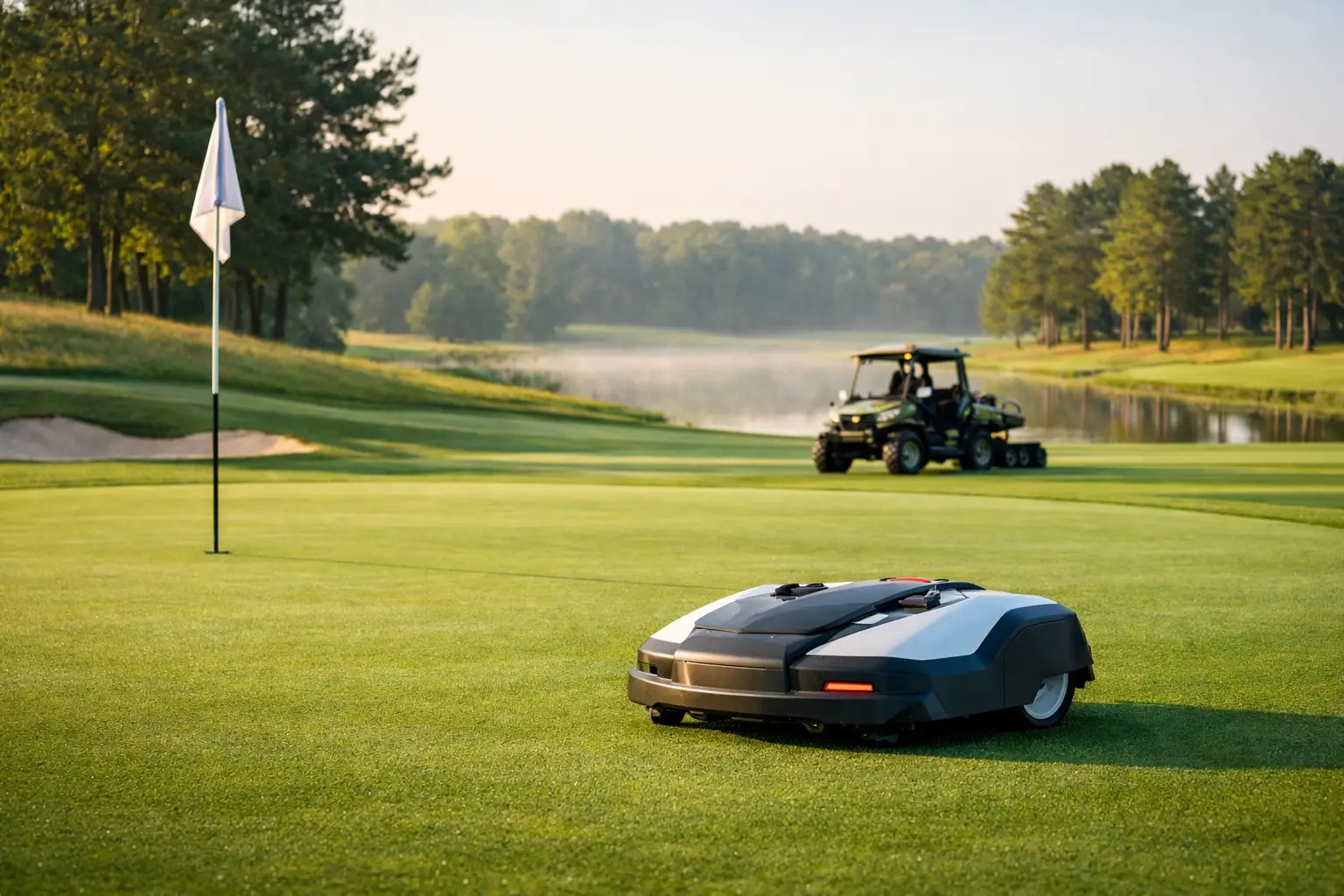
At 6am, the question is rarely whether the green needs cutting. The real question is whether you can deliver the same standard every day without stretching labour, delaying other tasks, or compromising surface quality. That is exactly why more course operators are asking how to maintain golf greens autonomously, not as a technology exercise, but as a practical operating model.
For professional golf environments, autonomy only works when it protects playing performance. Greens are not roughs or general amenity areas. They demand tighter tolerances, cleaner presentation, dependable frequency, and a maintenance plan that supports speed, density, plant health and consistency through changing weather and playing pressure. An autonomous approach has to fit those realities.
How to maintain golf greens autonomously in practice
The starting point is not the machine. It is the maintenance objective. If your target is a consistently presented green with predictable ball roll and reduced reliance on early-morning manual mowing, then autonomy needs to be built around repeatable cutting quality and disciplined scheduling.
That usually means treating autonomous mowing as part of a wider greens programme rather than a direct one-for-one replacement for every traditional pass. Frequency is where autonomous systems earn their value. A robotic greens mower can maintain a regular cut pattern and stable presentation window with far less dependence on staff availability. The result is often less visible variation between greens and fewer peaks and troughs caused by labour gaps, weather disruption or competing site priorities.
The trade-off is straightforward. Autonomy improves consistency best when the site is prepared for it. If green perimeters are poorly defined, access routes are awkward, or the surface is still managed with highly reactive decision-making, results will be mixed. Good autonomy depends on good process.
Start with a greens audit, not a product shortlist
Before any deployment, assess each green as an operating zone. Look at shape complexity, entry and exit points, surrounding hazards, edge definition, and the distance from charging or service locations. A simple, open green is easier to automate than one surrounded by bunkers, steep run-offs and heavy golfer traffic, but difficult greens can still be managed autonomously with the right planning.
This audit should also consider how the greens sit inside the wider maintenance schedule. If hand mowing, rolling, brushing, topdressing, spraying and hole changing are all happening on tight cycles, the autonomous mower needs a working window that does not create conflict. In practice, that means identifying when the machine can operate uninterrupted and when manual intervention will still be preferable.
For many clubs, a phased approach is the sensible route. Start with a group of greens that offer clear access and consistent demand, then expand once the team has confidence in route planning, cut quality and daily workflow.
Build the autonomous system around frequency and control
Autonomous greens maintenance is not just about replacing labour hours. It is about controlling output more precisely. Greens benefit from regular, light maintenance rather than irregular, heavier intervention, and robotics suits that model well.
Higher mowing frequency can help maintain a cleaner, more even presentation while reducing the visual impact of each individual pass. It can also make the working day easier to organise because staff are no longer tied up completing the same repetitive cutting route every morning. That labour can be redirected towards detail work, agronomy-led tasks, bunker preparation, irrigation checks and course setup.
Control matters as much as frequency. Cutting height, route logic, overlap, turning behaviour and timing all need to be set to the green rather than treated as generic defaults. The most effective autonomous setups are site-specific. They reflect green size, growth rate, play patterns and the standard expected by members or paying visitors.
That is why professional systems are different from consumer robotics. Golf greens require specialist capability, dependable navigation and a cut quality suitable for fine turf. The objective is not simply to keep grass short. It is to maintain a playing surface.
Set realistic autonomy boundaries
Not every task on a green should be automated. Mowing is the strongest entry point because it is repetitive, measurable and time-intensive. But greenkeeping decisions still need human oversight. Disease pressure, moisture stress, clipping yield, surface firmness and seasonal growth behaviour all require judgement.
The strongest model is usually assisted autonomy rather than total removal of staff input. The mower handles the repeatable cutting work. The greenkeeping team manages standards, responds to conditions and focuses on the higher-value tasks that machines do not replace.
Course setup matters more than many expect
One of the biggest reasons autonomous projects underperform is that the site has not been prepared to support them. The mower may be capable, but the operating environment introduces avoidable friction.
Edges need to be defined clearly enough for consistent navigation. Transfer routes should avoid unnecessary congestion and awkward crossings. Service access must be easy enough that cleaning, inspection and maintenance can be completed quickly. If golfers regularly meet the machine in the wrong place at the wrong time, scheduling needs adjusting.
This is also where expectations should be set internally. An autonomous mower is not a fit-and-forget machine. It reduces manual workload, but it still requires management discipline. Blades need checking, cut performance needs monitoring, and the site team needs clear responsibility for daily oversight. The difference is that the oversight is lighter and more predictable than the labour it replaces.
How to maintain golf greens autonomously without losing quality
The concern most course managers raise first is simple: will the surface still look and play right? That is the correct concern. Labour savings only matter if quality holds.
To protect standards, focus on three things from day one. First, judge performance by surface consistency over time rather than by a single mowing event. Autonomous mowing tends to show its strength across a full week of operation, especially where staffing can vary. Second, review quality green by green. Some surfaces may need adjusted schedules or revised route settings. Third, keep manual contingency available during establishment, tournament preparation, renovation periods or extreme growth flushes.
There will be periods when a conventional intervention still makes sense. After heavy topdressing, during recovery from stress, or ahead of a major competition, a course may want a different presentation approach for a short window. That does not weaken the case for autonomy. It simply reflects the reality that greens management is conditional.
Professional operators already work this way with other equipment decisions. Autonomy should be treated no differently. The goal is to improve the baseline standard and free skilled staff for better use of time, not to force automation into every situation regardless of suitability.
Labour reduction is only part of the value
The most visible commercial benefit is reduced pressure on labour. In the current market, that matters. Skilled greenkeeping staff are difficult to recruit and retain, and routine mowing can absorb hours that are hard to replace.
But there is a second gain that is often more valuable over time: predictability. When greens mowing becomes more consistent and less dependent on who is available at dawn, the entire maintenance day is easier to plan. Teams can organise around agronomic priorities instead of repeatedly firefighting the same operational bottleneck.
That is where a specialist supplier such as GrassRobotics fits the conversation. The value is not autonomy as a headline. It is autonomous precision applied to a professional turf environment with clear operational outcomes.
Measure success properly
If you are assessing whether autonomous greens maintenance is working, look beyond headline machine hours. The stronger indicators are consistency of finish, reduced manual mowing demand, smoother team allocation, and the ability to maintain standards through busy periods.
It is also worth tracking what happens to the rest of the course operation. If autonomous mowing frees experienced staff to improve presentation elsewhere, tighten setup standards, or give more time to proactive turf management, the return is broader than the greens alone.
There may be an adjustment period. Teams need to trust the system, refine schedules and learn where intervention is still required. That is normal. The right benchmark is not instant perfection. It is whether the operation becomes more controlled, more repeatable and less vulnerable to labour disruption after implementation.
Autonomy suits golf greens best when it is introduced with clear intent, realistic boundaries and professional expectations. Get those elements right, and the result is not just fewer manual mowing hours. It is a more resilient maintenance model, built around consistency where the player notices it most.