
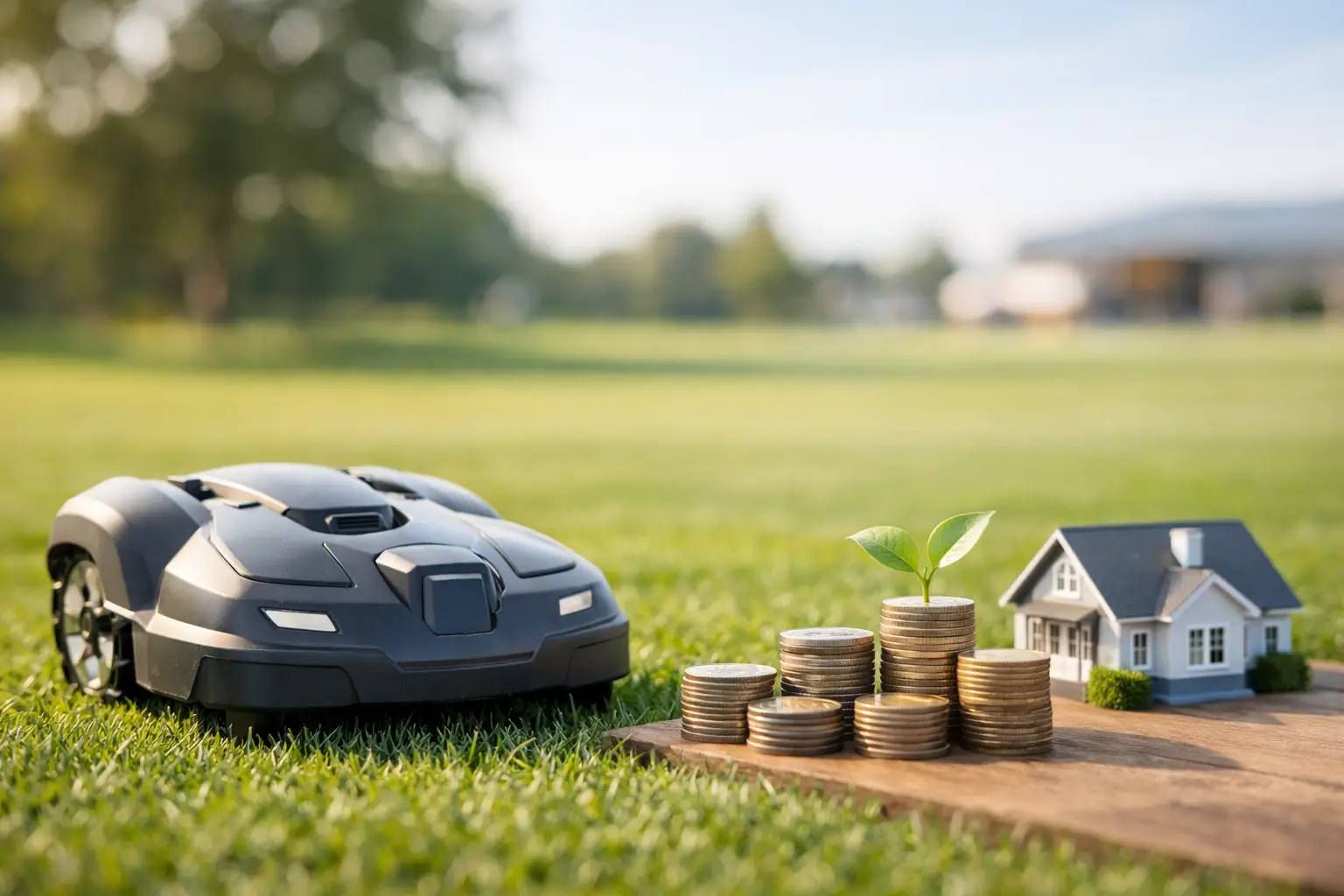
When a golf course loses an experienced operator or a sports venue is covering more acreage with the same team, the conversation changes quickly. Autonomous mowing return on investment is no longer a theory exercise. It becomes a practical question about labour resilience, mowing frequency, presentation standards and whether the equipment can deliver measurable value on real turf.
For professional sites, ROI is rarely just a purchase-price calculation. A robotic mower may reduce labour input, but that is only one part of the commercial case. The stronger argument usually comes from a combination of lower routine mowing hours, more consistent cutting output, reduced pressure on skilled staff and better use of labour across the rest of the maintenance programme.
What autonomous mowing return on investment actually means
In managed turf, return on investment should be judged against the full cost of maintaining a given area to the required standard. That includes operator time, fuel or energy, machine wear, scheduling inefficiency and the hidden cost of jobs that do not get done because staff are tied up mowing.
On a fairway, for example, a robotic system may not simply replace one machine with another. It can change the labour model. Repetitive cutting hours move to autonomous equipment, while trained staff focus on detail work, course set-up, irrigation checks, bunker presentation, disease monitoring or renovation planning. The financial gain sits partly in direct savings and partly in higher-value use of the team you already have.
That is why autonomous mowing return on investment often looks strongest on sites where labour is expensive, recruitment is difficult or mowing frequency is critical to surface quality. The more pressure there is on consistency and staffing, the more likely the numbers work in favour of autonomy.
The cost lines that matter most
Labour is usually the biggest variable. If a robotic mower removes a large share of routine cutting hours each week, the saving compounds across the season. This does not always mean headcount reduction. In many cases, it means avoiding overtime, reducing agency dependence or preventing standards from slipping when vacancies cannot be filled.
Energy and running costs matter too, but they should be kept in proportion. The difference between electric autonomous operation and conventional fuel use can be meaningful over time, particularly across larger fleets or long operating windows. Even so, on professional sites the labour effect tends to be more commercially significant than the fuel line alone.
Wear patterns also change. Traditional mowing fleets often rack up hours quickly on repetitive routes. Shifting selected areas to autonomous mowing can preserve manned equipment for tasks where operator judgement adds more value. That may extend replacement cycles and reduce service pressure, although it depends on how the overall fleet is managed.
Then there is turf performance. Consistent, frequent cutting can support presentation and playability, but the financial benefit varies by site. On a golf course, better consistency may contribute to member satisfaction and course reputation. On a school, stadium or training ground, it may support fixture readiness and a more reliable maintenance schedule. Not every benefit lands neatly in a spreadsheet, but serious operators know it still has value.
Where ROI tends to appear fastest
The quickest returns are usually found where mowing is repetitive, time-intensive and spread over significant acreage. Fairways, rough margins, sports outfields and defined large-area zones often make sense because they consume hours week after week.
Sites with persistent labour shortages are another strong fit. If the alternative is paying skilled staff to spend much of the week on repetitive cutting, the opportunity cost is high. Autonomous systems release those hours back into the maintenance plan.
ROI can also be strong where presentation standards leave little room for disruption. If sickness, holidays or recruitment gaps regularly affect mowing schedules, robotic support creates operational stability. That stability has a value of its own, especially on premium venues and high-usage sports sites.
The payback may be slower on smaller or more fragmented areas with complex access, frequent obstacle changes or highly irregular maintenance demands. In those cases, the business case depends more on site layout, deployment planning and choosing the right machine for the right surface.
How to calculate autonomous mowing return on investment
A credible ROI model starts with current mowing hours. Look at the actual weekly time spent cutting the target area during the main season, not an idealised estimate. Include preparation, travel between zones, refuelling or charging management, and any time lost to weather-related rescheduling.
Next, assign a real labour cost. That means wage cost plus on-costs, not just headline hourly pay. If contractors are used, apply the contract rate. If the site is short-staffed, account for overtime or the cost of pulling experienced people away from higher-skill work.
Then compare that against the expected autonomous operating model. Include machine acquisition, installation requirements, support, maintenance and energy use. It is better to be conservative here. Serious buyers should stress-test assumptions rather than chase optimistic payback claims.
After that, factor in indirect gains. These may include reduced dependency on temporary labour, lower pressure on existing ride-on fleets, more consistent mowing frequency and increased staff availability for priority agronomic tasks. Some operators leave these out to keep the case strict. Others include them because they reflect the actual operational benefit. Both approaches are valid, provided the assumptions are clear.
A simple calculation often starts with annual net savings divided by project cost. But on professional turf, the better question is not only how fast the machine pays back. It is whether the system improves labour resilience and maintenance output enough to justify the capital decision over several seasons.
Trade-offs that affect the numbers
Autonomy is not a universal shortcut. Site complexity matters. Areas with narrow pinch points, frequent temporary obstructions or changing access arrangements may require more planning and supervision than open, repeatable zones.
Cutting requirement matters as well. Greens, fairways, tee boxes and sports pitches each have different expectations around finish, pattern, clipping management and timing. The return depends on matching the machine to the task rather than assuming every area should be automated in the same way.
There is also a transition period. Teams need to adapt workflows, understand deployment boundaries and build confidence in the system. That adjustment is normal. It does not undermine ROI, but it should be recognised in implementation plans.
Weather, site usage and seasonal peaks can influence the result too. If a venue has highly variable demand or frequent event-driven changes, autonomy works best as part of a wider maintenance strategy rather than a one-for-one replacement mindset.
Why the labour argument is often the decisive one
Across UK turf management, recruitment remains one of the most stubborn operational problems. Skilled operators are hard to find and harder to keep. When mowing consumes a large share of available hours, the whole maintenance programme becomes vulnerable.
That is why many professional buyers justify autonomy less on pure equipment economics and more on workforce efficiency. If one autonomous unit protects standards across key areas while freeing staff for specialist work, the value reaches beyond the mowing line on the budget.
For head greenkeepers and sports turf managers, this is often the turning point in the conversation. The aim is not simply to replace labour. It is to use labour where human judgement has the highest return.
Making the business case internally
For committees, bursars, finance teams or senior management, the strongest proposal is specific. Show the current hours tied up in mowing, the areas suitable for autonomous operation and the likely effect on staffing flexibility and quality consistency.
Avoid generic claims about innovation. Decision-makers respond better to measurable outcomes such as reduced weekly mowing hours, more reliable coverage during staffing gaps and improved deployment of skilled team members. If the site has known pinch points, address them directly. A balanced case carries more weight than a sales-heavy one.
For operators assessing solutions from specialist providers such as GrassRobotics, the key is to evaluate fit by use case. The right autonomous system for fairways is not necessarily the right one for greens or marked sports surfaces. Return on investment improves when the equipment aligns with the exact standard, acreage and workflow of the site.
The real question behind ROI
Most professional venues are not asking whether autonomy is interesting. They are asking whether it improves output without compromising turf standards. That is the real commercial test.
If autonomous mowing reduces repetitive labour, protects consistency and gives your team more time for the work that actually lifts surface quality, the return is not difficult to justify. The smartest investment is usually the one that makes the whole maintenance operation more reliable next season, not just cheaper on paper.