
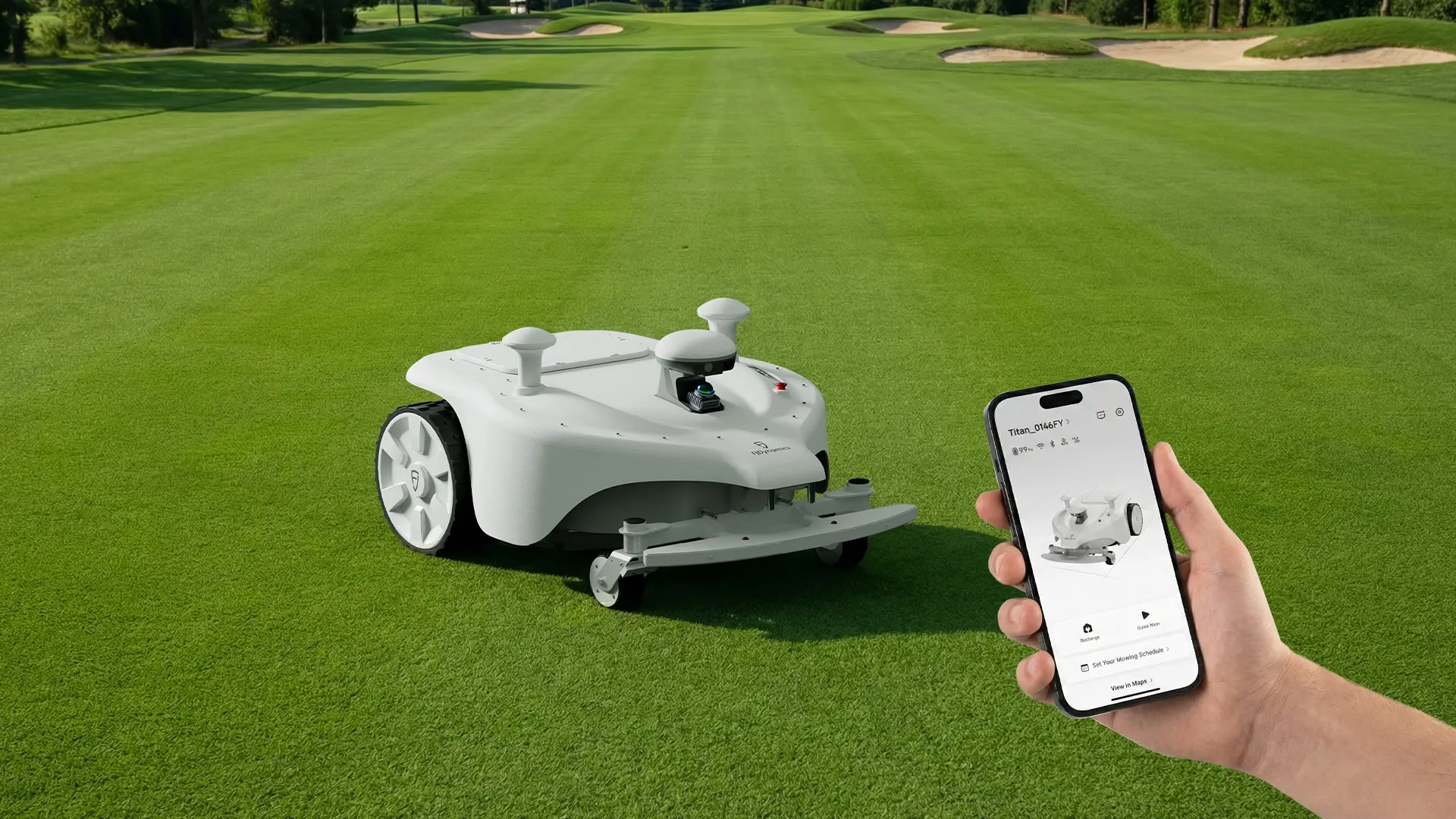
Golf-course mowing is a strong candidate for automation because much of the workload is repetitive, but a successful deployment is rarely about replacing every mower with one robot. The better approach is to divide the course into mowing roles, identify the areas where autonomous operation creates the most value, and then select the appropriate equipment for each surface.
This guide explains the planning process Grass Robotics uses when discussing FJ Dynamics robotic mowing with UK golf facilities.
1. Start with the course, not the mower
Map the areas currently being maintained and record the required finish, cutting frequency, approximate mowing hours, terrain and access between zones. Fairways, semi-rough, approaches, tees, greens and practice areas have different requirements, so they should not automatically be assigned to the same machine.
Also identify bunkers, water, paths, bridges, steep ground, narrow passages, public interfaces and other areas that affect autonomous travel. Our guide to mapping golf hazards for safer mowing covers this in more detail.
2. Identify the best first areas to automate
The first deployment should normally focus on a clearly defined area with a meaningful recurring mowing workload. The objective is to demonstrate a reliable workflow and establish how autonomous mowing fits alongside the greenkeeping team before expanding coverage.
Fairways and maintained rough can be strong candidates, but suitability depends on the individual course. Greens and other fine-turf areas require a different assessment because cutting system and presentation standards become more important.
3. Match the mower to the mowing role
The FJ Dynamics professional range allows a course to consider a mixed fleet rather than forcing one machine into every role. The RM21 is a versatile autonomous platform for professional mowing; the RCM01 provides autonomous cylinder mowing for areas such as fairways and approaches; the FRX is suited to more complex terrain; and the GM22S is aimed at professional fine turf.
Use our FJD robotic mower comparison to see how the current range fits different applications.
4. Plan navigation, charging and travel
Autonomous mowing needs more than a cutting area. A professional deployment should define working zones, exclusions, charging locations and safe routes between tasks. The most efficient charging location is not always obvious until the course layout and intended mower workload are considered together.
Where a course has fragmented mowing areas, the assessment should consider whether a central charging strategy remains efficient or whether the fleet configuration needs to change.
5. Build the business case from your existing operation
Use actual course figures rather than generic percentage-saving claims. Useful inputs include current mowing frequency, operator hours, fuel or electricity use, annual maintenance spend, machinery replacement plans and the capital cost of the existing fleet.
Then estimate which parts of that workload can realistically be transferred to autonomous equipment. Our autonomous mowing ROI guide provides a useful framework.
6. Decide what success will look like
Labour hours are only one measure. A course may also value more consistent cutting frequency, fewer missed mowing windows, better use of skilled greenkeeping time, reduced reliance on conventional machinery or greater resilience during peak growth.
Define those objectives before deployment so the results can be compared with the previous maintenance programme.
7. Expand only after the first workflow is proven
Once the initial mowing role is working reliably, review the next most suitable area. This phased approach makes it easier to refine mapping, charging, scheduling and staff procedures while building a fleet around proven requirements.
Can one robotic mower automate an entire golf course?
Usually the better question is which combination of mowing systems is appropriate for the course. Greens, fairways, approaches, tees and rough do not all require the same cut or machine characteristics. A mixed fleet can therefore be more appropriate than trying to use one mower everywhere.
Arrange a golf-course site assessment
Grass Robotics can assess the maintained areas, current mowing programme, terrain and operational constraints and then recommend an FJD mower or fleet configuration. See our golf-course robotic mowing solutions or arrange a demonstration and site discussion.