
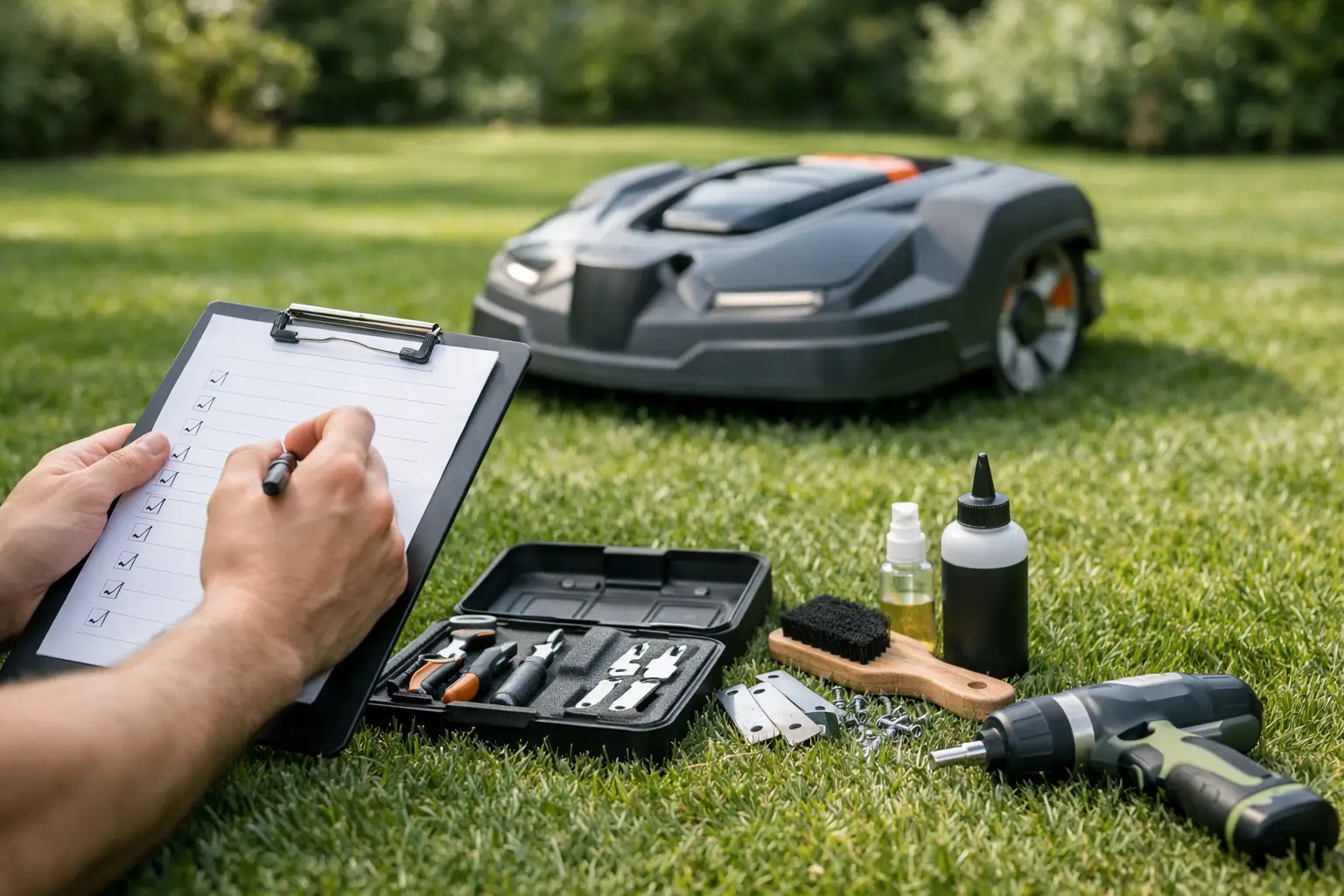
A robotic mower can complete thousands of productive cutting hours without adding pressure to the daily labour plan. But consistent autonomy depends on disciplined inspection, cleaning and adjustment. This robot mower maintenance checklist is designed for professional turf teams managing greens, fairways, sports pitches and large amenity areas where missed cuts, poor finish or unplanned downtime are not acceptable.
The objective is not to over-service equipment. It is to identify the few checks that preserve cut quality, protect key components and allow the mower to operate safely within its planned working window. Exact intervals will vary by machine, grass type, clipping volume and site conditions, so the manufacturer’s service schedule remains the final authority.
The daily robot mower maintenance checklist
Daily checks should be quick, repeatable and completed before the mower enters its work cycle. On high-value surfaces, the operator should inspect the result as well as the machine. A mower may report no fault while still delivering an inconsistent presentation standard.
Walk around the unit and check the cutting deck, wheels, bodywork and sensors for accumulated grass, soil, twigs or other debris. Wet clippings can compact beneath a deck and around moving assemblies, affecting airflow, discharge and cutting performance. Remove build-up using the approved cleaning method, taking care not to direct high-pressure water at bearings, electrical connectors, sensors or sealed housings unless the manufacturer specifically permits it.
Inspect blades or cylinder cutting units for damage, wear and secure fitting. A chipped blade, bent component or blunt cutting edge can tear leaf tissue rather than make a clean cut. The consequence is more than a poorer visual finish: stressed turf can lose colour, recover more slowly and become less resilient under play. On cylinder units, assess the quality of cut and listen for abnormal contact or running noise.
Check the wheels and drive system for wrapped grass, string, wire or debris. This is particularly relevant around pitch perimeters, landscaped edges and public-access sites. Restricted wheel movement can increase power demand, reduce traction and cause the mower to lose position on slopes or damp ground.
Before release, confirm that battery charge, charging connection and planned working area are operating as expected. Review alerts from the previous cycle rather than simply clearing them. Repeated low-charge returns, navigation interruptions or boundary warnings often indicate a developing issue with the installation, route plan or machine condition.
For a practical daily record, grounds teams should capture at least these points:
- Cutting unit condition and visible cut quality
- Grass and debris build-up beneath the mower and around wheels
- Battery status, charging performance and active alerts
- Sensor, bumper and safety-stop operation
- Damage caused by obstacles, vandalism or transport
A short operator log gives managers useful evidence when assessing recurring faults, replacement intervals and the true cost of maintaining each autonomous unit.
Weekly checks that protect cut quality
Weekly maintenance is where small observations become preventative action. Schedule it around the operating programme so the mower has sufficient time to cool, charge and be inspected without compromising the mowing plan.
Start with the cutting system. Clean the deck thoroughly, inspect blade carriers, fixings and guards, and replace components that are worn or damaged. Do not wait for every blade to appear visibly poor before changing a set. On presentation turf, a planned replacement interval is usually more reliable than reactive replacement. The right interval depends on operating hours, sand contamination, leaf litter and the surface being cut.
Check wheel condition, tyre tread and wheel-motor areas. Poor grip can affect stripe consistency, turning accuracy and slope performance. If the mower repeatedly struggles in one location, investigate the ground condition and route settings as well as the machine. Compaction, irrigation run-off and worn turning zones can create traction problems that no software setting will fully solve.
Wipe camera lenses, ultrasonic sensors, radar covers or other guidance hardware with suitable materials. Autonomous mowers make decisions from the information they receive. A dirty or obstructed sensor may not trigger an immediate failure, but it can lead to hesitant movement, missed areas or unnecessary stops.
Charging stations also require attention. Keep the approach route clear and inspect contact points for contamination, corrosion or damage. A mower that docks inconsistently may lose valuable cutting hours overnight, then compete with staff activity and play schedules the following day. Confirm that the station is level, stable and free from vegetation growth that could obstruct approach.
Monthly inspection: look beyond the mower
A monthly inspection should cover the wider autonomous mowing system, including its operating environment. This is particularly valuable across multi-unit fleets, where a consistent process allows managers to compare performance between machines and locations.
Review the mower’s operating hours, completed area, charging cycles, fault history and frequency of manual interventions. A rise in rescues or pauses may indicate a worn part, a deteriorating boundary, a changing site condition or a route that no longer suits the maintenance programme. The key is to identify trends before they become stoppages during a busy period.
Inspect cables, antennae, reference equipment, boundary installations and site markers where applicable. Groundworks can be disturbed by aeration, drainage repairs, vehicle movements, frost heave or construction activity. On sports sites, temporary infrastructure and event set-up can also alter the mower’s safe working environment. Update exclusion zones and work plans before the machine encounters those changes.
Check fasteners, covers, seals and protective guards for security. Look for water ingress, cracked housings and signs of impact. Professional robotic mowers operate in exposed conditions, often outside normal staffing hours, so a minor enclosure defect can become a more serious electrical or reliability issue if ignored.
Use this review to assess cut height and programme settings against the season. Growth rates, surface firmness, tournament preparation and fixture patterns all change. The mower’s value comes from repeatable work, but its programme should not be static when the turf-management requirement has moved on.
Seasonal maintenance for UK conditions
British weather places different demands on an autonomous fleet throughout the year. Spring brings rapid growth, softer ground and high clipping volumes. Summer may require altered cutting windows to manage drought stress, irrigation and intense site use. Autumn introduces leaves, moisture and reduced daylight, while winter demands a clear decision about whether the machine should operate, operate selectively or be stored.
At the start of the main growing season, fit fresh cutting components where required, inspect drive and cutting systems, test all safety functions and validate the mowing plan across the full site. This is also the right time to revisit labour allocation. A robotic fleet should remove routine mowing pressure so skilled staff can focus on renovation, detailing, irrigation, disease observation and playing-surface preparation.
During wet periods, avoid treating the mower as a solution to every missed mowing window. If ground conditions cannot support repeated turns without marking, reduce activity, alter routes or pause work. Autonomous operation is productive only when it protects the surface being maintained.
Before winter storage, clean the mower fully, inspect it for required repairs and follow the manufacturer’s battery-storage guidance precisely. Store equipment in a dry, secure environment and record outstanding parts or software actions. A planned winter service avoids the familiar spring problem of finding several machines unavailable just as growth accelerates.
Set clear ownership and service triggers
The strongest maintenance routines have named ownership. One person may complete daily visual checks, while a designated technician or service partner handles monthly inspections, software updates and repairs. What matters is that alerts do not sit unreviewed because everyone assumes somebody else has dealt with them.
Define escalation triggers in advance. Repeated docking failures, a sustained reduction in cutting output, abnormal noise, inconsistent cut quality, damaged safety components or unexplained route deviations should all move the machine from routine operation to inspection. Continuing to run a mower in the hope that a fault will clear can turn a modest repair into avoidable downtime.
A well-maintained robotic mower is not simply a machine that keeps moving. It is a reliable part of the turf-care programme, delivering clean, repeatable work while giving professional teams more time for the tasks that determine surface quality. Treat the checklist as an operational standard, and autonomy becomes far easier to scale across the site.