
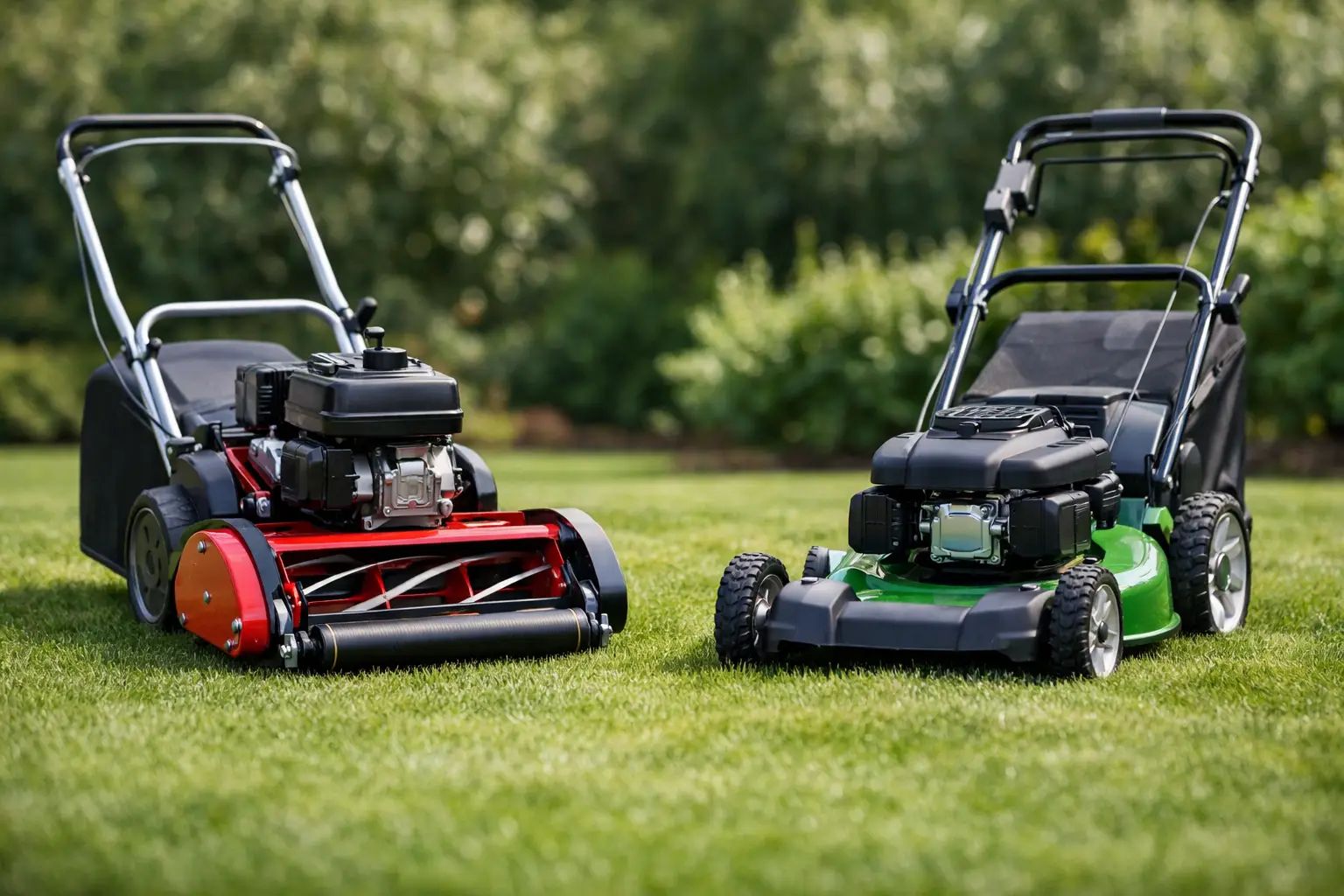
A cylinder mower versus rotary mower decision is not simply a choice between two cutting systems. It determines the finish your team can present, the heights of cut you can maintain confidently, the time needed to manage each area and the level of automation that can be introduced without compromising standards. For professional sites, the right answer usually changes across the estate.
Golf greens, tee boxes, fairways, stadium pitches, training grounds, amenity grass and rough all place different demands on the mowing fleet. A cylinder mower is built to produce a close, refined cut on managed turf. A rotary mower brings speed, resilience and broad coverage where surface conditions are less controlled. The most effective maintenance strategies recognise where each machine earns its place.
How the cutting systems differ
A cylinder mower cuts through a scissor action. A rotating reel of blades passes against a fixed bottom blade, known as the bedknife, shearing the leaf cleanly. When the reel, bottom blade and height-of-cut settings are correctly adjusted, the result is a precise finish with minimal tearing. That quality is why cylinder cutting remains central to greens, closely maintained tees and presentation sports surfaces.
A rotary mower uses one or more horizontal blades rotating at high speed beneath a deck. Rather than a scissor cut, it relies on impact to sever the grass leaf. Rotary cutting is highly capable on longer grass, mixed species and uneven or more contaminated ground. It is generally more tolerant of occasional debris and variations in turf density, but it cannot normally replicate the close, uniform finish of a correctly set cylinder.
The difference is visible at low mowing heights. A clean cylinder cut supports a consistent visual appearance and helps reduce leaf-tip bruising on intensively managed fine turf. A rotary mower may leave a less refined finish at very low heights, particularly when blades are dull, ground speed is too high or conditions are wet. That does not make rotary technology inferior. It makes it appropriate for a different operating requirement.
Cylinder mower versus rotary mower by surface
Greens and fine golf turf
For greens, a cylinder mower is the clear professional choice. It is designed to maintain the low heights of cut, consistency and presentation expected on putting surfaces. The quality of cut also matters for ball roll, surface uniformity and the health of fine turf under an intensive maintenance programme.
Autonomous cylinder mowing can extend this advantage. Regular, controlled cutting enables teams to maintain presentation standards while reducing repetitive manual mowing hours. It does not remove the need for skilled turf judgement. Moisture levels, clipping management, disease pressure, firmness and seasonal growth still require active oversight. It does, however, make frequent precision mowing more achievable when labour is constrained.
Tees, approaches and fairways
The decision is more dependent on the desired finish, terrain and operating model. Cylinder mowing is often preferred on tees and closely managed approaches where striping, definition and a premium cut are important. On fairways, both systems can be viable.
A cylinder mower can deliver an excellent fairway finish where surfaces are relatively smooth and the course places high value on presentation. A rotary mower may be the more productive option across large, undulating acreage, especially where the required height of cut is higher and the priority is consistent coverage at scale. Autonomous rotary mowing is particularly compelling where it can operate frequently over defined areas, maintaining a tidy, even surface without tying up an operator for long shifts.
Sports pitches and training areas
For elite sports pitches, cylinder mowing is normally specified for match presentation and closely managed playing surfaces. The clean cut and stripe definition contribute to the visual standard expected by clubs, schools and professional venues. A cylinder unit also suits regular mowing regimes where surface quality is closely monitored.
Rotary mowing is valuable for training areas, warm-up zones, surrounding amenity grass and larger secondary spaces. It can absorb more variable conditions while completing a high volume of work efficiently. On a multi-pitch site, this distinction allows grounds teams to reserve cylinder capability for priority surfaces and deploy rotary automation where coverage and labour efficiency matter most.
Rough, verges and general amenity areas
Rotary mowing is usually the practical choice for longer grass and lower-intensity turf. Its blade design and deck clearance make it better suited to areas where growth is more vigorous, ground is uneven or the finish does not need to meet sports or golf presentation standards. It is also more forgiving when mowing intervals are extended by weather, fixture pressure or staff availability.
Cylinder mowers are not intended to rescue neglected grass. Once growth becomes too long or lodged, the risk of poor clipping collection, scalping and reduced cutting quality increases. In these areas, rotary machinery provides the operational flexibility that professional teams need.
Cut quality is only one part of the cost
Cylinder systems require disciplined maintenance. Reel-to-bedknife contact must be set accurately, blades need regular sharpening and backlapping, and the cutting unit must be kept clean and correctly adjusted. Poor set-up can quickly turn a precision machine into a source of torn leaf tips, excessive power demand and inconsistent results.
That maintenance requirement should be viewed in context. On high-value turf, the cost of a poor finish can outweigh the cost of maintaining the correct cutting system. Greens and premium pitches are judged every day by members, players, visitors and clients. A cylinder mower supports the standard those surfaces demand, provided the team has the workshop process and technical capability to keep it performing properly.
Rotary mowers are generally simpler to maintain. Blade replacement or sharpening is more straightforward, and the cutting system is less sensitive to precise adjustment. However, rotary blades still need attention. A blunt or damaged blade tears grass, reduces finish quality and can put unnecessary stress on the machine. Lower maintenance complexity does not mean maintenance-free operation.
Fuel, power use and labour must also be assessed across the whole workflow. The correct question is not whether a cylinder or rotary mower is cheaper to own. It is which machine delivers the required result per hectare, per mowing cycle and per labour hour. A low purchase cost is of limited value if the machine cannot achieve the finish required or creates additional remedial work.
The role of autonomy in each system
Robotic mowing changes the comparison because it separates productivity from operator seat time. A conventional machine can only cut while a trained operator is available. An autonomous mower can maintain programmed areas repeatedly, at planned times and with consistent travel patterns, allowing skilled staff to focus on tasks that cannot be automated as easily.
For cylinder mowing, autonomy is most valuable on defined, high-standard surfaces where frequent cutting protects quality. Robotic cylinder equipment can support a consistent greens, tee or fine-turf programme without making the team choose between mowing and essential cultural work. The objective is not to replace the greenkeeper or grounds manager. It is to remove repetitive passes from the daily workload while keeping professional control over the programme.
For rotary mowing, the strongest case is often acreage. Large fairways, sports-field surrounds and amenity zones can consume substantial labour when cut conventionally. Autonomous rotary machines can maintain these areas at a steady frequency, avoiding the peaks and troughs that occur when mowing is delayed by staffing gaps, weather windows or competing site demands.
Autonomy does require proper planning. Site boundaries, slopes, access routes, obstacle management, charging arrangements, work schedules and safety procedures must be assessed before deployment. The technology performs best when it is specified around the site rather than treated as a direct like-for-like replacement for any existing mower.
Choosing the right mowing fleet
Most professional venues should not frame this as an either-or purchase. The strongest fleet strategy is often a layered one: cylinder cutting for surfaces where quality, low height and presentation are non-negotiable; rotary cutting for scale, resilience and less intensively managed turf; and autonomous machines assigned to the repetitive areas where they release the most labour.
Start with the mowing standard required for each zone, then assess terrain, grass species, height of cut, clipping expectations and available labour. A smooth championship green and a broad undulating fairway may sit within the same course boundary, but they are different mowing problems. The same principle applies to a stadium pitch and its outer training areas.
GrassRobotics works from this site-led approach, matching autonomous precision to the operational needs of professional golf and sports turf teams. The value lies in a system that protects turf standards while making productive use of every available working hour.
The best mower is the one that lets your team deliver the right surface, at the right frequency, without making skilled staff spend their day completing work that technology can manage consistently.