
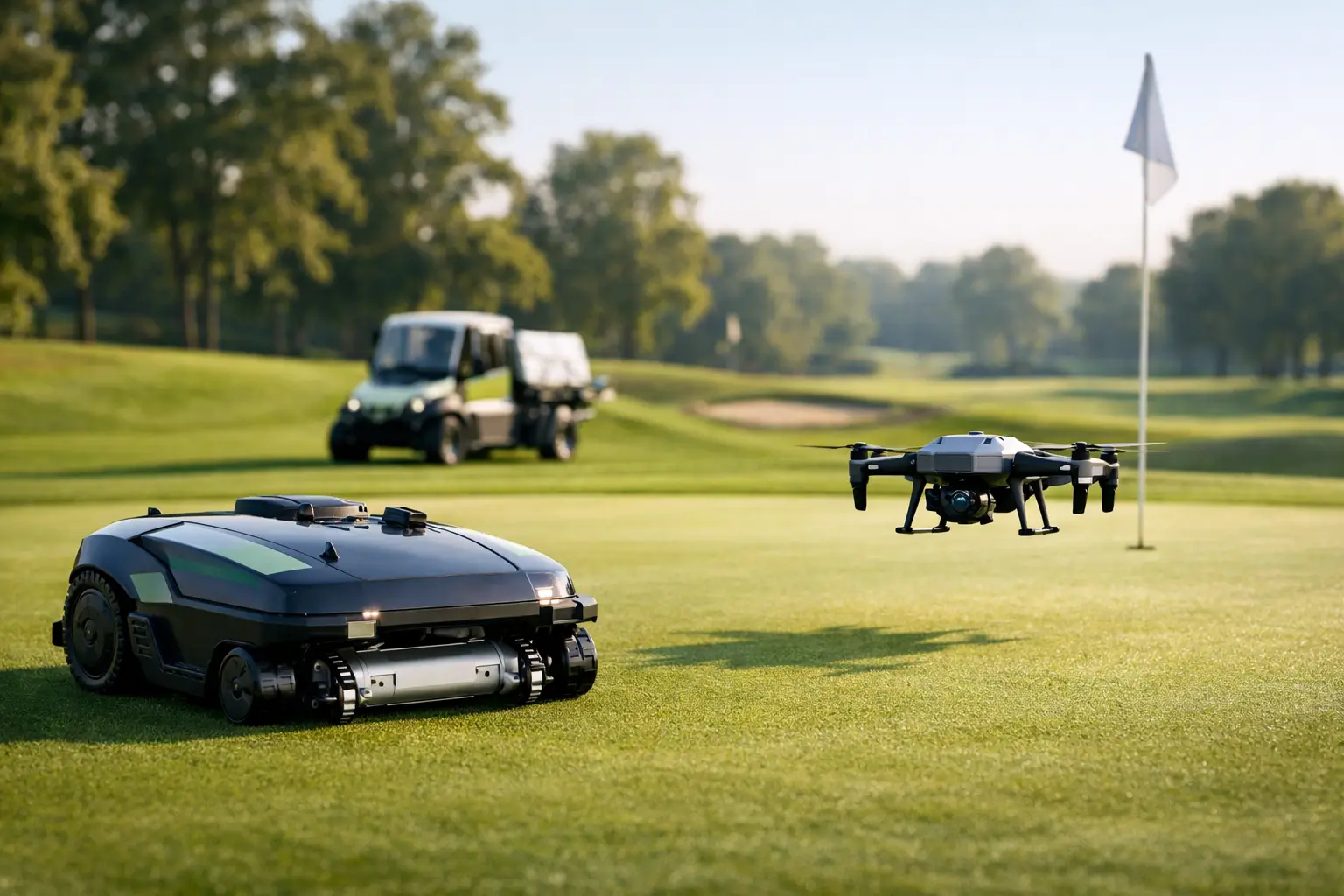
A green does not look after itself simply because a machine is working on it. Cutting quality, frequency, route planning, collection requirements and daily course operations still need to be controlled with the same discipline expected of a professional greens team. What autonomous greens maintenance systems change is the amount of productive work that can be completed without tying up skilled staff on repetitive mowing rounds.
For golf clubs facing labour pressure, rising operating costs and increasingly high member expectations, that is a material operational advantage. The right autonomous system supports a more consistent surface while giving the head greenkeeper and team more time for the work that cannot be automated: inspection, hand finishing, irrigation, disease prevention, bunker preparation and agronomy.
Why autonomous greens maintenance systems matter
Greens maintenance is governed by detail. A missed cut, uneven pattern or poorly timed operation can affect presentation and playability quickly, particularly during periods of strong growth or heavy traffic. Manual mowing remains highly effective, but it is dependent on available operators, fixed working windows and equipment being ready at exactly the right time.
Autonomous equipment introduces repeatability. Once a working area, cutting schedule and operating rules are established, the machine can carry out regular mowing with predictable frequency. That frequent, light cutting can help maintain an even visual finish and reduce the peaks and troughs that occur when mowing intervals are stretched by staffing shortages, weather disruption or competing course priorities.
The commercial case is equally clear. Labour is not simply removed from the operation – it is redeployed. A skilled greenkeeping team can spend less time completing routine passes and more time protecting turf health, preparing for events and responding to the conditions on the course. For many clubs, that is a more valuable use of experienced staff than adding further hours to a daily mowing rota.
Precision begins with the right application
Not every green, course layout or mowing requirement calls for the same machine or operating model. The most effective installation starts with an honest assessment of the surface, access routes, working hours and expected finish.
A robotic cylinder mower is suited to applications where close, precise cutting and presentation standards are the priority. It should be evaluated against the required height of cut, grass species, green contours and whether clippings need to be collected. Rotary autonomous mowing can be highly productive on wider turf areas, but greens demand a specification that reflects the finer tolerances of the surface.
Course managers should also distinguish between primary green mowing and supporting maintenance. In some operations, autonomous machinery may take on scheduled routine cutting while the team retains manual equipment for tournament preparation, dew removal, clean-up cuts or specific seasonal requirements. In others, it may become the core mowing method for selected greens. The correct balance depends on the club’s standards, staffing model and playing calendar.
Cutting frequency and turf response
One of the strongest operational benefits of autonomy is the ability to mow little and often. Regular removal of a small amount of leaf can produce a clean, uniform appearance without the disruption associated with taking off more growth in a single pass.
That does not mean more cutting is automatically better. Growth rates vary with temperature, moisture, nutrition and seasonal conditions. A schedule that works well in late spring may be excessive during slower winter growth. Machines need to be set within an agronomic plan, not left to follow a fixed calendar regardless of conditions.
The same principle applies to height of cut. Autonomous operation can maintain consistency, but it cannot compensate for an unsuitable mowing height or poor set-up. Reel condition, bedknife adjustment, battery capacity and traction all influence the final result. Professional results come from matching the machine, the programme and the surface.
Planning the system around play
A successful autonomous mowing programme must fit around golfers rather than forcing golfers to fit around the machinery. That requires clear operating zones, sensible working windows and a practical response to movement around the course.
Greens are compact, visible and frequently occupied. The system must be able to operate safely around players, staff and course furniture, while maintaining an orderly approach to edges, transitions and travel routes. Site mapping and boundary definition are therefore not administrative details. They determine whether the installation performs reliably day after day.
Charging and storage locations also deserve attention. They should be positioned to reduce unnecessary travel, protect equipment and allow straightforward access for routine checks. A poor location can waste operating time and introduce avoidable wear across high-value turf.
Before committing to a programme, assess the following operational factors:
- the number, size and shape of greens to be maintained;
- slopes, banks, bridges, narrow approaches and access constraints;
- player traffic patterns, competition schedules and early-morning presentation requirements;
- the site’s connectivity, charging infrastructure and secure storage arrangements; and
- how the machine will be cleaned, inspected and supported by the grounds team.
These considerations are not barriers to automation. They are the detail that turns a promising demonstration into a dependable long-term system.
Labour reduction without lowering standards
The value of autonomous turf care is often described as a labour saving. That is true, but it is incomplete. The more useful measure is labour resilience.
When staff availability is tight, routine mowing can consume a disproportionate share of the day. A missed shift or unexpected absence can quickly force the team into reactive work, with presentation tasks delayed until later. Autonomous mowing creates capacity that is less exposed to those daily pressures.
This can be particularly useful across multi-course venues, busy member clubs and facilities with large areas of maintained turf beyond the putting surfaces. By assigning repetitive work to autonomous equipment, operators can protect the skilled tasks that influence course condition most directly.
There is still a human role every day. Operators should inspect the machine, confirm cutting performance, keep the work area clear and review results on the turf. Automation reduces routine handling; it does not remove professional judgement. The best outcomes come when experienced greenkeepers remain in control of standards and use the equipment as part of a managed system.
Measuring performance beyond hours saved
A business case should not rest only on the number of operator hours released. Those hours matter, but the wider benefit is the consistency of the operation.
Track whether greens are receiving the intended number of cuts, whether morning presentation is more reliable and whether staff are able to complete higher-value tasks without interruption. Review the quality of cut at different points in the season, including periods of rapid growth, dry stress and high event demand.
It is also sensible to measure practical inputs: energy use, maintenance time, consumables, machine availability and the number of manual interventions required. A system that looks efficient on paper but needs frequent recovery or adjustment may not suit the site. Conversely, a well-mapped machine operating within its intended conditions can deliver a predictable return over multiple seasons.
GrassRobotics approaches this as a professional turf-management decision, not a consumer lawn-care purchase. Machine selection should follow the demands of the surface and the operational objective, whether that is close-cut greens, tees, fairways or wider sports turf.
Where autonomy has limits
Autonomous mowing is not a substitute for an agronomy programme. It will not correct compaction, drainage issues, disease pressure, poor irrigation or unsuitable grass composition. Nor will it eliminate the need for seasonal renovation, hand work and close observation of surface performance.
Certain days may still call for manual intervention. Major competitions, heavy debris after a storm, renovation periods or temporary site changes can require the autonomous schedule to be adjusted or paused. That flexibility should be treated as part of the operating plan, not as a failure of the technology.
The objective is not to automate every decision. It is to automate repeatable mowing work precisely enough that the team can focus on the decisions that protect playing quality.
A well-specified autonomous greens programme gives a club something increasingly valuable: dependable presentation without making daily standards dependent on an already stretched labour rota. Start with the surface, build the operating plan around play, and judge the system by the condition it helps the team achieve each morning.