
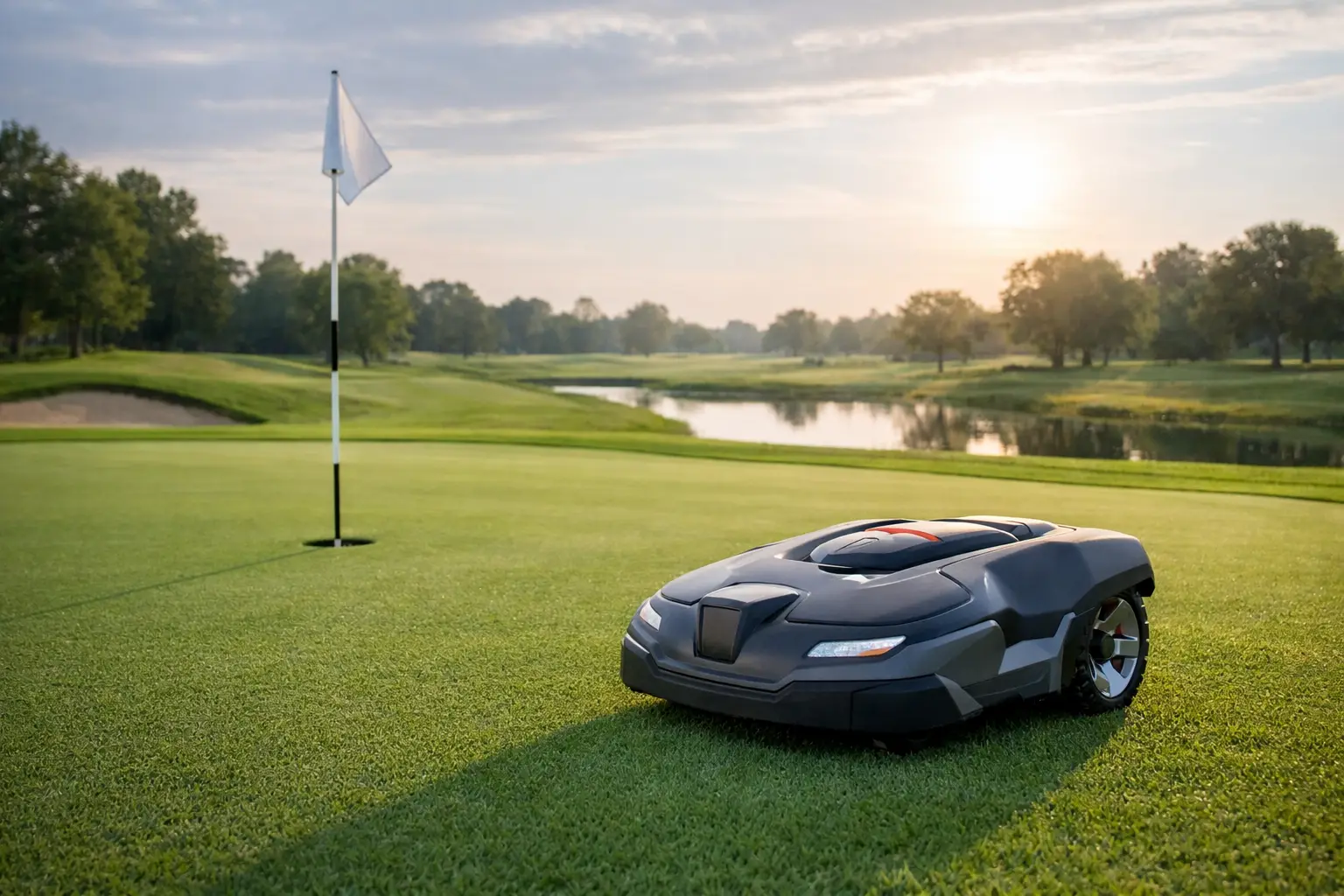
A greens mower is judged by the surface it leaves behind, not by how modern the machine looks. For course managers weighing investment against presentation standards, the question is straightforward: are autonomous mowers suitable for greens? The answer is yes, where the mower, operating plan and green design are properly matched. They are not a replacement for agronomy or attentive course management, but they can become a highly effective part of a disciplined greens-maintenance programme.
Autonomous mowing has moved well beyond broad-area grass cutting. Professional robotic cylinder mowers are designed to deliver frequent, controlled cutting on fine turf, helping teams maintain a clean, consistent presentation while reducing reliance on repetitive manual mowing. The strongest results come when robotics is introduced as an operational system, rather than simply placing a machine on a green and expecting it to replicate every task of a skilled greenkeeping team.
Are autonomous mowers suitable for greens in practice?
Greens demand a different standard from fairways, rough or amenity areas. The height of cut is low, visual finish matters, and every pass has the potential to affect playability. A suitable autonomous mower therefore needs accurate navigation, a quality cutting system and the ability to work repeatedly without creating visible patterns, scuffing turning points or compromising the green’s edges.
For many courses, autonomous mowing is particularly well suited to routine in-play cutting. Frequent operation allows the mower to remove a smaller amount of leaf material each time, supporting a neat finish without the pressure of completing all greens within a narrow early-morning window. This can be valuable during busy periods, when staff need to prioritise hole changes, moisture management, bunker work, machinery preparation and player-facing presentation.
The key distinction is between autonomous mowing and unattended greenkeeping. The mower can take responsibility for repeatable cutting, but the greenkeeping team retains control of setup, inspection, clipping strategy, rolling, nutrition, disease monitoring and all the decisions that define surface performance.
What determines whether a green is a good candidate?
The best candidates are greens with clearly defined boundaries, reliable access and enough usable space for the machine to operate without excessive manoeuvring. A modern green with clean approaches, well-managed collars and predictable routes can be an excellent environment for robotic mowing. Older greens with severe slopes, tight pinch points, irregular surrounds or numerous obstacles may still be suitable, but they need more careful site assessment and configuration.
Slope is one of the first factors to evaluate. A mower must maintain traction and stable cutting across the full green, including banks, entrances and transition areas. The issue is not simply whether it can climb an incline. It is whether it can work there repeatedly without marking the turf, losing cut consistency or creating wear in the same travel lines.
Surface firmness also affects performance. Wet or soft conditions require sensible operating rules, just as they do with conventional equipment. Autonomous machines reduce the need for a member of staff to be on the machine, but they do not remove the need to protect vulnerable turf. A well-planned programme should include weather-related controls and allow the team to pause mowing when saturated ground, frost, disease risk or course activity makes it the wrong choice.
Access deserves equal attention. If a mower must cross busy pathways, narrow bridges or poorly defined links between greens, the operational benefit can be reduced. Some sites gain the most value by assigning robotic equipment to selected greens, practice areas or tee complexes first, then expanding coverage once routes and routines are proven.
Cutting quality is the non-negotiable factor
For greens, frequency and cut quality matter more than headline mowing capacity. A professional autonomous cylinder mower can support the tight, even presentation expected on golf surfaces, provided the cutting unit is correctly specified, maintained and set to the intended height of cut.
Frequent mowing is a major advantage. Instead of relying on one daily pass completed under time pressure, an autonomous mower can work to a planned schedule and take off minimal growth at each visit. That approach can help maintain a uniform appearance and reduce the visual disruption associated with removing more leaf material in a single cut.
However, no mower can compensate for a poorly maintained cutting unit. Bottom blade adjustment, cylinder sharpness, bedknife condition and height-of-cut calibration remain fundamental. If the cut is not clean, automation simply repeats the problem more efficiently. Teams should inspect quality routinely, check for bruising or uncut leaf tips, and include the robotic fleet in the same maintenance discipline applied to all greens equipment.
Clippings must also be considered. Whether the preferred strategy is collection, mulching or a combination of operating patterns will depend on growth rate, presentation requirements and the mower’s specification. During strong growing conditions, the mowing plan may need adjustment to prevent excess residue affecting surface appearance or ball roll.
Where autonomous mowing changes the working day
The commercial case for greens automation is rarely based on removing one task in isolation. Its real value is in giving skilled people more time for the work that cannot be standardised. A head greenkeeper does not need more hours spent travelling from green to green on a routine pass. They need capacity for assessment, refinement and response.
By allocating regular mowing to autonomous equipment, teams can reduce the labour pressure associated with early starts, weekend coverage and staff shortages. This is especially relevant where experienced operators are difficult to recruit or retain. The result is not necessarily a smaller team. Often, it is a team used more effectively.
There is also a consistency benefit. A programmed machine does not lose concentration late in a long shift or alter its routine from one day to the next. It can mow within defined operating windows, including periods when the course is quieter, while staff focus on setup and high-value finishing tasks. That repeatability supports clearer planning across the maintenance operation.
For multi-course venues, resorts and clubs with extensive practice facilities, scalability can be significant. A phased deployment can demonstrate results on selected surfaces before the operating model is applied across more of the estate.
The limitations to plan for
Autonomous equipment is not suitable for every task on every day. Competition preparation, heavy dew, aggressive growth, leaf fall, renovation work and unusual course conditions may call for conventional mowing, hand work or a different finish strategy. The strongest operations treat robotics as a capable part of the fleet, not as an all-purpose substitute for it.
Human oversight remains essential. Greens staff must review the surface, confirm the mower is performing correctly, keep operating areas clear and respond to changing conditions. Mapping, boundary definition and charging or docking arrangements need to be planned properly from the start. Poor setup can create avoidable interruptions; professional implementation turns autonomy into a dependable routine.
It is also worth considering player experience. Machines should operate in a way that respects tee-time patterns, greenkeeper access and the course’s standards of presentation. Clear operating windows and sensible routing prevent technology from becoming a distraction rather than an asset.
Choosing the right autonomous greens-mowing approach
A productive assessment begins with the greens themselves: their size, shape, gradient, surrounding hazards, access routes and usual traffic. It should then consider the required height of cut, desired mowing frequency, clipping management and the tasks that staff would undertake with the released time.
This is why professional, purpose-built equipment matters. Consumer robotic mowers may maintain domestic lawns, but greens require precision cutting, dependable navigation and an operating model built around professional turf standards. Equipment selection should be based on surface quality and site suitability first, then on productivity and budget.
GrassRobotics works with professional turf teams that want to apply autonomy where it delivers measurable operational value: consistent mowing, reduced dependence on routine labour and more time for skilled turf management.
The right question is not whether a robot can physically mow a green. It is whether it can support the standard your members, visitors and players expect while making the maintenance operation more resilient. Where the answer is backed by a proper site assessment and a clear programme, autonomous mowing can give greens teams something increasingly valuable: more control over their time, without surrendering control of the surface.