Category: Uncategorized

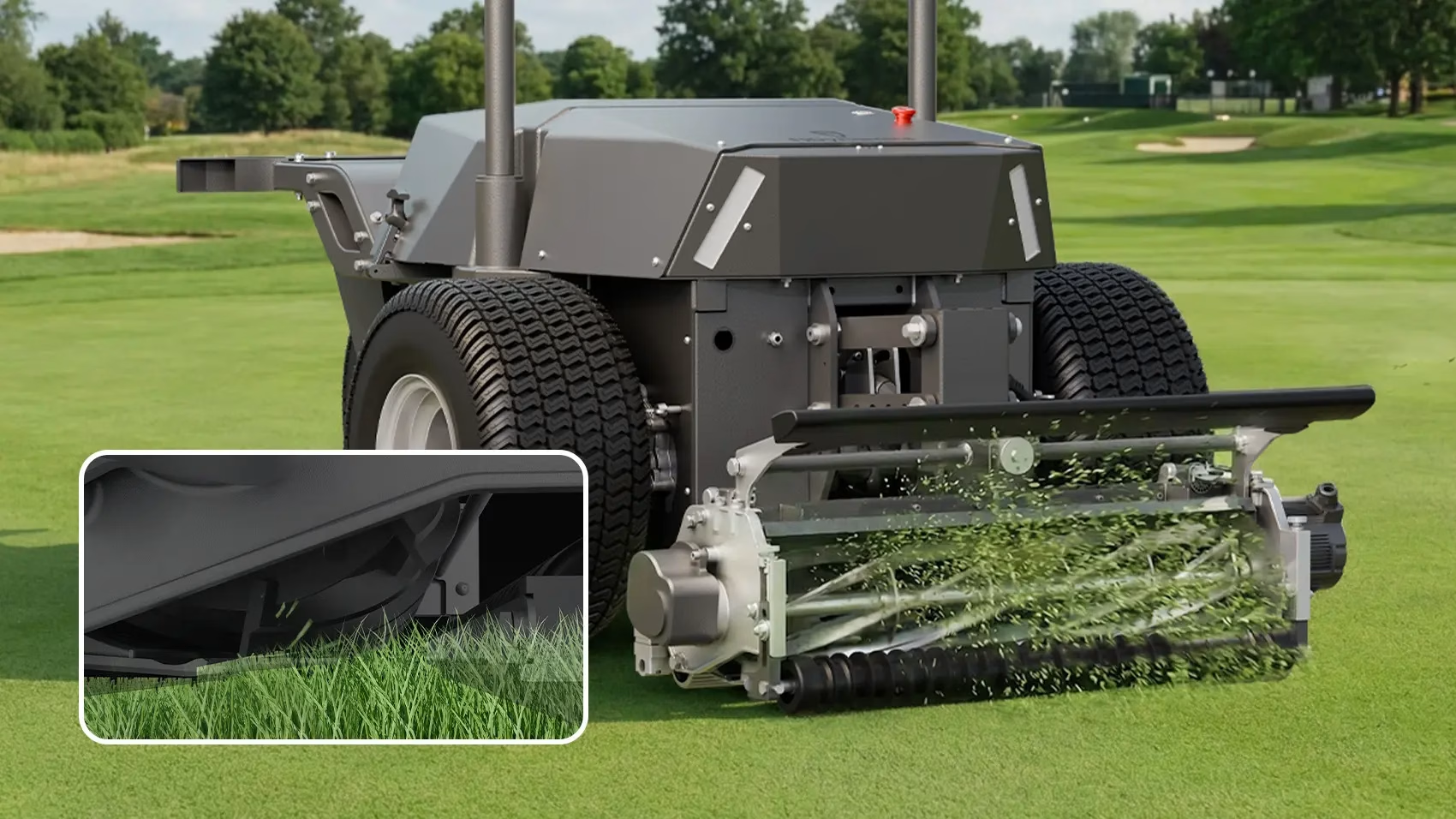
  • RM21 robotic mower review for pro turf

    RM21 robotic mower review for pro turf

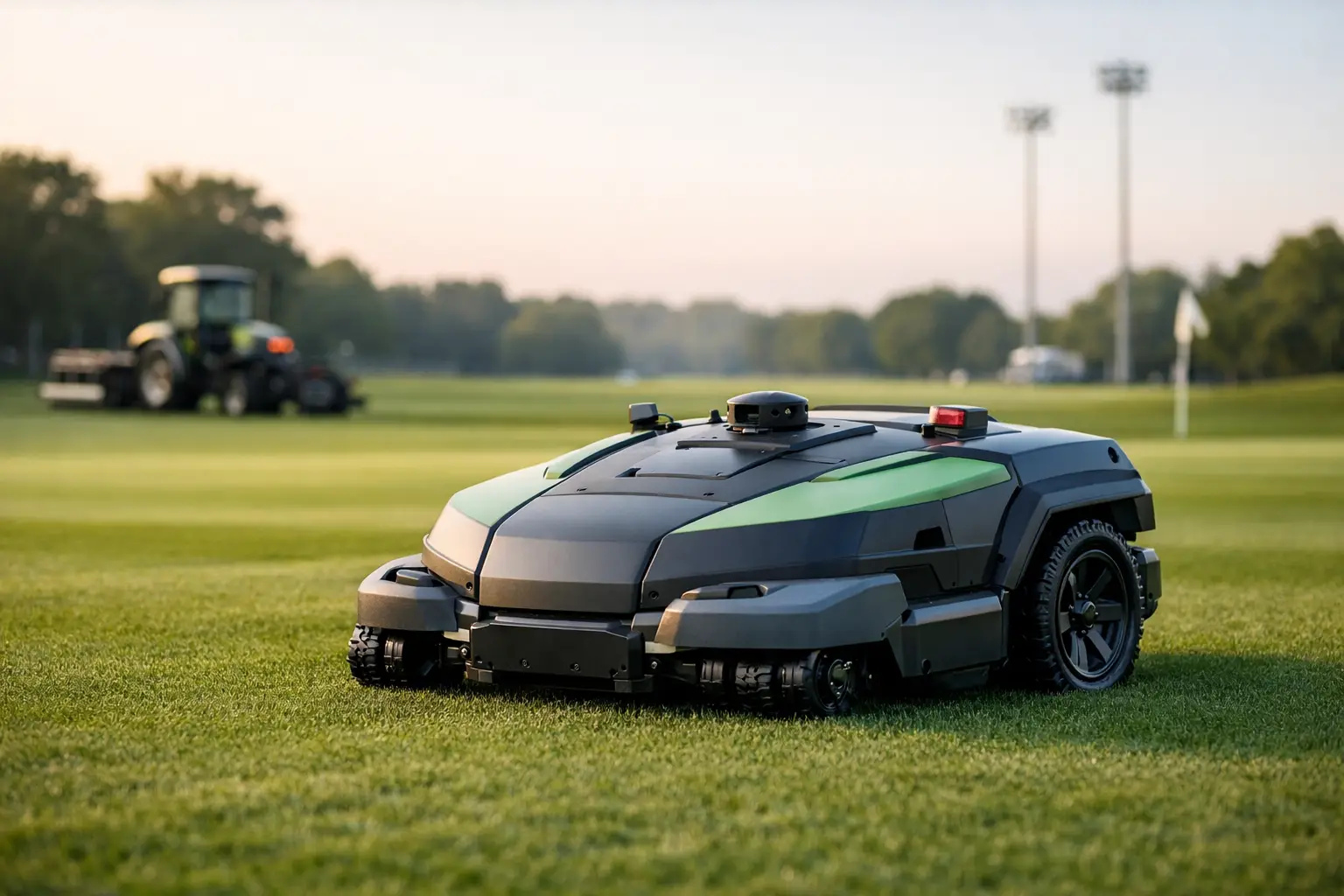
    If you are assessing autonomous mowing for a golf course, sports venue or managed estate, an rm21 robotic mower review needs to answer one question first – does it perform like professional kit, or does it behave like a scaled-up domestic machine? That distinction matters. In professional turf management, labour pressure, presentation standards and daily reliability all sit on the same line.

    The RM21 is better understood as a productivity tool for serious turf operations than a gadget with blades. Its value is not simply that it cuts grass without an operator on board. The real case for it is consistent output, repeatable presentation and reduced dependence on hard-to-source labour across areas where mowing frequency drives surface quality.

    RM21 robotic mower review: where it fits best

    The RM21 makes the strongest case on sites that need regular, disciplined mowing over large managed areas, particularly where the standard of finish must remain high through variable staffing levels. Golf environments are an obvious fit, especially fairways, semi-rough interfaces, approaches and other areas where consistency matters but labour time is often stretched. Sports grounds and institutional estates can also benefit where there is a need to maintain presentation over broad acreage without committing operator hours every day.

    That said, site fit is everything. A robotic mower can be excellent on the right terrain and operational plan, then become underwhelming if it is expected to solve every mowing problem on a complex site. Steep transitions, fragmented zones, intensive event schedules and frequent temporary obstructions all affect the business case. The RM21 is most compelling where autonomous mowing can be integrated into a planned maintenance system rather than treated as a one-machine answer to all turf work.

    Cutting quality and turf presentation

    For professional buyers, the finish comes before the novelty. If the machine cannot hold visual standards, no labour saving will justify it. The RM21’s advantage is not dramatic single-pass impact in the way a large ride-on can sometimes appear after a heavy cut. Its strength is sustained, frequent mowing that keeps the sward in control and reduces the peaks and troughs that come with less frequent manual schedules.

    On fairways and other presentation-led areas, this approach can improve uniformity. Regular cutting supports a cleaner visual result, tighter canopy control and a more predictable playing surface. Where teams are fighting weather windows or staff shortages, that consistency becomes commercially significant.

    There is a trade-off, however. Autonomous mowing performs best when grass growth is managed proactively. If the site repeatedly allows areas to get away, any robotic platform will be less efficient than a conventional machine brought in for recovery work. The RM21 suits programmes built around maintaining standard, not rescuing neglected growth.

    Labour saving is the main commercial argument

    Most professional interest in robotic mowing starts with labour, and rightly so. Recruitment remains difficult in many parts of the UK turf sector. Even where teams are stable, skilled staff are often tied up on routine mowing when they could be deployed on irrigation, surface preparation, renovation planning, bunker work or line marking.

    This is where the RM21 can make a measurable difference. By taking repetitive mowing hours out of the schedule, it allows labour to be reassigned to higher-value tasks. That does not mean the machine eliminates staffing needs. It means it changes where skilled people spend their time.

    That distinction is important in any fair review. If you expect the RM21 to remove the need for operational oversight, transport, edge finishing or wider turf management input, expectations will be misaligned. If you view it as a force multiplier for a professional team, the proposition is much stronger.

    Reliability, autonomy and day-to-day use

    Any review of a professional robotic mower has to look beyond brochure language and focus on daily practicality. Autonomy only has value if the machine can operate predictably within a real working site. Golf courses and sports facilities are not controlled laboratory environments. They involve public interfaces, maintenance traffic, changing conditions, seasonal growth shifts and narrow operating windows.

    The RM21’s appeal lies in bringing autonomous precision into that setting in a structured way. For operators, the benefit is not only unmanned cutting but repeatable scheduling and controlled route behaviour. A machine that starts when planned, cuts where intended and returns reliably creates confidence. That confidence is what allows teams to plan around it.

    The quality of deployment matters here. Successful robotic mowing is not just about choosing a capable machine. It depends on correct site assessment, suitable zoning and a realistic view of traffic patterns, access points and working priorities. On a well-mapped site, autonomy supports operational discipline. On a poorly planned site, even good hardware can look ordinary.

    RM21 robotic mower review: strengths and limits

    The RM21’s strongest qualities are consistency, labour reduction and suitability for professional environments that require frequent mowing over defined areas. It aligns well with facilities that want predictable turf presentation and a more resilient maintenance model. It is especially relevant where management teams are under pressure to do more with the same headcount.

    Its limits are the same limits that apply to any serious robotic mowing platform. It is not a universal substitute for all ride-on or pedestrian mowing equipment. Specialist areas, detailed perimeter work, highly ornamental sections and recovery cutting still need the right supporting machinery and people. In other words, the RM21 works best as part of a system.

    That should not be read as a weakness. In professional turf care, very few machines do everything well. Buyers usually get the best return when equipment is chosen for a clear role. The RM21 has a clear role, and that is one of its strengths.

    What professional buyers should assess before purchase

    The right question is not simply whether the RM21 is a good machine. It is whether your site can convert its capabilities into measurable gain. Start with mowing frequency. If your standards depend on regular cutting and your team is stretched, the case becomes easier. Then look at acreage, layout and how often skilled staff are currently assigned to repetitive mowing.

    You should also assess the value of consistency. On golf sites, that may be visual quality and ball presentation across fairways or approaches. On sports sites, it may be the ability to hold surface standards during busy periods without expanding labour hours. For contractors, the value may sit in scaling output across multiple managed properties without adding the same proportion of staff.

    The final part is operational readiness. Autonomous equipment rewards disciplined implementation. If the site is willing to define zones properly, manage workflows around the machine and treat robotics as a core maintenance asset, the upside is stronger. If the plan is vague, the return will be harder to prove.

    Is the RM21 worth it?

    For the right professional setting, yes. The RM21 is not trying to imitate consumer robotics at a larger size. Its relevance comes from professional application: controlled autonomous mowing, steady turf presentation and meaningful labour efficiency in environments where standards are non-negotiable.

    That does not mean it will suit every venue equally. Smaller sites with low mowing pressure may struggle to justify the investment in the same way as a busy golf facility or large sports complex. Equally, sites with highly fragmented terrain may need a mixed fleet strategy rather than relying too heavily on one autonomous machine.

    What stands out in this rm21 robotic mower review is that the value proposition is operational, not cosmetic. If your objective is to modernise turf maintenance, protect standards and reduce reliance on routine operator hours, the RM21 deserves serious consideration. For professional teams looking at the next stage of productive, precision-led mowing, that is usually the point that matters most.

    The most useful way to judge any robotic mower is to ask how it improves the working week, not just the machine list. If it gives your team more time for the jobs that really move surface quality forward, it is doing exactly what professional automation should do.
  • Best Mowers for Tee Complexes

    Best Mowers for Tee Complexes

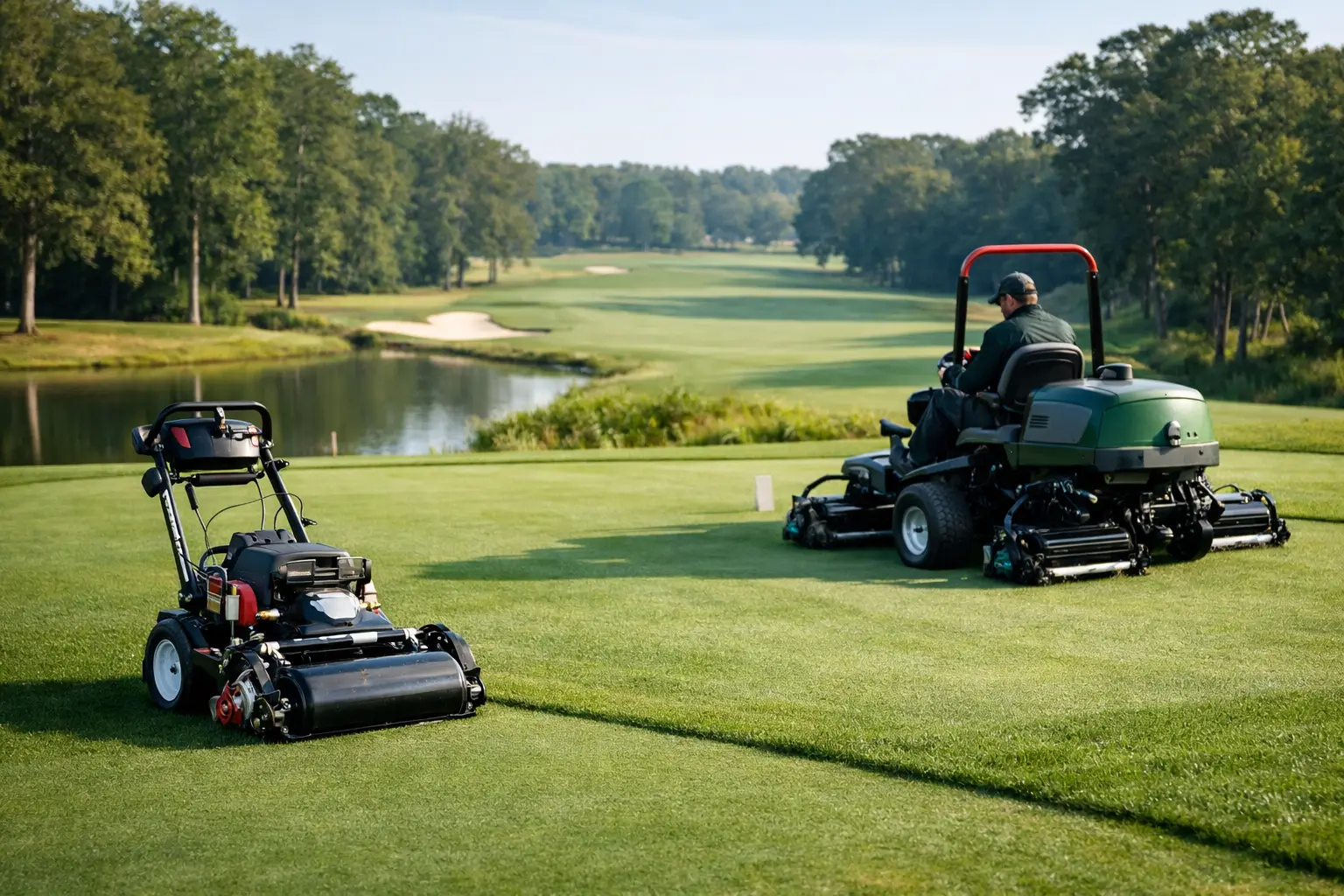
    Tee complexes expose every weakness in a mowing setup. Tight perimeters, walk-on wear, small approach areas, shifting presentation lines and high player visibility all combine to make them one of the most demanding parts of a golf course to maintain. That is why choosing the best mowers for tee complexes is less about headline machine size and more about precision, consistency and how well the mower fits the wider maintenance operation.

    For most courses, the right answer is not simply the smallest machine or the cheapest route into automation. Tee surfaces sit in an awkward middle ground. They need a consistently refined finish, but they also need practical throughput across multiple tees, variable layouts and often constrained labour windows. A mower that looks efficient on paper can become a poor fit if it struggles around markers, bunker edges, walk-offs or narrow linking routes.

    What the best mowers for tee complexes need to do

    A tee complex mower has to deliver a high visual standard without creating extra handling, trimming or repair work elsewhere in the day. Cut quality matters, but so does repeatability. If the finish fluctuates between tees, or if the machine regularly misses edges and leaves too much hand work, the labour saving disappears quickly.

    Precision is the starting point. Tee areas are compact, visible and often framed by sharp landscaping features. Any inconsistency in tracking, overlap or boundary control stands out. That is particularly true on courses where tee boxes form part of the overall presentation standard expected by members, visitors and societies.

    Productivity comes next. A mower may produce an excellent finish on a single tee, but if it requires frequent transport, supervision or setup changes across the full tee estate, it can still be the wrong choice. The best machines reduce operator dependency while maintaining a dependable result across repeated cycles.

    Then there is turf response. Tee boxes take concentrated traffic, especially on par threes and heavily used medal routes. Mowing equipment needs to support surface quality rather than add stress through excess weight, poor turning behaviour or inconsistent clipping management. Low-impact operation and controlled movement are not optional extras here.

    Cylinder, rotary or robotic – what suits tee work?

    The usual discussion starts with cutting system, but that only tells part of the story. Cylinder mowing still sets the benchmark for the most refined finish on fine turf. On many tee complexes, that remains the standard against which other options are judged. If visual striping, tight presentation and a traditional tournament-style appearance are top priorities, a cylinder unit remains highly relevant.

    That said, tee maintenance is no longer a simple cylinder-versus-rotary decision. Robotic mowing has changed the equation because it improves consistency through frequency. Instead of relying on a single pass at a fixed interval, autonomous machines can maintain the surface more continuously, holding presentation standards with less labour input. On the right site, that can produce a cleaner and more stable result than intermittent manual mowing.

    Rotary systems still have a place, particularly where the brief is broader than pure presentation and where operators need flexibility across mixed-condition teeing grounds. They tend to be more forgiving in variable growth and less exacting in setup, but that trade-off is visible in the finish. For premium tee complexes, rotary is rarely the first choice unless the course is balancing budget pressures, secondary tee quality and labour limitations.

    The more useful question is not which technology is universally best, but which one matches the course standard, site layout and staffing reality.

    When robotic mowing is the better option

    For many facilities, the best mowers for tee complexes are now robotic because the operational gain is wider than mowing alone. Labour remains difficult to source and retain across the UK turf sector. Tee boxes are also a repetitive maintenance task that rewards consistency rather than constant operator judgement. That makes them well suited to autonomy.

    A properly specified robotic mower can maintain a regular cut cycle, reduce reliance on early-morning manual passes and free skilled staff for work that genuinely needs their attention. Instead of spending labour hours transporting, unloading and mowing each tee in sequence, teams can redeploy time into setup detail, irrigation checks, renovation work and presentation tasks that move the standard of the course forward.

    The productivity case is strong, but only if the machine is suited to the site. Tee complexes vary widely. Some are open and accessible. Others are broken into small, awkward platforms with narrow connections and steep transitions. Robotic performance depends heavily on navigation accuracy, boundary reliability and the ability to handle professional turf conditions rather than domestic-style mowing environments.

    This is where specialist equipment matters. Professional autonomous units built for managed turf can offer far more than labour reduction. They can support consistent clipping control, disciplined routeing and a predictable standard across repeat visits. For golf operators looking at long-term efficiency rather than a short-term gadget purchase, that is the real shift.

    Key factors that separate average from professional performance

    The first factor is surface finish. Tee complexes are part of the course presentation story, so mowing quality cannot be treated as secondary. A machine should leave a uniform appearance across multiple tees, not just a passable cut on easy ground.

    The second is manoeuvrability. Many tee boxes are small enough that inefficient turning or weak edge control creates visible defects. Machines need to work close to margins, cope with shape changes and avoid scuffing in areas that already take concentrated foot traffic.

    The third is transport and deployment. A mower may perform well once in position, but if moving it between tee complexes is slow or awkward, daily efficiency suffers. This is one reason autonomous systems can outperform conventional setups over time – not because each individual cut is faster, but because the overall workflow is leaner.

    The fourth is reliability in mixed conditions. Dew, uneven growth, worn entries, shaded surrounds and transitional weather all affect tee performance. Equipment that needs ideal conditions to achieve an acceptable finish can create more operational pressure than it removes.

    Finally, there is integration with the wider maintenance plan. Tee mowing should not be selected in isolation. It has to fit around greens, collars, approaches and fairway operations. The best result often comes from matching one mowing system to another in a way that supports the whole site rather than optimising a single area at the expense of everything else.

    Choosing the best mowers for tee complexes by course type

    On a high-end private or tournament-focused course, surface quality will usually take priority. In those environments, a professional cylinder solution or a dedicated robotic cylinder mower can make the most sense, especially where the expectation is a close, highly consistent finish with strong visual presentation.

    On a busy members’ course, the calculation can be different. Labour efficiency and dependable repeatability may be just as important as cosmetic perfection. If the tee estate is large and staffing is under pressure, a robotic solution that maintains standards daily can be more valuable than a traditional machine that produces a marginally finer finish but depends on regular operator time.

    For municipal or pay-and-play facilities, value often sits in balancing presentation with cost control. A machine that cuts reliably, reduces labour hours and limits operator intervention can be the strongest commercial decision, even if the brief is not elite tournament presentation.

    For multi-site contractors, standardisation matters. Equipment that is easy to deploy, predictable to manage and scalable across different client sites has a clear advantage. In those situations, robotic mowing can support consistency across contracts while reducing exposure to labour availability.

    What buyers often get wrong

    One common mistake is judging a mower only by width or speed. Tee complexes are not broad-acre fairway work. Accuracy, control and repeatability are usually more valuable than headline output figures.

    Another is underestimating setup complexity. If a machine requires too much intervention to cope with boundaries, routeing or small-area variation, the promised efficiency can shrink quickly. Professional buyers should assess the full operating model, not just the mower itself.

    There is also a tendency to separate mowing quality from labour planning. In practice, they are linked. A machine that allows more frequent, autonomous cutting can improve presentation simply because standards are maintained more consistently. That is one reason specialist providers such as GrassRobotics are focusing on autonomous precision as a practical operational upgrade rather than a novelty.

    The strongest choice is the one that fits your operation

    There is no universal winner for every tee estate. The best mower for one course may be the wrong machine for another, especially where layout, access, presentation targets and staffing levels differ. What matters is whether the mower improves cut quality, reduces avoidable labour and performs reliably across the real conditions of the site.

    If tee complexes are taking too much operator time, or if presentation is inconsistent because mowing frequency is hard to maintain, it may be time to look beyond conventional replacement logic. The strongest buying decisions come from treating tee mowing as part of a wider productivity system, not just another machine purchase.

    The right mower should make the standard easier to hold every day, not harder to chase.

  • Can Robotic Mowers Cut Wet Grass?

    Can Robotic Mowers Cut Wet Grass?

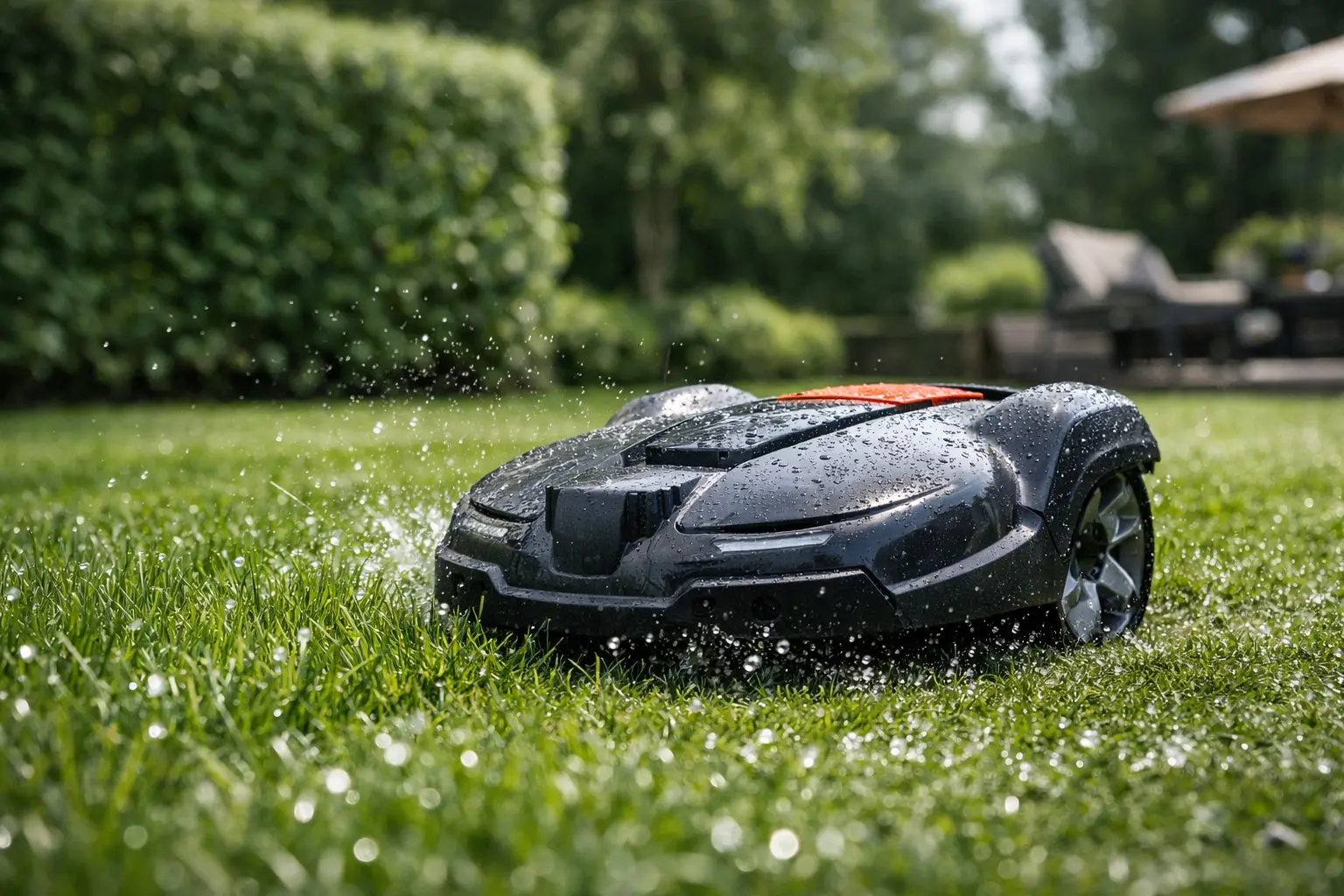
    A mower leaving clumps behind on a damp fairway margin or smearing a sports surface after overnight rain is not a minor issue. It affects presentation, plant health, clean-up time and, in professional settings, confidence in the machinery. So when operators ask can robotic mowers cut wet grass, the right answer is yes – but only within the limits set by turf condition, rainfall level, machine design and the standard of finish required.

    For professional turf teams, the better question is not simply whether a robotic mower can operate in the wet. It is whether it can do so without compromising cut quality, traction, safety and surface performance. That distinction matters on greens approaches, tee surrounds, sports pitches and other managed areas where consistency is non-negotiable.

    Can robotic mowers cut wet grass in real conditions?

    In real working conditions, many robotic mowers can cut damp or lightly wet grass. Dew, light drizzle or residual surface moisture will not always prevent operation, particularly where the machine has suitable tyres, sharp blades and a mowing pattern designed for frequent cutting.

    What changes in wet conditions is the margin for error. Grass bends rather than standing upright. Clippings become heavier and more likely to adhere to decks, wheels and guards. Tyre slip increases, especially on slopes, compacted ground or high-wear access routes. Even if the machine keeps moving, the finish may fall below the standard expected on professional turf.

    That is why experienced operators treat wet-weather mowing as a performance decision rather than a simple yes-or-no capability. A robotic unit may be able to continue cutting, but the correct choice depends on the surface, the weather event and the required presentation level.

    Wet grass affects more than cut quality

    On professional sites, wet grass changes the whole mowing environment. The first effect is on clipping behaviour. Fine, dry clippings disperse cleanly and break down quickly. Wet clippings gather, stick and can form localised deposits, which are particularly unwelcome on sports surfaces and closely managed golf areas.

    The second effect is plant presentation. Wet leaf tissue tends to lay over, so rotary systems in particular may not achieve the same upright, even finish they deliver in drier conditions. Frequent robotic mowing helps reduce the amount removed in any one pass, which can limit visible disruption, but it does not remove the underlying issue.

    The third effect is traction and route accuracy. Autonomous mowing depends on predictable movement. On saturated ground, wheel slip can affect turns, edge tracking and repeated travel lines. For large commercial areas, this matters because small losses in traction can become visible wear if they are repeated day after day.

    Where robotic mowing performs well in damp weather

    There are plenty of situations where autonomous mowing remains effective despite moisture. Light morning dew is usually manageable. So is a surface that is damp underneath but not waterlogged at leaf level. Fairways, roughs and outfield areas with firmer soil structure often tolerate robotic mowing well when rainfall has been modest.

    This is one reason robotic systems are attractive to professional operators. Frequent, low-volume cutting means the machine is not trying to remove a heavy flush of growth in one pass. When conditions are only mildly wet, that lighter workload supports better results than a conventional schedule that waits for a larger cut window.

    Purpose-built professional units also tend to be more capable than domestic machines in these conditions. Better traction control, more stable construction and more precise operating logic all contribute to usable performance when the weather is less than ideal.

    When wet grass becomes a problem

    The threshold is reached when surface moisture becomes standing water, the leaf is heavily saturated, or the ground beneath loses stability. At that point, even if the mower physically continues, the quality and agronomic outcome can deteriorate quickly.

    On sports pitches, this may mean smearing, wheel marking or inconsistent presentation across high-use zones. On golf surfaces, it can mean a poorer visual finish and unnecessary disturbance around turns, narrow entries or sloping transitions. On premium fine turf, the cost of a poor pass is often higher than the value of keeping the machine running.

    Heavy rain also raises a practical issue with clipping management. Wet growth is more likely to accumulate beneath the deck or around cutting components, reducing efficiency and increasing maintenance attention. If operators are trying to save labour, repeated intervention to clear build-up defeats part of the purpose.

    Can robotic mowers cut wet grass without damaging turf?

    They can, but only when the machine, programme and site conditions are aligned. Damage is far less likely on firm surfaces with moderate moisture than on soft, saturated or weakly rooted ground. It is also less likely when the mower is set up to minimise repeated stress in the same areas.

    For professional operators, the biggest risk is not usually blade damage to the plant. It is traffic stress. Repeated autonomous movements across the same turning points, pinch points or perimeter routes can create wear if the ground is soft enough. This is particularly relevant on access corridors, sidelines, goalmouth approaches and shaped golf features where routing options are naturally limited.

    Good deployment planning matters here. If a site routinely holds moisture, the answer is not simply to ask more of the robot. It may be to adjust schedules, rotate operating zones, restrict use during peak saturation or select a platform better suited to that environment.

    What determines wet-weather performance?

    Machine type is the starting point. A professional robotic mower designed for commercial turf care is built for more demanding and more predictable output than a lightweight domestic unit. Weight distribution, wheel design, blade system and navigation all affect results when the surface turns damp.

    Cutting frequency is equally important. Regular mowing reduces clipping volume per pass, which helps in moisture. If the machine is trying to recover overgrown grass after a wet spell, performance will be less consistent and the likelihood of visible residue increases.

    Surface type also matters. A free-draining sand-based profile behaves very differently from heavier native soil. The same mower may perform well on one and struggle on the other after similar rainfall. Slope, shade, compaction and local traffic patterns all shift the real operating threshold.

    Then there is the finish standard. A utility area may remain perfectly acceptable after damp-weather mowing. A showpiece entrance lawn, striped sports venue or tightly presented golf feature may not. Wet-weather capability is always relative to the expectation of the surface.

    How professional operators should manage robotic mowing in wet periods

    The strongest approach is controlled flexibility. Rather than treating the robotic mower as either fully available or fully unavailable, set practical operating rules around moisture level and site sensitivity.

    On many sites, that means allowing autonomous mowing through dew and light surface moisture, then pausing when rainfall becomes persistent or the ground softens. It may mean prioritising robust areas while holding back on fine turf or high-visibility zones until conditions improve. It can also mean using robotic mowing to maintain frequency around weather windows rather than forcing operation through the worst conditions.

    This is where a solution-led setup makes the difference. The right machine on the right area, with realistic programming and a clear understanding of agronomic thresholds, delivers productivity without asking the surface to absorb unnecessary stress.

    The commercial question behind wet-weather mowing

    For turf managers and contractors, this is not only about whether a machine can cut wet grass. It is about whether autonomous mowing can protect output when labour is stretched and weather windows are narrowing.

    A robotic platform that works reliably through marginal conditions offers a real operational advantage. It can maintain frequency, reduce catch-up mowing and help teams focus labour on detail tasks, presentation work and reactive maintenance. But that advantage only holds if the machine is used with discipline.

    Professional automation is not about running regardless of conditions. It is about making smarter use of available cutting time. That is the difference between treating robotics as a gadget and using it as a serious turf-management asset.

    For operators managing golf, sport or large institutional landscapes, wet grass should not be seen as an automatic stop signal or a green light. It is a condition to assess. If the surface is firm, the moisture is light and the mower is properly specified, robotic mowing can continue productively. If the ground is saturated and the finish requirement is high, pausing is often the better decision. The most effective systems are the ones that respect both the machine’s capability and the turf’s limits.

  • Grounds Maintenance Automation That Delivers

    Grounds Maintenance Automation That Delivers

    A missed cut window on a fairway or sports pitch is rarely a one-off problem. It usually points to the same pressure points – labour gaps, tighter maintenance windows, rising expectations, and too much manual time tied up in repeat mowing tasks. That is exactly why grounds maintenance automation is moving from a future-facing idea to a practical operating model for professional turf teams.

    For golf courses, sports venues, education estates and contractors, the case is no longer based on novelty. It is based on output. If a site needs consistent presentation, predictable cutting frequency and better use of skilled staff, automation starts to look less like an equipment choice and more like a maintenance strategy.

    What grounds maintenance automation actually means

    In professional turf care, grounds maintenance automation is not simply replacing an operator with a machine. It is about automating the right tasks, in the right areas, to improve consistency and free up labour for higher-value work.

    That usually starts with mowing because mowing is repetitive, time-intensive and highly visible. Fairways, roughs, surrounds, tee approaches, training grounds and large managed grass areas all consume hours that could be redirected into detail work, turf health, presentation and reactive maintenance.

    The strongest automated systems are built around repeatable precision. They follow planned routes, maintain defined areas consistently and operate with a level of frequency that manual schedules often struggle to match when teams are stretched. The result is not just less labour input. It is a more stable standard of cut.

    Why automation is gaining ground in professional turf

    The labour issue is obvious. Many sites are finding it harder to recruit and retain experienced grounds staff, particularly for roles heavily weighted towards routine mowing. At the same time, expectations have not softened. Golf members still expect clean striping, tidy fairways and reliable presentation. Sports users still expect safe, consistent and well-defined playing surfaces.

    Automation addresses that mismatch directly. It reduces dependence on manual hours for repetitive cutting while keeping mowing frequency high. That matters because turf quality is shaped by consistency as much as by operator skill. Frequent, precise cutting can improve presentation and help maintain a more uniform surface across the areas where robotic mowing is correctly deployed.

    There is also a productivity argument that goes beyond headline labour saving. When autonomous mowing takes on repeat work, skilled staff can spend more time on the tasks that actually need judgement – course setup, surface refinement, irrigation checks, repairs, disease response, line marking and seasonal planning. In other words, automation helps teams apply expertise where expertise matters most.

    Where grounds maintenance automation works best

    Not every square metre of a site should be automated in the same way. That is where realistic planning matters.

    Large, repeatable grass areas are often the strongest starting point. Fairways, semi-rough, outfield spaces, training areas and perimeter grounds are usually easier to map into an automated workflow because they involve regular cutting patterns and predictable boundaries. These are the zones where hours quickly add up and where consistent autonomous coverage can have a visible effect on labour efficiency.

    On higher-specification surfaces, the conversation becomes more nuanced. Greens, tee boxes and marked sports surfaces have tighter tolerances and more exact presentation demands. Automation can still be highly effective here, but only with the right machine, the right setup and a clear understanding of the finish required. The difference between suitable automation and unsuitable automation is not whether the site is premium. It is whether the equipment is designed for that specific turf environment.

    This is why professional buyers should be wary of treating all robotic mowing as interchangeable. A domestic-style unit adapted to a commercial setting is not the same as a purpose-built professional solution designed for managed turf performance.

    Precision matters more than novelty

    The real value of automation on a golf course or sports site comes from precision. If the cut path is inconsistent, if area control is weak, or if the machine cannot maintain standards across demanding surfaces, then the labour saving becomes irrelevant because the quality gap has to be corrected manually.

    Professional robotic mowing needs to deliver measurable reliability. That means dependable navigation, consistent area coverage, accurate operation around key turf zones and a cut quality that supports the site’s presentation standards. It also means working within the practical reality of the venue – slopes, route planning, access points, usage patterns and maintenance windows.

    There is a simple test worth applying. Does the automated system improve the operation, or does it create a second operation that staff must constantly supervise and correct? Good grounds maintenance automation reduces workload. Poorly matched automation shifts it around.

    The operational gains go beyond wages

    Labour reduction is often the first reason buyers explore automation, but it is rarely the only one that justifies the investment.

    A well-matched robotic mowing system can improve consistency across the week, not just on the day a team has enough staff available. That steadier cutting frequency supports presentation and can help sites maintain a cleaner, more controlled appearance through periods of labour pressure, high growth or tight fixture schedules.

    There is also a planning benefit. Automated mowing introduces predictability into part of the maintenance programme. Managers can allocate people more effectively because some mowing output becomes scheduled and repeatable rather than fully dependent on who is available that morning.

    For contractors, this can support margin protection. For in-house teams, it can support service reliability. For both, it reduces the operational risk that comes from relying too heavily on scarce labour for routine tasks.

    What to assess before investing

    The best automation projects start with site suitability, not with product enthusiasm. Buyers should look closely at the acreage involved, the surface types, access between zones, desired finish, labour profile and how often the area needs to be presented at peak standard.

    It is also worth being clear about the objective. Some sites want to remove routine mowing hours from the weekly schedule. Others want to improve cut frequency on key areas. Others need a scalable answer to long-term recruitment pressure. The right solution depends on that starting point.

    Budget should be viewed in operational terms, not just capital terms. A lower-cost machine that cannot meet the finish standard or area requirement is expensive in practice. Equally, the highest-specification system is not automatically the right choice if the site’s real need is reliable automation on larger secondary areas. Matching machine capability to turf demand is what protects return on investment.

    Support and implementation matter as well. Professional operators need more than a delivered machine. They need a solution that fits the site, can be commissioned properly and is aligned with the standards expected across golf, sport or institutional grounds. That consultative approach is one reason specialist providers such as GrassRobotics are gaining attention in this space.

    Automation is not all or nothing

    One of the more common misconceptions is that automation only makes sense when a site is ready to transform everything at once. In reality, phased adoption is often the smarter route.

    A course might begin with fairway automation. A sports venue might start on training areas or outfield zones. A contractor might deploy autonomous mowing where repeat visits create the highest manual burden. Once the workflow, savings and presentation benefits are proven, automation can be expanded with more confidence.

    This staged model matters because it lets teams build around real operational results rather than assumptions. It also allows managers to keep manual capability where it adds the most value while automating the areas that drain time without requiring constant human judgement.

    The future of grounds maintenance automation

    The direction of travel is clear. Professional grounds teams are under increasing pressure to do more with fewer people while maintaining exacting standards. Automation fits that reality because it improves repeatability, reduces labour dependence and supports a more productive use of skilled staff.

    The strongest sites will not be the ones that chase technology for its own sake. They will be the ones that apply it with discipline – matching the right autonomous equipment to the right surfaces and measuring success by output, consistency and turf quality.

    For professional operators, that is the real shift. Grounds maintenance automation is no longer a side conversation about what might be possible. It is a practical option for sites that need to maintain standards without building their entire operation around manual mowing hours. The question is not whether automation belongs in professional turf care. It is where it can deliver the most value first.

  • How to Improve Fairway Consistency

    How to Improve Fairway Consistency

    A fairway rarely looks inconsistent by accident. More often, the variation shows up because small operational differences keep repeating – cut timing shifts, mowing lines drift, clipping volume changes, and one area receives a different standard of attention than the next. If you are looking at how to improve fairway consistency, the real question is not simply how to cut more often. It is how to create a repeatable system that delivers the same quality across the whole surface, day after day.

    That matters because fairway consistency is judged at speed. Players notice ball lie, presentation, stripe definition and surface uniformity immediately. Management notices labour pressure, machine utilisation and the cost of chasing standards manually. A fairway that is excellent three days out of five is not truly performing. Consistency is the standard.

    How to improve fairway consistency starts with repeatability

    Most fairway issues are not caused by one major failure. They come from variable execution. Different operators, changing start times, weather interruptions, inconsistent overlaps and delayed mowing passes all create visible differences across the surface. On larger sites, that problem multiplies quickly.

    The first step is to review whether your current process is actually repeatable. If the cut quality depends heavily on who is driving, how much time is available that morning, or whether another task has taken priority, fairway consistency will always be vulnerable. Good turf management still relies on judgement, but the core mowing standard should not be left to daily improvisation.

    This is where many professional sites begin to separate occasional quality from reliable quality. The goal is to reduce variation in the process, not just react to variation in the result.

    Set the fairway standard before you assess the machinery

    Before changing equipment or schedules, define what consistency means on your site. For one facility, it may mean visual uniformity across every fairway by a specific time each day. For another, it may mean maintaining ball presentation and clipping control through strong growth periods without adding labour hours.

    That distinction matters. If your expectation is unclear, every operational decision becomes harder to measure. Height of cut, frequency, route planning and staffing all need to work towards a defined outcome.

    In practical terms, assess fairway consistency against four questions. Is the cut uniform across the full width and length of the fairway? Are stripes and lines staying straight and repeatable? Is clipping dispersal controlled well enough to avoid visual patchiness or smothering? And does the surface present the same standard whether viewed on Monday morning or Friday afternoon?

    If one of those areas regularly drops away, the issue is usually in the system behind the cut rather than the grass alone.

    Mowing frequency has more impact than many teams admit

    A common reason fairways become visually uneven is that mowing intervals are being dictated by labour availability rather than turf response. During active growth, waiting too long between cuts increases clipping load, raises the chance of wheel marking and weakens presentation. The next pass then becomes corrective rather than routine.

    For professional sites, consistency usually improves when mowing becomes lighter and more frequent. That does not always mean sending larger teams out more often. In fact, on many courses and sports venues, labour capacity is exactly the constraint. But the agronomic principle remains the same – less removed per pass generally produces a cleaner, more uniform result.

    There is, of course, a trade-off. Higher frequency demands more machine time and better route discipline. If that frequency depends entirely on available staff hours, standards can still drift. That is one reason autonomous mowing is gaining ground in fairway maintenance. It allows facilities to maintain regularity without tying surface quality to fluctuating labour resource.

    Clipping management is central to fairway presentation

    When fairways look inconsistent, the first assumption is often that the machine is cutting unevenly. Sometimes it is. Just as often, the surface is visually inconsistent because clipping volume is inconsistent. Heavy deposition in one zone and lighter dispersal in another can make a fairway appear patchy even when height of cut is technically acceptable.

    This is especially relevant in periods of rapid growth or changeable weather. Morning moisture, soft ground and a surge in growth can all affect clipping behaviour. If the operation is not adjusted quickly enough, presentation suffers before the team has time to correct it.

    Improving fairway consistency therefore means treating clipping control as a performance measure, not a side effect. More frequent cutting, stable route execution and equipment designed for reliable repeated operation all help reduce visible variation. The less corrective work you need after mowing, the more stable your standard becomes.

    Straight lines and route discipline still matter

    On high-visibility fairways, presentation is not only about plant health. It is also about geometry. Wandering lines, uneven overlaps and slight misses at fairway edges create a finish that looks below standard even where the grass itself is healthy.

    Manual operation can achieve excellent striping and alignment in skilled hands, but over time it is difficult to remove variation entirely, especially across large acreages and busy maintenance programmes. Fatigue, interruptions and changing operator technique all have an effect.

    If you want to improve fairway consistency, route discipline has to be designed into the process. That may involve tighter mowing plans, clearer pass sequencing and stronger supervision. It may also point towards autonomous systems that follow defined patterns with far greater repeatability than manual mowing can typically sustain over the long term.

    This is not an argument against skilled greenkeeping. It is an argument for using skilled staff where their judgement adds most value, while repetitive mowing tasks are handled with precision and consistency.

    How to improve fairway consistency with better labour allocation

    Many course managers know what the fairways need. The challenge is finding the hours to deliver it consistently while also covering greens, tees, surrounds, bunker work, irrigation checks and reactive tasks. Fairway quality often slips not because it is unimportant, but because it competes with everything else.

    That makes labour allocation a central part of the answer. If experienced staff are spending large blocks of time on repetitive fairway mowing, there is less capacity for detail work and agronomic interventions elsewhere. The operation may still function, but it becomes harder to sustain a high and even standard across the site.

    Autonomous mowing changes that equation. By assigning repeatable fairway work to robotic systems, managers can reduce dependence on hard-to-source labour while maintaining frequency and precision. For commercial and institutional sites under pressure to do more with the same headcount, that is not just a technology upgrade. It is an operational one.

    At GrassRobotics, that shift is typically viewed through a practical lens: can the system maintain presentation, improve productivity and reduce labour pressure without compromising turf quality? For fairways, the answer increasingly depends on how much value you place on repeatable daily execution.

    Timing, weather and ground conditions need a flexible plan

    No fairway programme operates in perfect conditions for long. Wet mornings, localised wear, recovery areas and uneven growth flushes all influence consistency. That is why rigid scheduling alone is not enough.

    The better approach is controlled flexibility. Keep the standard consistent, but allow the operation to respond to conditions. For example, if a section of fairway is carrying more moisture or showing softer ground, route timing and machine deployment may need to change. If growth accelerates after rainfall and temperature lift, frequency may need to increase before presentation drops.

    What should not change is the underlying discipline of the process. The strongest operations make adjustments early, before inconsistency becomes visible to players. They are not waiting for complaints to confirm what the surface is already showing.

    Equipment choice should match the standard you are trying to hold

    Not every fairway maintenance challenge is solved by buying new machinery. But equipment capability does set the ceiling for what is operationally realistic. If your current setup struggles to deliver consistent cut quality, maintain frequency or support efficient labour deployment, the fairway standard will always rely on extra effort to bridge the gap.

    That is rarely sustainable. Over time, teams need systems that make consistency easier to achieve, not harder. For large-scale fairway areas, that means assessing equipment in terms of repeatability, autonomy, productivity and suitability for professional turf conditions – not novelty.

    There is also an important nuance here. The right solution depends on site layout, acreage, staffing model and required finish. A compact operation with stable labour may prioritise one approach. A larger course or multi-surface venue with ongoing recruitment pressure may see far more value in autonomous mowing from the outset. The key is to match the system to the operational problem.

    Fairway consistency improves when the process stops depending on daily recovery work. The more your mowing plan is based on precision, repeatability and appropriate frequency, the more reliable the result becomes. For professional turf teams, that is where better presentation and better productivity start to align.

    The useful question is not whether your fairways can look good on the right day. It is whether your operation is built to keep them that way.

  • Autonomous Turf Care Solutions That Perform

    Autonomous Turf Care Solutions That Perform

    Labour pressure rarely arrives as a theory. It shows up when a skilled operator is off sick, when recruitment drags on for months, or when a venue still needs immaculate presentation before first light. That is where autonomous turf care solutions have moved from interesting concept to serious operational option for golf courses, sports grounds and managed estates.

    For professional operators, the appeal is not novelty. It is repeatable output. If a machine can maintain defined areas to a reliable standard, reduce dependency on scarce labour and free trained staff for higher-value turf tasks, it deserves attention. The question is no longer whether autonomy has a place in professional turf care. The question is where it delivers the strongest return, and where a conventional approach still makes more sense.

    Where autonomous turf care solutions fit best

    Autonomy works best where the maintenance objective is clear, recurring and measurable. Fairways, surrounds, rough management zones, practice areas and many sports surfaces all suit structured robotic mowing programmes because they demand frequency, consistency and predictable presentation. In these areas, the value of robotic operation is straightforward – more cutting hours, tighter scheduling and less disruption to the core team.

    That does not mean every square metre should be handed over to a robot. Fine turf areas with highly variable conditions, one-off renovation requirements or surfaces that need constant tactical adjustment may still benefit from experienced hands on the machine. Greens, for example, can be a strong fit for specialist autonomous equipment, but only where the site, standard and operating model align. The right decision depends on the surface, the expected finish and the manager’s tolerance for operational change.

    Professional buyers tend to assess autonomy by task, not by trend. That is the right approach. When robotic mowing is matched to the correct environment, it improves consistency and releases labour without lowering standards.

    The real operational case for autonomous turf care solutions

    The strongest case for autonomy is not simply wage reduction. It is labour resilience. Most facilities still need skilled people, but those people are increasingly difficult to recruit and retain. Autonomous mowing helps protect output when staffing is tight and allows experienced team members to spend more time on agronomy, presentation detail, line marking, course setup, repairs and seasonal works.

    There is also a quality argument. Human operators vary. Even excellent staff can only be in one place at a time, and fatigue affects performance. A robotic platform follows programmed parameters with a level of repeatability that manual operations struggle to match across large areas and long schedules. That matters on golf sites where visual consistency shapes member perception, and on sports facilities where surface presentation reflects directly on the venue.

    Productivity gains tend to build quietly rather than dramatically. A robot does not solve every maintenance challenge overnight. What it does is keep cutting, stick to schedule and remove a proportion of routine mowing hours from the weekly workload. Over time, those saved hours become operational breathing space.

    What professional operators should assess first

    Before selecting equipment, the key issue is suitability of application. Terrain, slope, access, area size, boundary definition, obstacles and the required quality of cut all affect the outcome. A site with clear mowing zones and repeatable weekly demands is easier to automate than one with fragmented areas, frequent public interaction and constant pattern changes.

    Infrastructure matters as well. Charging arrangements, site mapping, transport between zones and safe operating windows all influence whether a system becomes productive quickly or turns into a management burden. The best autonomous setups are designed into the maintenance plan rather than added as an afterthought.

    It is also worth being honest about expectations. If the goal is to eliminate all manual mowing, disappointment is likely. If the goal is to automate the right percentage of routine work, improve consistency and reduce labour dependency, the business case becomes much stronger.

    Surface standards still come first

    Professional turf managers are right to be cautious about finish. Presentation is not negotiable on greens, tees, fairways and marked playing surfaces. Any autonomous system has to protect, or improve, current standards.

    That means evaluating cut quality in real operating conditions, not just in controlled demonstrations. Grass type, seasonal growth, moisture, traffic and site wear all shape performance. A machine that performs well on a dry, uniform surface may need a different setup or a different application elsewhere. The better suppliers understand this and position equipment by use case rather than pretending one platform suits every requirement.

    Labour savings depend on workflow

    Savings are often discussed as if they happen automatically. They do not. A robotic mower only reduces labour pressure if the team reorganises around it. If staff continue to duplicate the same work, or if the machine is assigned to unsuitable areas that require frequent intervention, the benefit narrows.

    The most successful operators use autonomy to redesign workflow. Routine mowing is delegated where possible, while skilled staff focus on tasks where judgement, timing and local knowledge matter most. That is where autonomy strengthens a professional maintenance operation rather than complicating it.

    Common gains across golf and sports turf

    On golf sites, autonomous equipment can bring particular value to fairways, approaches, tee surrounds and rough management zones where regularity matters and labour demand is persistent. The outcome is not just a cleaner schedule. It is a more stable presentation standard across the whole course, including periods when staffing is stretched.

    On sports turf, the case often centres on pitch presentation, marked surface maintenance and keeping up with dense fixture schedules. Repetitive cutting tasks consume time that grounds teams would rather allocate to surface preparation, recovery and in-season repairs. Where autonomous systems are specified properly, they can support a more controlled and predictable maintenance programme.

    Contractors and multi-site operators have another angle to consider. Robotics can help standardise output across locations and reduce exposure to labour volatility. That does not remove the need for skilled supervision, but it can make service delivery more consistent and scalable.

    Why precision matters more than novelty

    There has been enough hype around robotics to make experienced turf professionals sceptical. Fair enough. Novelty has little value on a professional site. Precision does.

    Precision in this context means repeatable cut height control, defined area coverage, dependable navigation and predictable operating windows. It means knowing that a machine will carry out a scheduled task with minimal deviation, day after day. That consistency supports turf quality and helps managers plan the rest of the operation with greater confidence.

    It also changes how sites think about machine utilisation. Conventional mowing is limited by operator hours. Autonomous equipment can extend productive working time well beyond the practical limits of a staffed shift, provided the site and schedule allow it. That expanded operating window is one of the most commercially useful aspects of the technology.

    Adoption works best when it is phased

    The sensible route is usually phased adoption. Start with the areas where autonomous mowing can deliver an obvious operational gain and where the risk to presentation standards is low. Measure labour hours released, monitor quality outcomes and adjust the workflow. Then expand if the results justify it.

    This matters because autonomy is not a single purchase decision. It is a change in maintenance model. Teams need confidence in the equipment, clarity on responsibilities and enough time to integrate new routines. Facilities that treat robotic mowing as a strategic upgrade tend to get more value from it than those that expect instant transformation.

    For that reason, supplier focus is important. Professional users need equipment positioned around real applications, not broad consumer-style claims. A specialist provider such as GrassRobotics understands that a golf course manager and a sports turf operator are not buying into the same problem set, even when both are investing in autonomy.

    What the next few years will look like

    Autonomous turf care solutions are likely to become a standard part of professional maintenance fleets, particularly as labour constraints remain stubborn and expectations around presentation stay high. The shift will not replace skilled grounds staff. If anything, it will make their time more valuable by removing a greater share of repetitive mowing work.

    The sites that benefit most will be those that view autonomy practically. Not as a headline feature, and not as a complete replacement for conventional maintenance, but as a targeted way to improve consistency, productivity and labour resilience. That is where the technology proves itself.

    For professional operators, the key is simple: judge autonomy by the standard it holds, the hours it returns and the pressure it removes from your team. If it does those three things well, it is not the future of turf care. It is already part of the present.

  • Are Robotic Mowers Safe on Slopes?

    Are Robotic Mowers Safe on Slopes?

    A mower that performs well on flat ground can become a liability the moment it meets a steep bank, a wet shoulder or a cambered approach. That is why the question are robotic mowers safe on slopes matters so much in professional turf management. On golf courses, sports facilities and larger managed landscapes, slope safety is not a secondary feature – it is central to machine suitability, cut consistency and site risk.

    The short answer is yes, robotic mowers can be safe on slopes, but only when the machine, the terrain and the operating plan are properly matched. This is where professional buyers need to separate consumer assumptions from commercial reality. A robotic mower is not automatically safe because it is autonomous, and it is not automatically unsafe because a site includes gradients. The outcome depends on traction, drive layout, tyre design, centre of gravity, navigation logic, grass conditions and how the slope sits within the wider mowing area.

    Are robotic mowers safe on slopes in real working conditions?

    In real working conditions, slope safety is less about a headline gradient figure and more about repeatable control. A manufacturer may state a maximum incline, but that figure is only part of the picture. A dry, firm grass bank cut across the line behaves differently from a damp slope with soft edges, loose topsoil or worn turf under heavy traffic.

    For professional sites, the key issue is whether the machine can maintain predictable movement without slipping, grounding out or losing cut quality. If the mower climbs and descends cleanly, turns without lateral drift and keeps stable wheel contact, it can operate safely. If it struggles for grip, scuffs the surface or slides during directional changes, the risk rises quickly.

    This matters particularly on golf courses, around fairway edges, bunker surrounds, tee banks and shaped rough transitions. On sports sites, it applies to perimeter embankments, spectator banks and drainage contours near pitches. Slopes are common in managed turf, but they are not all equal.

    What actually determines slope safety?

    The first factor is traction. A robotic mower on a slope is only as safe as its ability to transfer power into the ground without wheelspin. On fine turf or closely managed surfaces, too little grip causes slippage. Too much aggressive grip can mark or disturb the surface, especially in softer conditions. The right balance depends on tyre pattern, machine weight and drive control.

    The second is weight distribution. Machines with a low centre of gravity and stable chassis geometry generally perform better on gradients than units that carry weight too high or unevenly. Stability is not just about avoiding roll risk. It also affects steering accuracy, cut overlap and how confidently the mower holds its line.

    The third is navigation behaviour. A robot that simply reaches a slope is not necessarily equipped to manage it well. Professional-grade systems should account for route planning, turning behaviour, repeated path stress and safe recovery if traction drops. Sudden pivoting on a bank, for example, can create unnecessary wear and reduce control.

    Then there is the surface itself. Grass species, thatch levels, soil moisture and recent weather all influence safe operation. A slope that is manageable in July may be far less forgiving through a wet autumn period. Professional operators already understand this from ride-on and pedestrian mowing. Robotic mowing does not remove the need for judgement. It changes where that judgement is applied.

    Maximum slope ratings need context

    Slope ratings are useful, but they should never be treated as a guarantee. Some refer to maximum travel capability rather than safe continuous mowing. Others are based on ideal conditions rather than the mixed, real-world environments found on golf and sports sites.

    A better approach is to view the rating as a starting point, then assess how the machine performs on the specific terrain type, moisture profile and maintenance standard of the site. A controlled demonstration on representative ground tells you more than a brochure figure on its own.

    Where slope risks usually appear

    The highest risks often appear at transition points rather than on the main face of a slope. The crest, the toe, side-entry points and any change in camber can all be more difficult than the incline itself. That is where wheels can lose contact, where machines can bottom out, or where turning loads become less predictable.

    Another common issue is mowing across a slope that looks modest but carries inconsistent firmness. If one side of the machine loses grip on shaded or wetter turf, the mower can drift laterally. That may not create a dramatic incident, but it can compromise edge accuracy, presentation and long-term turf condition.

    There is also the operational risk of asking one machine to cover every type of terrain on a complex site. A mower that is highly effective on open fairway areas may not be the right fit for steep banks around infrastructure, water features or sharply contoured spectator areas. In those cases, zoned deployment is often the safer and more productive answer.

    Are robotic mowers safe on slopes when turf conditions change?

    This is where experienced grounds teams usually ask the right question. The issue is not whether a robotic mower can handle a slope once. It is whether it can do so reliably through changing weather, growth patterns and seasonal ground conditions.

    The answer is again yes, but only with sensible operating controls. Wet grass reduces tyre grip. Soft ground increases sink and drag. Heavy dew on a morning bank can change braking and turning performance compared with the same area in the afternoon. On fine sports turf, this can also affect the visual finish.

    That is why professional robotic mowing should be managed as a system, not as a set-and-forget device. Schedules may need adjustment around rainfall, and certain areas may need temporary exclusion during poor ground conditions. This is not a weakness of robotic mowing. It is standard good practice for protecting both the machine and the surface.

    Cut quality and safety are linked

    On slopes, safety and cut quality tend to rise or fall together. If a mower is straining for grip, bouncing, drifting or repeatedly correcting its line, the finish will usually show it. You may see missed grass, uneven clipping dispersal or tracking damage over time.

    A machine operating comfortably within its slope capability is more likely to deliver the consistency that professional venues expect. That is the real benchmark. Safe operation is not just the absence of failure. It is stable, repeatable mowing with no compromise to presentation.

    How professional sites should assess a robotic mower for slopes

    The most effective assessment starts with mapping the site by terrain type rather than treating the whole property as one mowing environment. Identify sustained gradients, short sharp banks, cross-slopes, damp zones and high-risk transitions. Then consider surface expectations. A utility bank and a visible approach around a teeing area do not carry the same tolerance for marking or inconsistency.

    Next, review the mower’s drive and chassis characteristics against those conditions. Look beyond battery runtime and area capacity. Ask how the machine behaves on turns, how it manages route repetition and what safeguards are in place if traction drops. Professional support matters here, because the right configuration often depends on the site’s specific contour profile.

    It is also worth considering where robotics should complement, rather than replace, conventional mowing. Full automation across every square metre is not always the best commercial decision. On some sites, the stronger model is to automate the areas where robotic precision and labour reduction bring the most value, while retaining specialist equipment for isolated high-gradient sections.

    That is the practical difference between buying a machine and deploying a solution. For operators managing large or technically demanding turf, a consultative approach usually produces safer outcomes than selecting on headline claims alone.

    When robotic mowing on slopes is a strong fit

    Robotic mowers are often a strong fit on slopes that are consistent, well established and maintained to a standard that supports stable traction. They are particularly effective where regular mowing frequency helps avoid heavy bulk removal and where route planning can minimise unnecessary turning stress.

    They are less suitable where banks are severe, heavily shaded, persistently wet or structurally uneven. In those situations, the right answer may be a different robotic platform, a different deployment zone or a conventional method for that specific area. Productivity comes from matching the tool to the task, not forcing one machine into every role.

    For professional turf teams, that balance is where the value sits. The right robotic mower can reduce labour pressure, maintain presentation and bring highly consistent output across challenging terrain. But slope safety is earned through specification, planning and site understanding.

    If you are assessing autonomy for golf, sport or wider managed turf, treat slopes as an operational design question rather than a simple yes-or-no feature check. That is usually where the best decisions start – and where long-term performance is won.

  • Commercial Robotic Mower UK: What Matters

    Commercial Robotic Mower UK: What Matters

    Labour gaps rarely show up on a machinery spec sheet, but every course manager and grounds team feels them. That is why the commercial robotic mower UK market is moving from curiosity to serious consideration across golf, sport and large managed turf sites. For professional operators, the question is no longer whether robotic mowing is viable. It is whether a system can deliver the standard, coverage and control a demanding site actually needs.

    Why the commercial robotic mower UK market is growing

    The pressure is coming from several directions at once. Skilled labour is harder to recruit and retain, seasonal peaks are more difficult to cover, and expectations around presentation have not softened. At the same time, many facilities are being asked to do more with the same budget, or the same work with fewer people.

    A commercial robotic mower changes that equation when it is deployed properly. It does not replace the need for turf expertise. It frees that expertise from repetitive cutting hours and allows teams to focus on presentation detail, agronomy, repairs, set-up and site management. On the right site, the gain is not simply lower labour input. It is more consistent output across the week.

    That matters in environments where missed cuts quickly become visible. Fairways, surrounds, training grounds, formal sports surfaces and large amenity areas all benefit from repeatable mowing frequency. Robotic operation keeps surfaces under control with less dependence on staff availability, weather windows or machine scheduling conflicts.

    What professional buyers should assess first

    The biggest mistake in this category is treating all robotic mowers as broadly comparable. They are not. A professional buyer should start with the turf surface, the expected finish and the operating pattern required.

    A golf green has very different demands from a football training area. A fairway approach area has different priorities again. Striping, clipping management, edge definition, turning behaviour, transport demands and obstacle density all affect suitability. The right machine for one task can be the wrong one for another, even on the same site.

    This is where many consumer-led discussions become irrelevant to commercial decision-makers. Professional robotic mowing is not about whether a machine can cut grass. It is about whether it can hold a standard over time, across the right acreage, at the right quality level, with manageable oversight.

    Cut quality is still the first test

    No productivity claim compensates for poor finish. For golf and sport, the mowing result remains the starting point. A robotic solution must produce a clean, even cut at the required frequency and maintain that result in changing conditions.

    For some sites, rotary performance is the right fit, especially where coverage efficiency and dependable daily presentation are the main priorities. In other settings, cylinder technology is more appropriate, particularly where finer finish and surface precision are central to the specification. The correct answer depends on the area being maintained, the tolerance for variation and the visual standard expected by members, players or clients.

    There is also a practical point here. Frequent autonomous cutting can improve consistency because the plant is being managed in smaller increments rather than through wider peaks and troughs between passes. That can support a neater overall appearance and more stable presentation, provided the machine is matched correctly to the surface.

    Labour saving is real, but it needs the right expectations

    A commercial robotic mower UK operators choose for labour reduction should be judged realistically. The strongest result is usually not a headcount replacement. It is a redistribution of skilled hours.

    That distinction matters. Grounds teams still need to prepare surfaces, carry out line marking, manage inputs, inspect turf health, handle hand mowing where required and respond to wear, weather and event schedules. Robotics removes a large block of repetitive mowing time, especially on areas where high-frequency cutting delivers a clear presentation benefit.

    For contractors and multi-site operators, that can improve fleet utilisation and staffing flexibility. For in-house teams, it can reduce pressure at the start of the day and allow better allocation of people to jobs that visibly affect standards. In a market where reliable labour is one of the hardest inputs to secure, that operational breathing space has value.

    Site fit matters more than headline capability

    The best robotic mower on paper can underperform if the site has not been assessed properly. Terrain, gradients, access routes, isolated sections, crossing points and boundary complexity all affect real-world performance.

    Open, repeatable areas are usually the easiest starting point. Fairways, outfield-style spaces, training grounds and larger formal areas often offer a strong case because the machine can work efficiently with fewer interruptions. More intricate zones can also be suitable, but they demand better planning around navigation, exclusion areas and route logic.

    UK conditions add another layer. Wet weather, softer ground, leaf fall, shorter winter daylight and varied seasonal growth patterns all influence deployment. A serious commercial system needs to be considered in the context of an annual maintenance programme, not just summer performance. Reliability in shoulder seasons often tells you more than a perfect July demonstration.

    Autonomy is only useful if control is practical

    Professional users do not need novelty. They need control that supports operations. That means the robotic system must be manageable by a grounds team, not just by a technician during commissioning.

    Scheduling, area assignment, machine status, stop-start control and performance visibility all matter. So does the ability to adapt quickly around matches, competitions, maintenance works and changing site priorities. If a system is difficult to adjust, it creates friction rather than savings.

    Good autonomous mowing should feel disciplined. It should fit into the site programme, not force the programme to fit around the machine. That is particularly important on sports sites, where training patterns, fixture schedules and protected surfaces can change quickly.

    The commercial robotic mower UK buyers choose should match the use case

    There is no single best commercial robotic mower UK buyers should expect to use everywhere. Professional sites usually need a use-case-led decision rather than a broad category purchase.

    Golf facilities may require different robotic solutions across greens, fairways, tees and rough transitions. Sports venues may need one approach for fine turf and another for larger surrounding areas. Schools, local authorities and institutional estates often prioritise broad productivity and labour reduction, but still need dependable presentation and safe operation around active environments.

    That is why consultative specification matters. A machine should be selected around the work, not squeezed into it. Surface type, acreage, quality standard, traffic levels and staffing structure all influence whether a robotic mower will deliver a strong return.

    Cost should be measured against output, not sticker price

    Commercial buyers are right to scrutinise capital cost. But the more useful calculation is cost against annual output and staffing pressure.

    If a robotic mower allows a team to maintain standards with fewer repetitive machine hours, the value shows up across labour allocation, machine utilisation and consistency of presentation. It can also reduce the operational risk that comes from relying too heavily on a shrinking labour pool.

    That said, not every site will see the same payback period. A high-specification venue with tight quality demands may judge return differently from a broad-acre operator focused on coverage and labour resilience. This is one of those areas where it depends. The right assessment looks at current mowing hours, staffing challenges, machine overlap, expected finish and the surfaces most suited to autonomy.

    Support is part of the product

    For professional operators, support should never be treated as an afterthought. Commissioning, training, setup, seasonal adjustment and ongoing technical backup all shape whether the system performs as expected.

    A serious supplier should understand managed turf, not just machine features. That means speaking in terms of greens, fairways, pitches, presentation standards and operational workflow. It also means being honest about where robotics will deliver strongly and where conventional equipment should still have a place.

    That specialist approach is what separates professional adoption from gadget-led buying. GrassRobotics is positioned around that reality, with robotic mowing solutions selected for commercial turf performance rather than general domestic use.

    Where robotic mowing is heading next

    The direction of travel is clear. Commercial robotics in turf care is moving towards more defined, task-specific deployment across professional environments. The strongest sites will not necessarily be the ones that automate everything first. They will be the ones that automate the right areas with clear operational intent.

    That may mean assigning robotic mowing to fairways and surrounds while keeping other surfaces under conventional control. It may mean using autonomous equipment to protect presentation during labour shortages. Or it may mean building a longer-term model where robotic systems become a permanent part of the maintenance fleet.

    The advantage is not simply that the machine can work unattended. It is that the site gains a more consistent, controllable mowing programme without stretching already pressured teams.

    If you are assessing a commercial robotic mower for a UK site, the useful question is not whether the technology is advanced enough. It is whether the solution fits your surfaces, your standards and your labour reality well enough to earn a permanent place in the operation.

  • Why a Professional Robotic Cylinder Mower Works

    Why a Professional Robotic Cylinder Mower Works

    At 6am, before the first fourball reaches the tee or the first training block starts on the pitch, cut quality is already setting the standard for the day. That is where a professional robotic cylinder mower changes the conversation. It is not simply a way to automate mowing. It is a practical system for producing repeatable presentation, tighter labour control and more predictable turf maintenance across high-expectation sites.

    For professional operators, that distinction matters. Consumer robotic mowing is built around convenience. Professional robotic mowing is built around performance. When surface consistency, striping quality, clipping management and daily labour allocation all affect the end result, the machine has to fit a professional maintenance programme rather than sit outside it.

    What makes a professional robotic cylinder mower different

    The cylinder cutting system is the first major point of difference. On greens, tees, surrounds and selected sports surfaces, the requirement is not just to shorten the plant. The objective is a clean, accurate cut that supports ball roll, visual quality and surface uniformity. Cylinder technology remains the standard in these environments because it delivers the finish professional turf teams expect.

    Adding robotics to that format creates a different operational model. Instead of relying on fixed staffing windows and manual machine hours for every pass, the mower can work to programmed schedules and repeatable routes. That improves consistency, but the bigger gain is control. When mowing frequency increases and variability drops, the surface tends to present more evenly and the maintenance team can spend more time on the tasks that still require judgement.

    This is why a professional robotic cylinder mower should be viewed as a turf-care asset, not just a labour-saving device. The cut quality still has to stand up. The machine still has to perform on demanding managed turf. If it cannot do that, the automation is irrelevant.

    Where a professional robotic cylinder mower fits best

    The strongest fit is in environments where presentation standards are high and mowing frequency matters. Golf is the clearest example. Greens, tees and approaches benefit from regular, accurate cutting, and robotic operation can help maintain that standard without putting the entire programme under labour pressure each morning.

    Sports turf is another strong use case, particularly where marked surfaces, repeat mowing patterns and visual consistency are important. Training grounds, stadium support pitches and institutional sports sites often need a dependable mowing routine while also managing staff time across line marking, repairs, irrigation checks and event preparation.

    That said, suitability depends on the site. A simple, open and well-structured area is easier to automate than a fragmented layout with frequent temporary obstacles, erratic access demands or highly variable use patterns. Robotics can still perform well on complex sites, but planning becomes more important. Buyers should assess not only the cutting requirement but also how the machine will move, charge, avoid disruption and integrate with the wider maintenance schedule.

    Cut quality matters more than novelty

    Professional buyers are rarely interested in robotics for its own sake. The real question is whether the machine can hold a line, deliver a clean finish and maintain standards day after day. If the answer is yes, the labour and efficiency benefits become commercially meaningful. If the answer is no, the technology becomes a distraction.

    That is why cylinder robotic mowing has genuine relevance in premium turf settings. It aligns automation with the finish level these surfaces demand.

    Labour reduction is real, but not absolute

    One of the strongest reasons to consider robotic mowing is labour scarcity. Many facilities are trying to maintain more area with fewer skilled staff, while recruitment remains difficult and wage pressure continues to rise. A robotic mower can relieve that pressure by taking on scheduled cutting hours that would otherwise consume a large share of the team’s week.

    But it is worth being precise about what that means. Robotics reduces dependence on repetitive manual mowing. It does not remove the need for turf professionals. The site still needs decision-making, set-up, supervision, quality control and agronomic input. The benefit is that skilled staff can be redirected towards tasks with higher operational value.

    For golf and sports venues, that shift is significant. Time spent hand-mowing every scheduled pass is time not spent on surface preparation, detail work, renovation planning or reactive issues. A professional robotic cylinder mower helps rebalance labour towards those areas.

    Consistency is often the biggest gain

    Labour saving usually gets the headline, but consistency is often the more important outcome. Manual mowing quality can vary with operator availability, time pressure, weather interruptions and machine scheduling. Robotic systems are designed to reduce that variability.

    More frequent cutting can improve presentation and help avoid the peaks and troughs that appear when mowing intervals are stretched. The result is not just a tidier appearance. It can also support more stable surface performance, especially where close management and visual standards are critical.

    For decision-makers, consistency has commercial value. It supports member satisfaction, player experience and facility presentation. It also makes maintenance planning easier because mowing becomes a more controlled background process rather than a daily staffing challenge.

    What to assess before you invest

    A robotic mower should fit the site and the operating model. That sounds obvious, but it is where many technology decisions succeed or fail. Start with the turf areas that drive the most labour demand and the highest expectation. Then look at the practical conditions around them.

    Area size, route complexity, charging access, boundary definition and daily traffic all matter. So does the required finish. A site maintaining greens and formal sports areas has a different specification from one focused on broad-acre rough or general amenity grass. The machine needs to match the mowing objective, not just the site acreage.

    You should also consider how the mower fits existing workflows. If the team already has a strong routine for start-of-day preparation, tournament set-up or matchday sequencing, the robotic system should support that structure rather than complicate it. Good adoption is not about forcing the operation around the machine. It is about selecting equipment that works with the operation.

    The business case is wider than wages

    It is easy to frame return on investment purely in labour hours, but that is too narrow for professional turf management. The value also sits in presentation consistency, reduced scheduling pressure, lower exposure to staffing gaps and more efficient use of skilled personnel.

    There is also a resilience argument. When one operator is absent, annual leave overlaps or seasonal recruitment falls short, a robotic system helps protect the mowing programme. That stability can be just as important as direct cost reduction.

    Why professional sites need specialist equipment

    Professional operators should be wary of treating all robotic mowers as broadly similar. They are not. Consumer and light commercial machines are designed around different expectations, different turf conditions and different duty cycles. On managed golf and sports surfaces, those differences become obvious very quickly.

    Specialist equipment is built around professional requirements such as repeatable precision, sustained output and suitability for fine turf environments. It is also supported with a more consultative approach, because implementation on a working professional site is rarely a simple box-drop exercise.

    This is where a specialist supplier adds value. A business such as GrassRobotics is not presenting robotics as a gadget category. It is positioning autonomous mowing as a serious operational upgrade for golf courses, sports pitches and other high-standard turf environments. That is the right lens for a professional buyer.

    The right question is not whether robotics will replace mowing teams

    It will not. The better question is which parts of the mowing programme should remain manual, and which can be handed over to autonomous equipment without sacrificing standards. On many sites, that answer is becoming clearer. Repetitive, scheduled cutting across defined areas is increasingly well suited to robotic operation. Fine adjustments, presentation decisions and wider turf management remain in the hands of the grounds team.

    That balance is usually where the best results are found. Not full replacement, but smarter allocation of labour and machinery.

    For facilities under pressure to maintain standards with leaner teams, a professional robotic cylinder mower offers a credible route forward. The technology matters, but the real advantage is operational: better use of labour, more dependable presentation and a mowing programme that is less vulnerable to the daily variables that make turf management harder than it needs to be.

    The next step is not to ask whether robotic mowing is the future. It is to decide where it can make your current operation stronger, more precise and easier to sustain.