
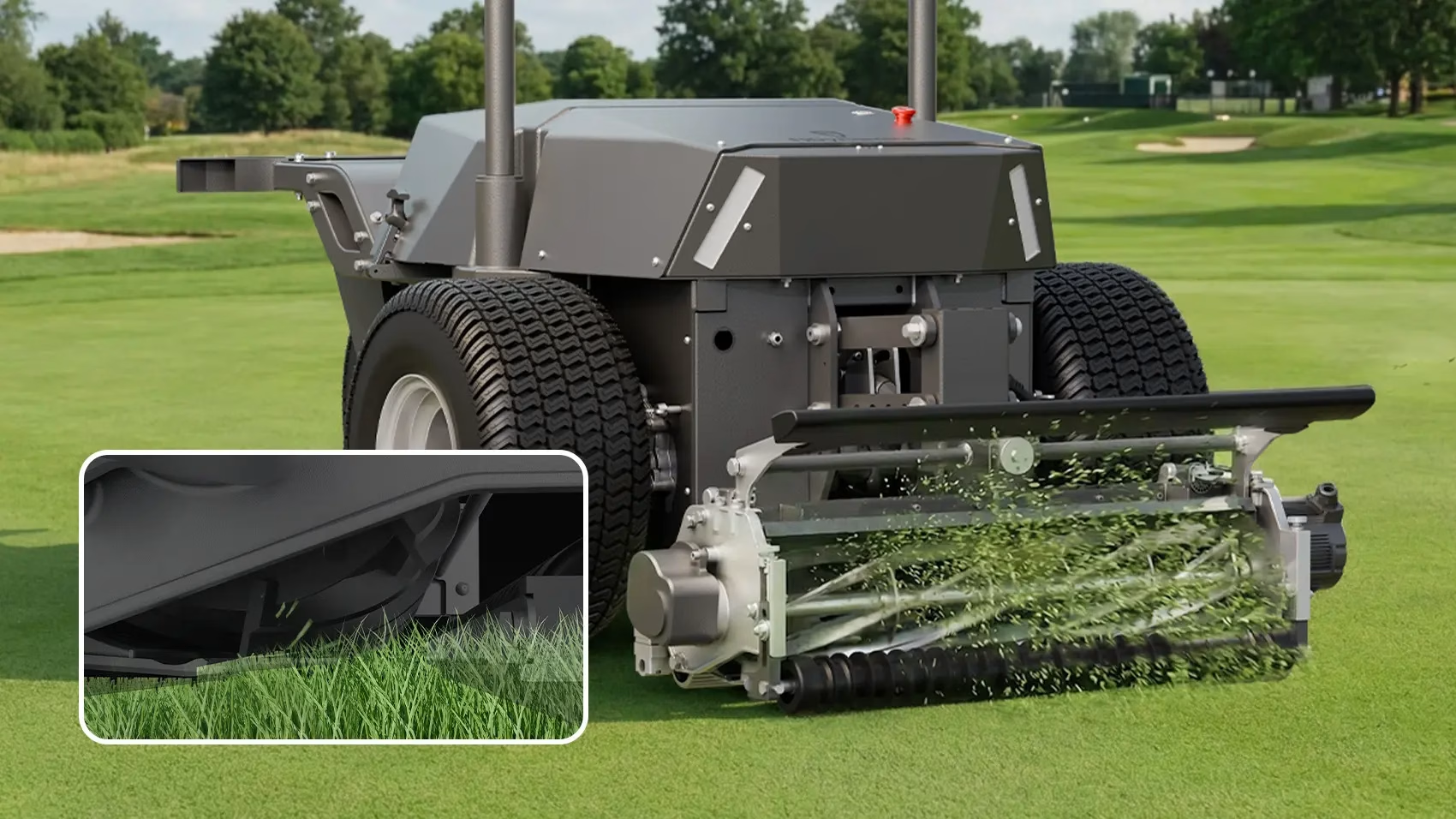
At 6am, before the first fourball reaches the tee or the first training block starts on the pitch, cut quality is already setting the standard for the day. That is where a professional robotic cylinder mower changes the conversation. It is not simply a way to automate mowing. It is a practical system for producing repeatable presentation, tighter labour control and more predictable turf maintenance across high-expectation sites.
For professional operators, that distinction matters. Consumer robotic mowing is built around convenience. Professional robotic mowing is built around performance. When surface consistency, striping quality, clipping management and daily labour allocation all affect the end result, the machine has to fit a professional maintenance programme rather than sit outside it.
What makes a professional robotic cylinder mower different
The cylinder cutting system is the first major point of difference. On greens, tees, surrounds and selected sports surfaces, the requirement is not just to shorten the plant. The objective is a clean, accurate cut that supports ball roll, visual quality and surface uniformity. Cylinder technology remains the standard in these environments because it delivers the finish professional turf teams expect.
Adding robotics to that format creates a different operational model. Instead of relying on fixed staffing windows and manual machine hours for every pass, the mower can work to programmed schedules and repeatable routes. That improves consistency, but the bigger gain is control. When mowing frequency increases and variability drops, the surface tends to present more evenly and the maintenance team can spend more time on the tasks that still require judgement.
This is why a professional robotic cylinder mower should be viewed as a turf-care asset, not just a labour-saving device. The cut quality still has to stand up. The machine still has to perform on demanding managed turf. If it cannot do that, the automation is irrelevant.
Where a professional robotic cylinder mower fits best
The strongest fit is in environments where presentation standards are high and mowing frequency matters. Golf is the clearest example. Greens, tees and approaches benefit from regular, accurate cutting, and robotic operation can help maintain that standard without putting the entire programme under labour pressure each morning.
Sports turf is another strong use case, particularly where marked surfaces, repeat mowing patterns and visual consistency are important. Training grounds, stadium support pitches and institutional sports sites often need a dependable mowing routine while also managing staff time across line marking, repairs, irrigation checks and event preparation.
That said, suitability depends on the site. A simple, open and well-structured area is easier to automate than a fragmented layout with frequent temporary obstacles, erratic access demands or highly variable use patterns. Robotics can still perform well on complex sites, but planning becomes more important. Buyers should assess not only the cutting requirement but also how the machine will move, charge, avoid disruption and integrate with the wider maintenance schedule.
Cut quality matters more than novelty
Professional buyers are rarely interested in robotics for its own sake. The real question is whether the machine can hold a line, deliver a clean finish and maintain standards day after day. If the answer is yes, the labour and efficiency benefits become commercially meaningful. If the answer is no, the technology becomes a distraction.
That is why cylinder robotic mowing has genuine relevance in premium turf settings. It aligns automation with the finish level these surfaces demand.
Labour reduction is real, but not absolute
One of the strongest reasons to consider robotic mowing is labour scarcity. Many facilities are trying to maintain more area with fewer skilled staff, while recruitment remains difficult and wage pressure continues to rise. A robotic mower can relieve that pressure by taking on scheduled cutting hours that would otherwise consume a large share of the team’s week.
But it is worth being precise about what that means. Robotics reduces dependence on repetitive manual mowing. It does not remove the need for turf professionals. The site still needs decision-making, set-up, supervision, quality control and agronomic input. The benefit is that skilled staff can be redirected towards tasks with higher operational value.
For golf and sports venues, that shift is significant. Time spent hand-mowing every scheduled pass is time not spent on surface preparation, detail work, renovation planning or reactive issues. A professional robotic cylinder mower helps rebalance labour towards those areas.
Consistency is often the biggest gain
Labour saving usually gets the headline, but consistency is often the more important outcome. Manual mowing quality can vary with operator availability, time pressure, weather interruptions and machine scheduling. Robotic systems are designed to reduce that variability.
More frequent cutting can improve presentation and help avoid the peaks and troughs that appear when mowing intervals are stretched. The result is not just a tidier appearance. It can also support more stable surface performance, especially where close management and visual standards are critical.
For decision-makers, consistency has commercial value. It supports member satisfaction, player experience and facility presentation. It also makes maintenance planning easier because mowing becomes a more controlled background process rather than a daily staffing challenge.
What to assess before you invest
A robotic mower should fit the site and the operating model. That sounds obvious, but it is where many technology decisions succeed or fail. Start with the turf areas that drive the most labour demand and the highest expectation. Then look at the practical conditions around them.
Area size, route complexity, charging access, boundary definition and daily traffic all matter. So does the required finish. A site maintaining greens and formal sports areas has a different specification from one focused on broad-acre rough or general amenity grass. The machine needs to match the mowing objective, not just the site acreage.
You should also consider how the mower fits existing workflows. If the team already has a strong routine for start-of-day preparation, tournament set-up or matchday sequencing, the robotic system should support that structure rather than complicate it. Good adoption is not about forcing the operation around the machine. It is about selecting equipment that works with the operation.
The business case is wider than wages
It is easy to frame return on investment purely in labour hours, but that is too narrow for professional turf management. The value also sits in presentation consistency, reduced scheduling pressure, lower exposure to staffing gaps and more efficient use of skilled personnel.
There is also a resilience argument. When one operator is absent, annual leave overlaps or seasonal recruitment falls short, a robotic system helps protect the mowing programme. That stability can be just as important as direct cost reduction.
Why professional sites need specialist equipment
Professional operators should be wary of treating all robotic mowers as broadly similar. They are not. Consumer and light commercial machines are designed around different expectations, different turf conditions and different duty cycles. On managed golf and sports surfaces, those differences become obvious very quickly.
Specialist equipment is built around professional requirements such as repeatable precision, sustained output and suitability for fine turf environments. It is also supported with a more consultative approach, because implementation on a working professional site is rarely a simple box-drop exercise.
This is where a specialist supplier adds value. A business such as GrassRobotics is not presenting robotics as a gadget category. It is positioning autonomous mowing as a serious operational upgrade for golf courses, sports pitches and other high-standard turf environments. That is the right lens for a professional buyer.
The right question is not whether robotics will replace mowing teams
It will not. The better question is which parts of the mowing programme should remain manual, and which can be handed over to autonomous equipment without sacrificing standards. On many sites, that answer is becoming clearer. Repetitive, scheduled cutting across defined areas is increasingly well suited to robotic operation. Fine adjustments, presentation decisions and wider turf management remain in the hands of the grounds team.
That balance is usually where the best results are found. Not full replacement, but smarter allocation of labour and machinery.
For facilities under pressure to maintain standards with leaner teams, a professional robotic cylinder mower offers a credible route forward. The technology matters, but the real advantage is operational: better use of labour, more dependable presentation and a mowing programme that is less vulnerable to the daily variables that make turf management harder than it needs to be.
The next step is not to ask whether robotic mowing is the future. It is to decide where it can make your current operation stronger, more precise and easier to sustain.