
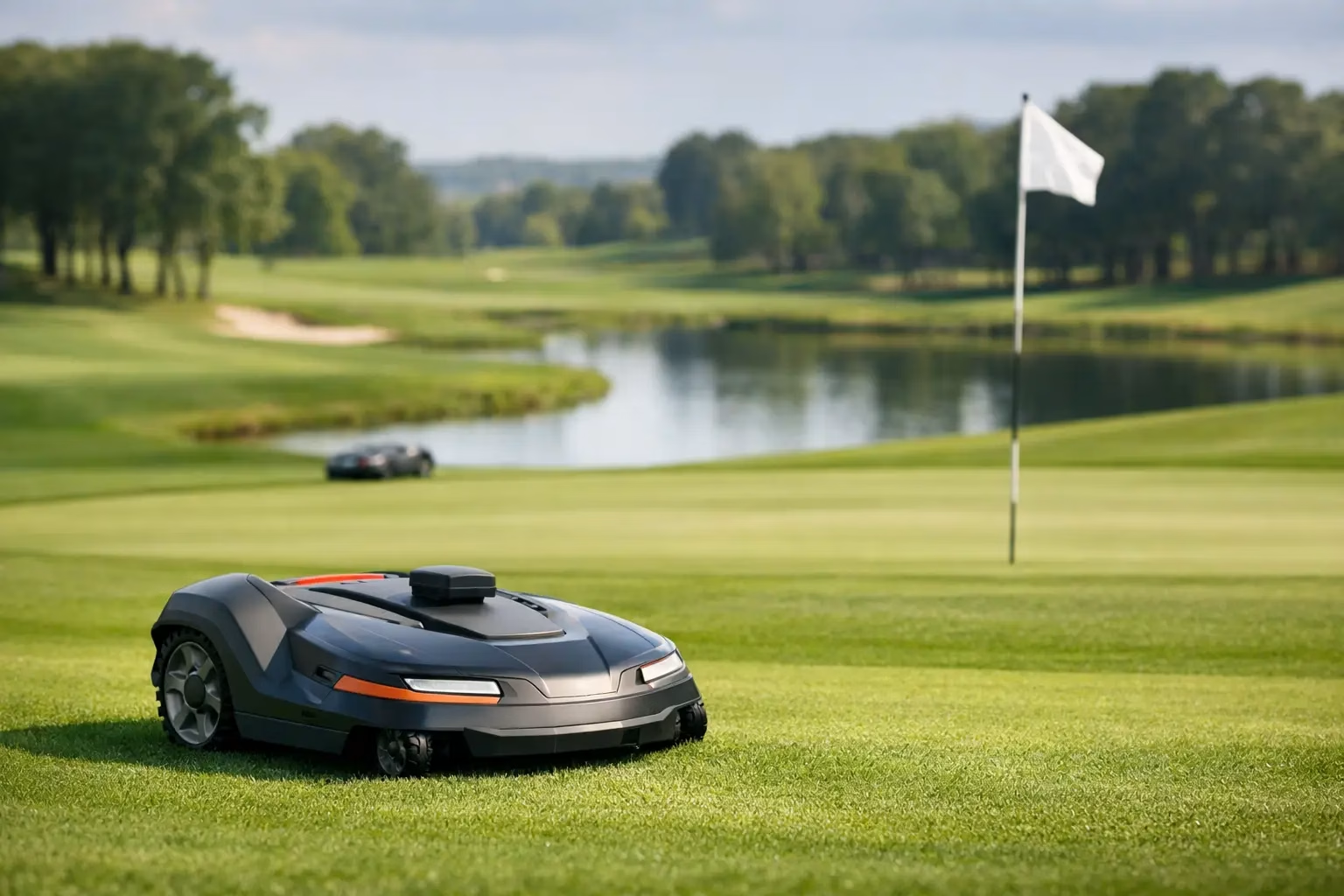
A missed cut window on a busy course is rarely caused by a lack of standards. More often, it comes down to labour pressure, weather disruption and the sheer number of playing surfaces competing for attention. That is exactly why robotic mowers for golf courses are moving from trial projects to serious operational consideration across Great Britain.
For course managers and head greenkeepers, the question is no longer whether autonomy can cut grass. It can. The real question is where it fits, what it replaces, and how it improves presentation without creating new complications elsewhere in the maintenance programme.
Why robotic mowing now makes sense on golf courses
Golf maintenance has always been a precision job shaped by timing. Greens, tees, surrounds and fairways all have different demands, yet the pressure on labour, budgets and consistency keeps rising across every area of the course. Recruitment is difficult, seasonal cover is unreliable, and routine mowing still consumes a large share of available hours.
Robotic mowing addresses that pressure in a practical way. It shifts repeat cutting work to autonomous equipment, allowing skilled staff to focus on tasks that genuinely require judgement – course set-up, irrigation management, disease monitoring, bunker presentation and finer turf work. That labour reallocation is often the strongest commercial case.
There is also a turf-quality argument. Frequent, controlled mowing supports a more even presentation and a more predictable finish than a schedule shaped purely by staff availability. On golf surfaces, consistency is not a cosmetic extra. It affects ball roll, player perception and the standard the club presents to members and visitors.
Where robotic mowers for golf courses deliver the most value
Not every area of a course should be treated the same, and robotic deployment works best when matched to the site rather than forced across it.
Fairways and large open areas
Large fairway acreage is where autonomy often produces the clearest productivity gain. These are high-hour mowing zones, and they can absorb repeated autonomous cutting with minimal disruption when the site layout is suitable. The benefit is not simply reduced machine time. It is the ability to keep fairway presentation consistent without tying up staff for long routine passes.
That said, fairway suitability depends on obstacles, crossing points, narrow links between holes and how much public or buggy movement the route sees. A well-planned autonomous system can cope with complex spaces, but badly matched deployment creates avoidable inefficiency.
Tees, approaches and surrounds
These areas are often strong candidates because they demand consistent presentation and regular attention, yet they do not always justify a skilled operator spending hours on repetitive cutting. Robotic mowing can maintain a dependable standard while freeing the team for more visible detail work elsewhere.
The main consideration here is finish quality and the type of cut required. In some situations, rotary autonomy is ideal for maintaining presentation. In others, especially where a tighter formal finish is expected, a robotic cylinder solution may be the better fit.
Greens and high-specification surfaces
Greens are where buyers rightly become more demanding. The margin for error is smaller, presentation standards are higher, and the mowing result must support playing performance, not just appearance. This is why product choice matters far more than the generic idea of a robot.
For greens, the conversation should focus on cut quality, repeatability, surface protection, route accuracy and the mower’s suitability for fine turf conditions. A professional autonomous greens mower is a very different proposition from a domestic robot scaled up for commercial claims.
The operational benefits beyond labour saving
Labour reduction gets attention because it is measurable, but it is not the only advantage. Autonomous mowing can improve the wider maintenance operation if it is introduced properly.
First, there is scheduling stability. A robot does not call in sick, need covering at short notice or lose productivity through routine fatigue. It works to a planned programme, which makes the mowing schedule more predictable across the week.
Second, there is consistency of cut frequency. More frequent mowing with lighter clipping removal can support cleaner presentation and reduce the peaks and troughs that appear when surfaces are cut around staffing constraints.
Third, there is machine utilisation. Conventional fleets often spend significant time idle between planned use periods, while autonomous equipment is deployed specifically to maximise productive cutting hours. That changes the economics of routine mowing.
Finally, there is site resilience. When staffing is stretched, clubs often prioritise the most visible surfaces and accept compromise elsewhere. Robotic support helps protect standards across the full course rather than only the headline areas.
What to assess before investing
The strongest results come from a site-led approach, not a product-first decision. Before choosing robotic mowers for golf courses, operators should assess the working environment with the same discipline they would apply to any major equipment purchase.
Start with the mowing map. Which areas are repetitive, time-heavy and suitable for autonomous operation? Which surfaces need close human supervision? Which routes are straightforward, and which create access or safety complications?
Then consider the standard required on each surface. Greens, tees and fairways may all be mown autonomously, but not with the same machine or the same mowing logic. Quality expectations should drive specification.
Infrastructure matters as well. Charging arrangements, site connectivity, boundary management, transport between areas and integration with existing maintenance routines all affect whether the system improves operations or simply adds another layer to manage.
Support should not be overlooked. Professional users need dependable set-up, commissioning and after-sales guidance, especially when deploying autonomy across a live golf environment. The technology may reduce routine labour, but it still needs the right implementation.
Common concerns and the reality behind them
Scepticism is healthy, particularly in golf. Maintenance teams are judged on results, not on how innovative the equipment sounds.
One common concern is that robotic mowing will compromise finish quality. That depends entirely on choosing the right solution for the right surface. Professional autonomous mowing is now capable of delivering a standard that fits serious golf operations, but the machine category must match the turf requirement.
Another concern is disruption to play. In practice, this comes down to planning, programming and the areas being managed. Autonomous mowing should work around the golf operation, not force the golf operation to work around the machine.
There is also the question of return on investment. The answer varies by course size, staffing model and current machinery costs. On some sites, the value is driven by reduced labour dependency. On others, it comes from maintaining standards without increasing headcount or replacing multiple conventional mowing hours. The commercial case is real, but it is not one-size-fits-all.
Choosing a professional solution, not a consumer product
This is where many comparisons go wrong. Golf courses do not need lighter-duty garden technology with a commercial label attached. They need purpose-built autonomous equipment designed for managed turf, defined surfaces and repeatable professional outcomes.
That means looking at more than headline battery claims or autonomous marketing language. The relevant questions are simpler and more practical. Can the machine maintain the required finish? Can it operate reliably across the intended terrain? Can it support the club’s labour model? Can it be deployed at a scale that justifies investment?
A specialist supplier matters because golf sites are rarely generic. The right recommendation for a greens programme may not be the right answer for fairways or semi-rough. A consultative approach is usually the difference between a system that works and one that becomes a compromise.
GrassRobotics positions this correctly – as a professional turf-care upgrade tied to specific surfaces, workloads and output standards, not as novelty automation.
The future of golf maintenance is selective autonomy
Autonomy is not about removing the greenkeeping team from the course. It is about applying labour where skill has the greatest value and using precision automation where repetition consumes time without adding expertise.
That is why the most successful adoption tends to be selective. A course may begin with fairways, then extend to tees or approaches, or introduce a dedicated autonomous solution for greens where the specification is right. This staged approach reduces risk and allows the maintenance team to build confidence while measuring the operational benefit.
For many clubs, the smartest move is not a wholesale fleet replacement. It is identifying the surfaces where robotic mowing immediately improves productivity, consistency and labour resilience. Once those gains are visible, the case for broader deployment becomes much clearer.
Golf course maintenance will always depend on skilled people making informed decisions about turf, playability and presentation. Robotic mowing simply changes who – or what – handles the repetitive cutting hours, and that shift is becoming harder to ignore.