
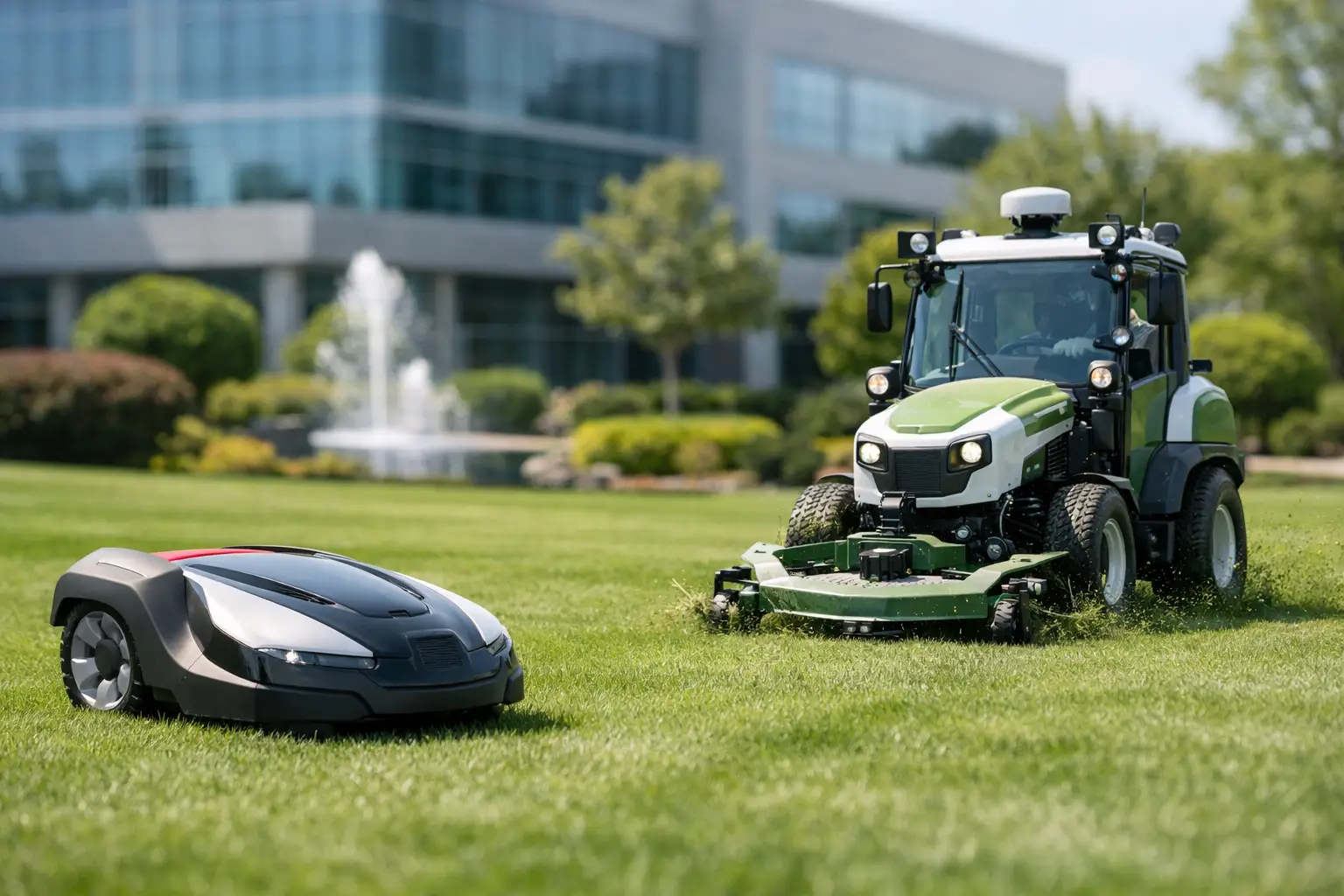
A missed cut window on a fairway or sports pitch is rarely a one-off problem. It usually points to the same pressure points – labour gaps, tighter maintenance windows, rising expectations, and too much manual time tied up in repeat mowing tasks. That is exactly why grounds maintenance automation is moving from a future-facing idea to a practical operating model for professional turf teams.
For golf courses, sports venues, education estates and contractors, the case is no longer based on novelty. It is based on output. If a site needs consistent presentation, predictable cutting frequency and better use of skilled staff, automation starts to look less like an equipment choice and more like a maintenance strategy.
What grounds maintenance automation actually means
In professional turf care, grounds maintenance automation is not simply replacing an operator with a machine. It is about automating the right tasks, in the right areas, to improve consistency and free up labour for higher-value work.
That usually starts with mowing because mowing is repetitive, time-intensive and highly visible. Fairways, roughs, surrounds, tee approaches, training grounds and large managed grass areas all consume hours that could be redirected into detail work, turf health, presentation and reactive maintenance.
The strongest automated systems are built around repeatable precision. They follow planned routes, maintain defined areas consistently and operate with a level of frequency that manual schedules often struggle to match when teams are stretched. The result is not just less labour input. It is a more stable standard of cut.
Why automation is gaining ground in professional turf
The labour issue is obvious. Many sites are finding it harder to recruit and retain experienced grounds staff, particularly for roles heavily weighted towards routine mowing. At the same time, expectations have not softened. Golf members still expect clean striping, tidy fairways and reliable presentation. Sports users still expect safe, consistent and well-defined playing surfaces.
Automation addresses that mismatch directly. It reduces dependence on manual hours for repetitive cutting while keeping mowing frequency high. That matters because turf quality is shaped by consistency as much as by operator skill. Frequent, precise cutting can improve presentation and help maintain a more uniform surface across the areas where robotic mowing is correctly deployed.
There is also a productivity argument that goes beyond headline labour saving. When autonomous mowing takes on repeat work, skilled staff can spend more time on the tasks that actually need judgement – course setup, surface refinement, irrigation checks, repairs, disease response, line marking and seasonal planning. In other words, automation helps teams apply expertise where expertise matters most.
Where grounds maintenance automation works best
Not every square metre of a site should be automated in the same way. That is where realistic planning matters.
Large, repeatable grass areas are often the strongest starting point. Fairways, semi-rough, outfield spaces, training areas and perimeter grounds are usually easier to map into an automated workflow because they involve regular cutting patterns and predictable boundaries. These are the zones where hours quickly add up and where consistent autonomous coverage can have a visible effect on labour efficiency.
On higher-specification surfaces, the conversation becomes more nuanced. Greens, tee boxes and marked sports surfaces have tighter tolerances and more exact presentation demands. Automation can still be highly effective here, but only with the right machine, the right setup and a clear understanding of the finish required. The difference between suitable automation and unsuitable automation is not whether the site is premium. It is whether the equipment is designed for that specific turf environment.
This is why professional buyers should be wary of treating all robotic mowing as interchangeable. A domestic-style unit adapted to a commercial setting is not the same as a purpose-built professional solution designed for managed turf performance.
Precision matters more than novelty
The real value of automation on a golf course or sports site comes from precision. If the cut path is inconsistent, if area control is weak, or if the machine cannot maintain standards across demanding surfaces, then the labour saving becomes irrelevant because the quality gap has to be corrected manually.
Professional robotic mowing needs to deliver measurable reliability. That means dependable navigation, consistent area coverage, accurate operation around key turf zones and a cut quality that supports the site’s presentation standards. It also means working within the practical reality of the venue – slopes, route planning, access points, usage patterns and maintenance windows.
There is a simple test worth applying. Does the automated system improve the operation, or does it create a second operation that staff must constantly supervise and correct? Good grounds maintenance automation reduces workload. Poorly matched automation shifts it around.
The operational gains go beyond wages
Labour reduction is often the first reason buyers explore automation, but it is rarely the only one that justifies the investment.
A well-matched robotic mowing system can improve consistency across the week, not just on the day a team has enough staff available. That steadier cutting frequency supports presentation and can help sites maintain a cleaner, more controlled appearance through periods of labour pressure, high growth or tight fixture schedules.
There is also a planning benefit. Automated mowing introduces predictability into part of the maintenance programme. Managers can allocate people more effectively because some mowing output becomes scheduled and repeatable rather than fully dependent on who is available that morning.
For contractors, this can support margin protection. For in-house teams, it can support service reliability. For both, it reduces the operational risk that comes from relying too heavily on scarce labour for routine tasks.
What to assess before investing
The best automation projects start with site suitability, not with product enthusiasm. Buyers should look closely at the acreage involved, the surface types, access between zones, desired finish, labour profile and how often the area needs to be presented at peak standard.
It is also worth being clear about the objective. Some sites want to remove routine mowing hours from the weekly schedule. Others want to improve cut frequency on key areas. Others need a scalable answer to long-term recruitment pressure. The right solution depends on that starting point.
Budget should be viewed in operational terms, not just capital terms. A lower-cost machine that cannot meet the finish standard or area requirement is expensive in practice. Equally, the highest-specification system is not automatically the right choice if the site’s real need is reliable automation on larger secondary areas. Matching machine capability to turf demand is what protects return on investment.
Support and implementation matter as well. Professional operators need more than a delivered machine. They need a solution that fits the site, can be commissioned properly and is aligned with the standards expected across golf, sport or institutional grounds. That consultative approach is one reason specialist providers such as GrassRobotics are gaining attention in this space.
Automation is not all or nothing
One of the more common misconceptions is that automation only makes sense when a site is ready to transform everything at once. In reality, phased adoption is often the smarter route.
A course might begin with fairway automation. A sports venue might start on training areas or outfield zones. A contractor might deploy autonomous mowing where repeat visits create the highest manual burden. Once the workflow, savings and presentation benefits are proven, automation can be expanded with more confidence.
This staged model matters because it lets teams build around real operational results rather than assumptions. It also allows managers to keep manual capability where it adds the most value while automating the areas that drain time without requiring constant human judgement.
The future of grounds maintenance automation
The direction of travel is clear. Professional grounds teams are under increasing pressure to do more with fewer people while maintaining exacting standards. Automation fits that reality because it improves repeatability, reduces labour dependence and supports a more productive use of skilled staff.
The strongest sites will not be the ones that chase technology for its own sake. They will be the ones that apply it with discipline – matching the right autonomous equipment to the right surfaces and measuring success by output, consistency and turf quality.
For professional operators, that is the real shift. Grounds maintenance automation is no longer a side conversation about what might be possible. It is a practical option for sites that need to maintain standards without building their entire operation around manual mowing hours. The question is not whether automation belongs in professional turf care. It is where it can deliver the most value first.