
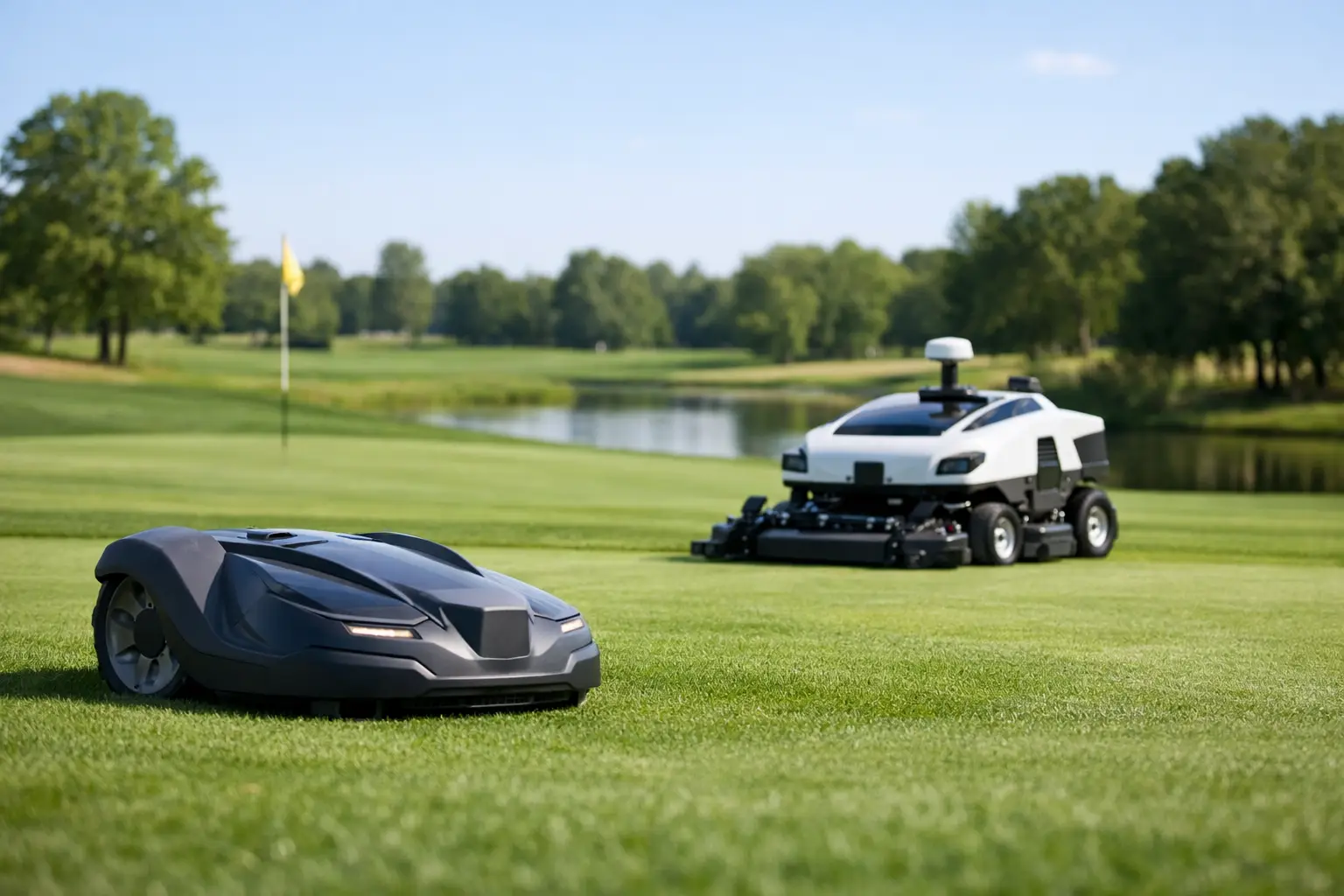
Labour pressure rarely arrives as a theory. It shows up when a skilled operator is off sick, when recruitment drags on for months, or when a venue still needs immaculate presentation before first light. That is where autonomous turf care solutions have moved from interesting concept to serious operational option for golf courses, sports grounds and managed estates.
For professional operators, the appeal is not novelty. It is repeatable output. If a machine can maintain defined areas to a reliable standard, reduce dependency on scarce labour and free trained staff for higher-value turf tasks, it deserves attention. The question is no longer whether autonomy has a place in professional turf care. The question is where it delivers the strongest return, and where a conventional approach still makes more sense.
Where autonomous turf care solutions fit best
Autonomy works best where the maintenance objective is clear, recurring and measurable. Fairways, surrounds, rough management zones, practice areas and many sports surfaces all suit structured robotic mowing programmes because they demand frequency, consistency and predictable presentation. In these areas, the value of robotic operation is straightforward – more cutting hours, tighter scheduling and less disruption to the core team.
That does not mean every square metre should be handed over to a robot. Fine turf areas with highly variable conditions, one-off renovation requirements or surfaces that need constant tactical adjustment may still benefit from experienced hands on the machine. Greens, for example, can be a strong fit for specialist autonomous equipment, but only where the site, standard and operating model align. The right decision depends on the surface, the expected finish and the manager’s tolerance for operational change.
Professional buyers tend to assess autonomy by task, not by trend. That is the right approach. When robotic mowing is matched to the correct environment, it improves consistency and releases labour without lowering standards.
The real operational case for autonomous turf care solutions
The strongest case for autonomy is not simply wage reduction. It is labour resilience. Most facilities still need skilled people, but those people are increasingly difficult to recruit and retain. Autonomous mowing helps protect output when staffing is tight and allows experienced team members to spend more time on agronomy, presentation detail, line marking, course setup, repairs and seasonal works.
There is also a quality argument. Human operators vary. Even excellent staff can only be in one place at a time, and fatigue affects performance. A robotic platform follows programmed parameters with a level of repeatability that manual operations struggle to match across large areas and long schedules. That matters on golf sites where visual consistency shapes member perception, and on sports facilities where surface presentation reflects directly on the venue.
Productivity gains tend to build quietly rather than dramatically. A robot does not solve every maintenance challenge overnight. What it does is keep cutting, stick to schedule and remove a proportion of routine mowing hours from the weekly workload. Over time, those saved hours become operational breathing space.
What professional operators should assess first
Before selecting equipment, the key issue is suitability of application. Terrain, slope, access, area size, boundary definition, obstacles and the required quality of cut all affect the outcome. A site with clear mowing zones and repeatable weekly demands is easier to automate than one with fragmented areas, frequent public interaction and constant pattern changes.
Infrastructure matters as well. Charging arrangements, site mapping, transport between zones and safe operating windows all influence whether a system becomes productive quickly or turns into a management burden. The best autonomous setups are designed into the maintenance plan rather than added as an afterthought.
It is also worth being honest about expectations. If the goal is to eliminate all manual mowing, disappointment is likely. If the goal is to automate the right percentage of routine work, improve consistency and reduce labour dependency, the business case becomes much stronger.
Surface standards still come first
Professional turf managers are right to be cautious about finish. Presentation is not negotiable on greens, tees, fairways and marked playing surfaces. Any autonomous system has to protect, or improve, current standards.
That means evaluating cut quality in real operating conditions, not just in controlled demonstrations. Grass type, seasonal growth, moisture, traffic and site wear all shape performance. A machine that performs well on a dry, uniform surface may need a different setup or a different application elsewhere. The better suppliers understand this and position equipment by use case rather than pretending one platform suits every requirement.
Labour savings depend on workflow
Savings are often discussed as if they happen automatically. They do not. A robotic mower only reduces labour pressure if the team reorganises around it. If staff continue to duplicate the same work, or if the machine is assigned to unsuitable areas that require frequent intervention, the benefit narrows.
The most successful operators use autonomy to redesign workflow. Routine mowing is delegated where possible, while skilled staff focus on tasks where judgement, timing and local knowledge matter most. That is where autonomy strengthens a professional maintenance operation rather than complicating it.
Common gains across golf and sports turf
On golf sites, autonomous equipment can bring particular value to fairways, approaches, tee surrounds and rough management zones where regularity matters and labour demand is persistent. The outcome is not just a cleaner schedule. It is a more stable presentation standard across the whole course, including periods when staffing is stretched.
On sports turf, the case often centres on pitch presentation, marked surface maintenance and keeping up with dense fixture schedules. Repetitive cutting tasks consume time that grounds teams would rather allocate to surface preparation, recovery and in-season repairs. Where autonomous systems are specified properly, they can support a more controlled and predictable maintenance programme.
Contractors and multi-site operators have another angle to consider. Robotics can help standardise output across locations and reduce exposure to labour volatility. That does not remove the need for skilled supervision, but it can make service delivery more consistent and scalable.
Why precision matters more than novelty
There has been enough hype around robotics to make experienced turf professionals sceptical. Fair enough. Novelty has little value on a professional site. Precision does.
Precision in this context means repeatable cut height control, defined area coverage, dependable navigation and predictable operating windows. It means knowing that a machine will carry out a scheduled task with minimal deviation, day after day. That consistency supports turf quality and helps managers plan the rest of the operation with greater confidence.
It also changes how sites think about machine utilisation. Conventional mowing is limited by operator hours. Autonomous equipment can extend productive working time well beyond the practical limits of a staffed shift, provided the site and schedule allow it. That expanded operating window is one of the most commercially useful aspects of the technology.
Adoption works best when it is phased
The sensible route is usually phased adoption. Start with the areas where autonomous mowing can deliver an obvious operational gain and where the risk to presentation standards is low. Measure labour hours released, monitor quality outcomes and adjust the workflow. Then expand if the results justify it.
This matters because autonomy is not a single purchase decision. It is a change in maintenance model. Teams need confidence in the equipment, clarity on responsibilities and enough time to integrate new routines. Facilities that treat robotic mowing as a strategic upgrade tend to get more value from it than those that expect instant transformation.
For that reason, supplier focus is important. Professional users need equipment positioned around real applications, not broad consumer-style claims. A specialist provider such as GrassRobotics understands that a golf course manager and a sports turf operator are not buying into the same problem set, even when both are investing in autonomy.
What the next few years will look like
Autonomous turf care solutions are likely to become a standard part of professional maintenance fleets, particularly as labour constraints remain stubborn and expectations around presentation stay high. The shift will not replace skilled grounds staff. If anything, it will make their time more valuable by removing a greater share of repetitive mowing work.
The sites that benefit most will be those that view autonomy practically. Not as a headline feature, and not as a complete replacement for conventional maintenance, but as a targeted way to improve consistency, productivity and labour resilience. That is where the technology proves itself.
For professional operators, the key is simple: judge autonomy by the standard it holds, the hours it returns and the pressure it removes from your team. If it does those three things well, it is not the future of turf care. It is already part of the present.